Memory and AI server ‘crisis’ can be solved with VMware, VCF leader says
“With AI demand skyrocketing, hardware, server and DRAM prices have all gone through the roof. What we have done in VCF are certainly helping customers in that regard,” says Krish Prasad
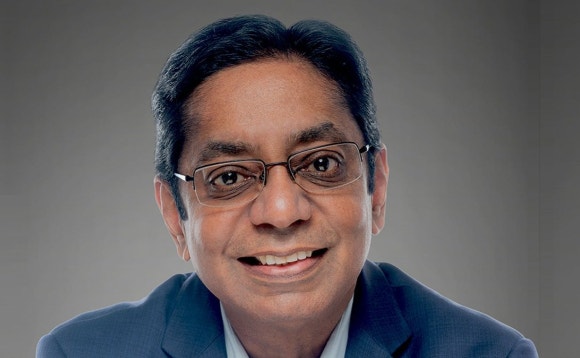
The hardware supply chain crisis around servers, memory and other IT infrastructure, along with soaring prices, can be solved with VMware Cloud Foundation thanks to innovations such as server virtualisation and advanced memory tiering, according to VMware’s Krish Prasad.
“With AI demand skyrocketing, the hardware, the server prices, the DRAM prices have all gone through the roof, and there is a hardware supply crisis going on,” Prasad, head of Broadcom’s VMware Cloud Foundation division, tells CRN.
“There’s a big area of concern about, ‘How can we do more with less?’” he says.
“Meaning, ‘How can I optimise what I have and extract more value from it before I start spending more money on adding more servers or more memory?’ The things that we have done in VCF are certainly helping customers in that regard.”
VMware’s VCF private cloud platform includes NVMe Memory Tiering technology that allows ESX hosts to use NVMe devices as a secondary memory tier alongside traditional DRAM.
VMware’s memory-tiering capabilities allow clients to extend effective memory pools by pairing DRAM with NVMe memory, while also using extended vSAN deduplication and compression to help reduce storage costs without bringing in new hardware, Prasad says.
VMware memory tiering can cut DRAM costs by 50 per cent
Prasad says VCF is the answer to DRAM prices going “through the roof."
“What memory tiering allows you to do is to cut the DRAM by roughly 40 per cent to 50 per cent, and you can tier it with NVMe storage, which is much cheaper without sacrificing the performance of the applications that you run,” Prasad says.
"This is a huge cost reduction for customers.”
He says the technology is helping VMware and channel partners win new customers and boost sales.
“Customers are jumping all over it and deploying it and converting their existing servers to memory-tiered servers to deal with the skyrocketing cost of DRAMs,” Prasad explains.
SHI International seeing VCF ‘success’
SHI International is one of the world’s top solution providers and VMware global partners.
SHI is witnessing customer success with VCF as hardware supply chain and pricing issues become a long-term focus for clients.
“With VMware, we’ve seen a lot of success with customers saying, ‘How do you use technology features like NVMe tiering to maybe free up existing infrastructure in a better way so I can deploy some new workloads without stretching the budget?’” Ryan Sheehan, SVP of advanced solutions at New Jersey-based SHI, tells CRN.
“We’re seeing a lot of that from customers,” he says.
At the beginning of the supply chain crisis, Sheehan says SHI was telling customers not to “panic buy”.
“With the supply chain issue, the rising cost of hardware and the rising costs of DRAM, a lot of customers made a rushed push to some public cloud workloads to test out AI,” he says.
“And now they’re realising the tokenomics costs. Now the CFOs and AI stakeholders involved are like, ‘How do we do this better?’”
“Customers can’t wait two or three years. Let’s figure out the infrastructure that your workload sits on, and how you can actually get it and deploy it in a reasonable time inside your budget cycle,” Sheehan says.
“It’s a tricky one, but we’re navigating it well with customers.”
Overall, VMware says its memory tiering can result in up to 4x more available memory per host, 2x better VM consolidation, up to 30 per cent improved CPU efficiency and up to 40 per cent lower TCO.
VCF virtualisation prowess helps with server costs
In addition to VCF’s memory tiering, Prasad says VMware’s long-time success as the virtualisation market leader is coming into play.
“When you’re thinking of doing more with less in context of servers, you try to virtualise the servers because virtualisation is all about doing more with a server by virtualising,” he says.
“You are seeing customers now look at silos in their environments where they have some bare-metal silos existing. They are trying to bring that into the virtualisation umbrella so they can extract more value from those servers,” Prasad says.
Overall, he says VCF is seeing huge momentum in the market because organisations want to bring more AI workloads on-premises due to cost savings and security concerns.
Broadcom’s infrastructure software group, which includes VMware, generated $8.75bn (£6.5bn) in revenue during the company’s Q3 FY26.
This represents a 29 per cent growth rate year-on-year for Broadcom’s VMware software group.
SHI, for its part, says its global scalability and tight partnership with VMware is winning customer mindshare.
“We’ve been 100 per cent all-in on VMware private cloud to run your AI workloads for a long time. That is one of the key platforms for us to be able to drive customers to a more secure, more controlled, more easily managed private cloud,” Sheehan says.
“I feel incredibly bullish on SHI’s position in the market.”
This article originally appeared on CRN UK sister websiteCRN.