NetApp CEO: AI is no longer a future aspiration - it’s driving record growth now
“Our broad-based success spanned industries and geographies, with multiyear agreements, expansion into new workloads and deeper customer engagement, all strong leading indicators of durable growth,” said George Kurian
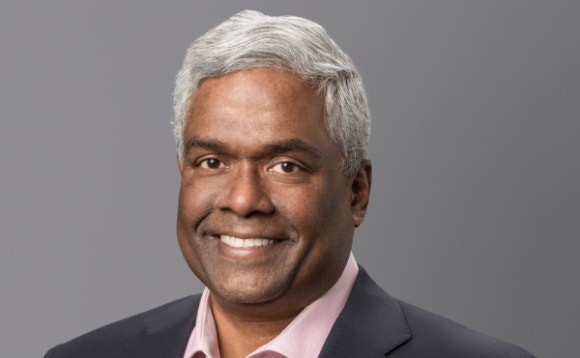
NetApp started its fiscal year in spectacular fashion thanks in large part to the impact of AI-driven growth, according to CEO George Kurian.
Kurian late Wednesday told financial analysts on NetApp’s first fiscal quarter 2027 financial call that the California-based storage and AI technology developer’s revenue and profits achieved record growth thanks to its disciplined business execution in a challenging component cost environment.
However, that growth stemmed from more than fiscal discipline, he said.
“This quarter’s achievements reflect more than just strong execution,” Kurian said.
“They underscore NetApp’s growing leadership in a rapidly evolving environment. Our broad-based success spanned industries and geographies, with multiyear agreements, expansion into new workloads and deeper customer engagement, all strong leading indicators of durable growth.
“While we are seeing some accelerated purchase decisions and pricing benefits, we are also seeing a clear, structural improvement in the underlying demand environment, all of which contributed to Q1’s strong results and are fuelling our momentum.”
AI was a major contributor to the company’s growth, Kurian added.
He explained AI has moved beyond the experimentation phase and is now becoming a core business priority for enterprises.
As organisations look to deploy AI at scale, he said the focus is shifting from compute capacity to ensuring data is accessible, governed and ready for AI workloads.
He also noted that NetApp’s platform helps customers prepare data for AI without moving it between environments by providing unified storage, security and management across hybrid multi-cloud infrastructure.
This, he said, allows organisations to accelerate AI and analytics initiatives while maintaining governance and control and moving more confidently from pilot projects into production deployments.
NetApp’s record first fiscal quarter was also fuelled by robust growth in public cloud, all-flash and Keystone subscription revenue, which Kurian said reflected the momentum in its business and validated its strategy as it delivered meaningful results for customers.
The CEO illustrated that broad range of growth drivers by highlighting a number of deals the company completed during the quarter, including:
- A major US utility choosing NetApp over legacy and flash-only competitors after a highly competitive evaluation to standardise on the company’s unified, AI-ready data infrastructure.
- A US hospitality company adopting NetApp technology for the first time through Amazon FSx for NetApp ONTAP to support large-scale VMware migration to AWS.
- A US public sector organisation selecting Azure NetApp Files as part of its data modernisation efforts, including for efficient VMware migrations.
- A European IT service provider for pension insurance selecting NetApp unified storage in its first NetApp engagement to meet stringent security and resilience requirements for critical infrastructure.
- NetApp displacing a competitor at a leading transportation agency with all-flash arrays for high-performance processing of massive video files and hybrid flash arrays for cost-effective long-term retention.
- NetApp winning approximately 350 AI and data lake modernisation deals during the quarter, up significantly year on year in both number and deal size.
- NetApp signing an agreement with Samsung Electronics to support its EDA environment and AI centre of excellence.
- A public sector organisation awarding NetApp a strategic deal to modernise and expand its intelligence capabilities and deliver real-time analytics leveraging NetApp AFX integrated with Nvidia SuperPOD.
- NetApp securing a significant win with an Asian neocloud provider, supplying high-availability, secure and scalable storage for new customer-facing AI services.
NetApp also strengthened its leadership through strategic acquisitions to expand the capabilities of the NetApp Platform and broaden its addressable market, Kurian said, including:
- DataPelago, whose Nucleus software engine enables high-performance, in-place data processing to help eliminate costly data movement and streamline AI readiness.
- JetStream, which provides cloud-native continuous protection and recovery of VMware workloads across diverse storage environments, with seamless replication to NetApp cloud offerings like Azure NetApp Files.
While AI was an important driver of NetApp’s growth, it wasn’t the only one.
Kurian, when asked by an analyst during the question-and-answer portion of the conference call what NetApp saw demand-wise in the quarter, replied that the demand profile was broad-based, with strength across every customer type, geography and vertical and was resilient despite component shortages.
“What we saw in the quarter was counter to what we see typically when prices of silicon and commodity costs go up dramatically,” he said.
“Customers generally lean into tech refresh. We saw a ‘non-refresh.’ We saw the opposite. We saw much higher than the anticipated strength across all classes of customers.”
Within the largest customers, Kurian said there were some pockets of accelerated purchasing.
However, he added that many customers were also expanding investments into lower-priority workloads and use cases.
In response to an analyst question about the impact of AI versus non-AI demand trends, Kurian said growth was broad-based and expected to remain strong for multiple quarters, leading NetApp to raise its outlook for the full year.
“There are AI-specific buildouts, for example, GPU-as-a-service cloud, GPU environments within enterprises and data lakes and modern data lake environments being built particularly for GPU usage and for AI analytics,” he said.
“There is, however, as other people have noted, including the hyperscalers, a broad-based modernisation of a variety of adjacent workloads and infrastructure.
“When you use AI, you also want to modernise your databases. You also want to modernise your unstructured data environment to get them ready. And we saw that happening pretty much across all the industries and all the customer segments.”
When asked about NetApp’s acquisition strategy, Kurian said the company remained disciplined in its approach, as demonstrated by its two most recent acquisitions focused on cloud and AI.
Kurian said the DataPelago takeover strengthens NetApp’s AI strategy by adding technology that can process and analyse data closer to where it is stored, helping customers improve AI inferencing performance and reduce the need to move large datasets.
He noted that the JetStream buyout, meanwhile, enhances NetApp’s VMware migration capabilities by expanding its disaster recovery and cloud migration offering. The technology provides a broader entry point for customers looking to move VMware workloads to the cloud, including organisations that do not currently use NetApp infrastructure on-premises.
NetApp by the numbers
For its first fiscal quarter 2027, which ended 31 July, NetApp reported total revenue of $2bn (£1.5bn), up about 30 per cent from the $1.6bn reported in the first fiscal quarter of 2026.
This included hybrid cloud segment revenue of $1.8bn, up about 30 per cent year on year, and public cloud segment revenue of $206m, up about 28 per cent.
Looking at revenue by category, NetApp reported product revenue of $987m, up from $654m a year earlier, and services revenue of $1.04bn, up from $905m.
Included in the total was all-flash storage revenue of $1.3bn, up from $893m, while hybrid-flash and other revenue increased to $510m from $505m.
NetApp’s Americas commercial market accounted for about 37 per cent of total revenue during the quarter, down from 40 per cent, while its US public sector market remained steady at 11 per cent.
Total revenue exceeded analyst expectations by $190m, according to Seeking Alpha.
NetApp also reported GAAP net income of $375m, or $1.88 per share, up significantly from $233m, or $1.15 per share, a year earlier.
On a non-GAAP basis, NetApp reported net income of $515m, or $2.58 per share, up from $314m, or $1.55 per share.
Non-GAAP earnings per share beat analyst expectations by 93 cents, according to Seeking Alpha.
Looking ahead, NetApp expected second fiscal quarter 2027 revenue to be in the range of $2.025bn to $2.175bn, with GAAP earnings of $1.97 to $2.07 per share.
The company also increased its full fiscal year 2027 revenue guidance to a range of $7.975bn to $8.225bn, with GAAP earnings expected to be between $7.35 and $7.65 per share.
This article originally appeared on CRN UK sister website CRN.