VMware head on ‘huge VCF tailwind’ from memory shortages, server prices issues
“We have essentially solved the hardware shortage and the hardware cost issues with a software solution,” says Krish Prasad, head of Broadcom’s VCF division
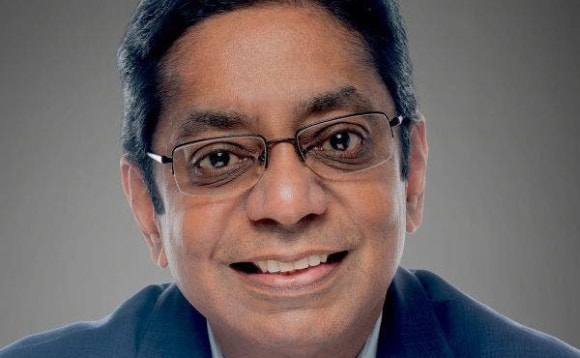
As customers grapple with memory shortages and rising server prices, VMware says it has built a platform that solves those two pressing issues: VMware Cloud Foundation.
“We have essentially solved the hardware shortage and the hardware cost issues with a software solution,” VMware’s Krish Prasad, who leads Broadcom’s VMware Cloud Foundation (VCF) Division, tells CRN.
“Memory costs are skyrocketing. With VCF 9.0, we introduced something called advanced memory tiering,” Prasad says.
“That allows you to solve this exact problem of skyrocketing cost of DRAMs and availability of DRAMs by saying, ‘Hey, you don’t need to use as much DRAMs. You can tier DRAMs with NVMe storage. And then once you do that, ESX through software, will make sure that you’re not seeing a significant performance penalty.’”
Prasad explains VMware is seeing a significant “tailwind” with customers buying VCF due to the global issues around rising server prices and memory shortages.
“This whole shortage is causing customers to rethink the value of virtualisation and do more virtualisation. So that’s the underpinning of our VCF cloud.
“It’s been a huge VCF tailwind in recent months for us.”
VCF 9.0 is the answer to memory shortages, hardware cost concerns
VMware Cloud Foundation 9.0 is the California-based company’s flagship unified private cloud platform launched in 2025.
VCF 9.0 treats servers, storage and networks as fluid software pools or resources with baked-in cybersecurity and enterprise-wide compliance guardrails.
The platform features Advanced Memory Tiering with NVMe, which offloads cold data from expensive DRAM to lower-cost NVMe storage to improve server consolidation.
“This is one of the things that customers love about VMware and traditionally has been very much in the DNA of VMware, which is to foresee problems that might happen in the future,” says Prasad.
“This is a great example of that, where the memory tiering capability was designed and developed over multiple years, became available in VCF 9.0. Since then, the memory [prices and shortages] went through the roof and customers are now able to take advantage of it with VCF,” he adds.
In an interview with CRN, Prasad takes a deep dive on the VCF 9.0, if he believes the memory and hardware shortage with continue throughout 2026 and VMware’s technology roadmap ahead.
Is VMware being impacted at all by the industry’s memory shortage or rising server prices? Or is it a tailwind for you?
“Because of all the huge investment that is happening in the AI space, there’s a shortage of hardware.
“There is a shortage of memory or DRAMs and the memory costs are going through the roof.
“Similarly, the server costs are going through the roof.
“And not only that, you have to be in line to get access to servers because there is a capacity crunch because they cannot meet the demands that AI is driving across the world.
“Customers are back to thinking about the basics.
“The basics for VMware was about doing more with less. That is from the day one.
“If you think about virtualisation, it was about taking a server and maximally utilising it by running other virtualised servers on top of it.
“It’s about consolidation and really utilising what we have more effectively.
“Because they cannot get hardware at the pace they need to, they have to take advantage of the hardware that they have, but more efficiently.
“Customers are packing their existing virtualised infrastructure much more.
“There is no other platform in the world that allows you to pack more than VMware.
“They are taking their bare metal servers that they have in the datacentre, converting them to virtualised servers, so they can get much more capacity out of it.
“This whole shortage is causing customers to rethink the value of virtualisation and do more virtualisation.
“That’s the underpinning of our VCF cloud. It’s a huge VCF tailwind in recent months for us.”

How is VCF the answer in terms of rising memory costs and shortages?
“If you think about what’s happening around memory costs, it has gone up multiple folds.
“Memory costs are skyrocketing.
“With VCF 9.0, we introduced something called advanced memory tiering.
“That allows you to solve this exact problem of skyrocketing cost of DRAMs and availability of DRAMs by saying, ‘Hey, you don’t need to use as much DRAMs. You can tier DRAMs with NVMe storage. And then once you do that, ESX through software, will make sure that you’re not seeing a significant performance penalty.’
“We will take care of the memory management across those tiers.
“So do the cheaper NVMe devices tiered with the lesser amount of DRAM and then you don’t see the difference in how your applications run.
“We have essentially solved the hardware shortage and the hardware cost issues with a software solution.
“VCF is saying, ‘Hey, you can solve it some other way. You don’t need to really be going after this much weight in DRAM. Use the memory tiering capability that came out in the product to address that.’
“And that’s resonating very well with customers.”

How was VMware able to get ahead of these IT shortages and price increase issues?
“It came before the customers ran into this significant problem, because memory is very critical for applications to run and maintain the performance and all of that.
“This is one of the things that customers love about VMware and traditionally has been very much in the DNA of VMware, which is to foresee problems that might happen in the future.
“This is a great example of that, where the memory tiering capability was designed and developed over multiple years, became available in VCF 9.0.
“Since then, the memory thing went through the roof and customers are now able to take advantage of it with VCF.
“It has been another big tailwind in terms of our adoption of VCF 9.0.”
What are customers saying when they buy VCF 9.0?
“Customers are going to the basics, which is, ‘Hey, I need to consolidate more. I need to densify my infrastructure. I need to do more with less because I’m not able to get more.’
“Then the whole answer is around virtualisation.
“VCF is the best platform in the industry for doing that.
“We see this as a place where we can play a critical role in helping our customers go through this crisis.”
Do you see these shortages and price increases going away soon?
“It’s not going to go away real fast.
“Because the demand and the shortages and all of that is driven by AI.
“AI is not going away anytime soon. Everybody is building out big datacentres and all that kind of stuff.
“That also is going to drive up the cost of the public cloud.
“Because the public cloud vendors are the ones who are building out these mega datacentres and all of that for AI.
“When you do that kind of investment, at some point, it will reflect in the pricing across the board.
“I don’t see the public cloud cost issue going away anytime soon.”

As the leader of VCF, what is VMware’s technology roadmap in 2026 and beyond?
“When you think about our roadmap, you should always think about what our core value proposition is.
“The first one is about reducing the total cost of ownership for the customer.
“For example, for storage, we have vSAN.
“If you compare it to the customer using any kind of external storage, vSAN is significantly better in terms of total cost of ownership.
“It’s not even close. It’s much less. You pay much less for storage if you use vSAN than using any other storage vendor.
“The second one is about container modern workloads.
“More and more of the AI workloads are all containerised.
“We are the only platform in the industry that has both containers and VMs running on a single platform.
“If you bring another vendor, then you have two platforms. If they have us and some others then everything gets much more complex.
“We provide all types of workloads running on a single platform, whether it’s AI, whether it’s other modern apps, whether it’s VM-based traditional apps, all runs on the same operational models.
“You train your people once, it’s much more efficient to do it that way, and much more secure, because you’re only protecting one platform.
“That’s where you’d see our roadmap continue to focus: It’s on the cost, it’s on security and then obviously, how do you enable AI into the platform so that your private cloud essentially becomes more and more automated over time.”
This article originally appeared on CRN UK sister website CRN.
Highlights