The AI bubble: Major concern or logical correction? IT leaders react
As concerns mount over a potential AI market correction, channel vets share their views on whether its impact would truly be as disruptive as some predict
It is now widely accepted that AI has permanently reshaped the IT landscape and, more broadly, the way businesses operate, and how people interact on a daily basis.
In the race to stay ahead, major tech companies have invested billions into AI, fuelling rapid innovation but also prompting concerns about market excess.
Several industry leaders, including Google CEO Sundar Pichai, have described elements of the current boom as “irrational”.
These concerns have ignited fears of a potential AI market correction, where investment and expectations risk outpacing real-world returns or technological maturity.
Some warn that such a scenario could have far-reaching consequences, drawing parallels with the dotcom boom and bust of the late 1990s.
But is AI heading towards a painful reckoning or is this simply a necessary phase in the evolution of a transformative technology?
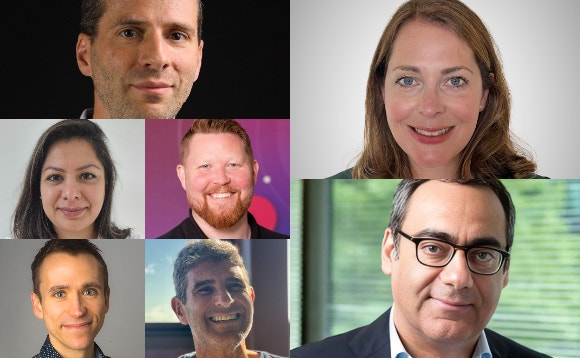
To explore this question, CRN gathered perspectives from IT leaders across the channel, including SCC, Maintel, Advania UK, Itcom Services, Cisilion, Nebula IT and Easy Service Informatique.

Chris Pottrell, MD, Nebula IT
Do you see an AI bubble forming and if so, where?
“There is clearly froth in parts of the AI market, but I’d be cautious about calling it a single, uniform bubble.
“The risk sits less in foundational AI platforms and more in the layers built on top, particularly tools that wrap LLMs with minimal differentiation or unclear commercial outcomes.
“Where AI is being sold as a shortcut rather than a capability, expectations can outpace reality.”
Do you see this burst as inevitable, or is it more of a theory at this point?
“Some correction is inevitable - that’s how emerging technologies mature.
“But a correction doesn’t mean collapse. We’ve seen this pattern before with cloud, SaaS, and even cybersecurity.
“The over-promised solutions fade, while genuinely useful capabilities quietly become infrastructure.”
Sundar Pichai, CEO of Google, recently said there is some ‘irrationality’ in the current AI boom. Do you agree? If so, why?
“Yes, to a degree.
“Irrationality tends to appear when narratives move faster than implementation.
“AI is real, powerful, and transformative but it’s not magic.
“Organisations still need data quality, governance, security, and change management. When those fundamentals are ignored, disappointment follows.”

Mini Biswas, AI and security specialist, Cisilion
Do you see an AI bubble forming, and if so, where?
“Let’s untangle this AI bubble hype - are we talking about conversational AI or agentic AI? It’s important to unpick this first.
“Conversational AI, driven by generative models and chat interfaces, dominates headlines and attracts the lion’s share of attention.
“Agentic AI, on the other hand, is emerging as a trend focused on autonomous decision-making and task execution.
“There’s no denying that parts of the AI market are overheated.
“Industry leaders have openly acknowledged this - Sam Altman commented that ‘parts of the field are kind of bubbly right now,’ while former Meta executive Nick Clegg went further, describing valuations as ‘unbelievable’ and suggesting the likelihood of a correction is ‘pretty high.’
“Analysts agree that if a correction comes, it will be a recalibration rather than a collapse.
“However, warning signs are hard to ignore when looking at the tens of billions in debt some hyperscalers are taking on to fund datacentre buildouts, it’s clear that expectations have outpaced near-term profitability.
“Yet, calling AI a ‘bubble’ oversimplifies the reality.
“AI is driving transformation across sectors - from healthcare and finance to agriculture.
“The narrative of a bubble often stems from focusing narrowly on consumer-facing applications, but AI is a foundational technology shaping infrastructure, automation and industry-specific solutions worldwide.
“While valuations may correct, AI itself is not a bubble; it’s a long-term shift that will redefine how businesses and societies operate.”
Do you see this burst as inevitable, or is it more of a theory at this point?
“There may be market corrections in areas where valuations have outpaced actual delivery, but a dramatic burst feels more theoretical than inevitable.
“Analysts widely agree that any adjustment will be a recalibration rather than a collapse, driven by the fact that most AI investment is backed by cash-rich tech giants rather than debt-heavy speculation.
“Historically, transformative technologies experience a cooling-off period before entering a phase of sustainable growth.
“AI is following that trajectory: while inflated valuations may correct, the underlying innovation will continue to advance, hopefully also creating long-term opportunities across every sector.”
Sundar Pichai, CEO of Google, recently said there is some ‘irrationality’ in the current AI boom. Do you agree? If so, why?
“I agree to an extent.
“There is clear irrational exuberance in certain pockets of the market - start-ups chasing funding without viable use cases, and organisations rushing to ‘tick the AI box’ for optics rather than value.
“This behaviour isn’t unique to AI; it’s a pattern we’ve seen with every disruptive technology.
“The real challenge is separating noise from substance.
“While hype dominates headlines, the focus should remain on responsible, outcome-driven adoption - embedding AI where it solves real problems and delivers measurable benefits.
“Ultimately, irrationality exists at the edges, not at the core.
“The underlying technology is transformative and already delivering tangible results across industries.
“The winners will be those who prioritise the foundational layer including governance, security, network, and real-world impact.”
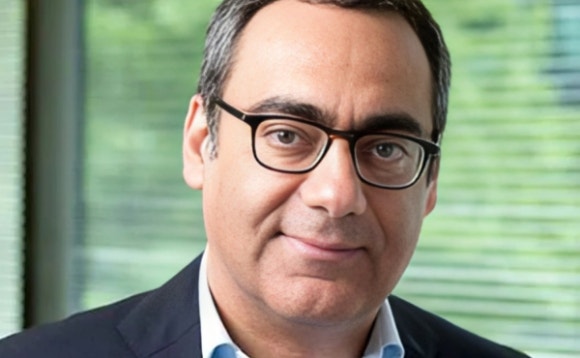
Robert Vassoyan, CEO, SCC
Do you see an AI bubble forming, and if so, where?
“I don’t believe in making assertive guesses on these matters.
“There could be here and there excessive valuations which might lead to punctual setbacks in the stock market but as a key and global player in the field of AI, we are seeing at SCC massive and growing demand and while 2026 might be a year of volatility in the stock markets.
“I am also convinced that it will be year of systemic adoption of AI platforms, SLMs and agentic AI in the enterprise and public sector world.
“Many executives are currently factoring increased productivity and efficiency in their budgets thanks to the usage of AI and deciding important investments in that fields.”
Do you see this burst as inevitable, or is it more of a theory at this point?
“These things are impossible to predict.
“It is likely that some of the major players will at one point disappoint and I hope that markets will adjust rather than correct.
“What I see is that demand and usage are real and growing exponentially which is very different to the Internet bubble.”
Sundar Pichai, CEO of Google, recently said there is some ‘irrationality’ in the current AI boom. Do you agree? If so, why?
“There is always a part of irrationality and excessive enthusiasm when industrial revolutions like these occur.”
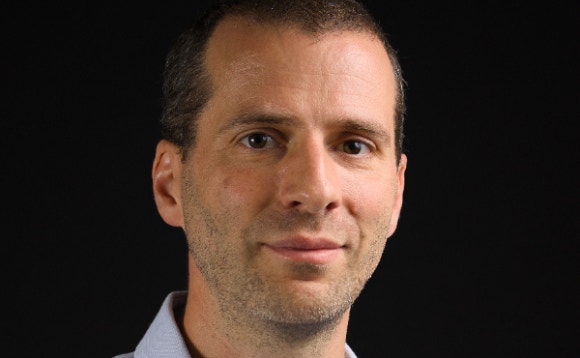
Frédéric Zouaï, founder and MD, Easy Service Informatique
Do you see an AI bubble forming, and if so, where?
“There is the impression that a lot of dreams are being sold for very little ROI.
“This naturally raises the question of how sustainable this can be over time.
“Moreover, many people say it resembles the internet bubble, and there are indeed strong similarities: many projects, many millions or billions invested, little revenue, and few truly useful services or products that actually deliver on their promises.”
Do you see this burst as inevitable, or is it more of a theory at this point?
“When we talk about a bubble, it is often a financial one, involving the collapse of major ‘overvalued’ companies.
“It is certain that many AI players will disappear due to a lack of real services and real customers.
“There will be (and there already are) consolidations, turning ten companies into a single serious one offering a genuinely value-added service.
“From a market and valuation standpoint, there will inevitably be damage; the real question is the scale of that damage - and its impact on the rest of the global economy.”
Sundar Pichai, CEO of Google, recently said there is some ‘irrationality’ in the current AI boom. Do you agree? If so, why?
“Yes, absolutely.
“There is no logical relationship between certain valuations and the current or potential revenue of some players.
“We are in an irrational phase, and irrationality always eventually collides with the wall of rationality.”

Jean-Benoît Carsin, founder and CEO, Itcom Services
Do you see an AI bubble forming, and if so, where?
“A bubble, yes, but not the one people think
“When we look at what is happening around infrastructure - GPUs, datacentres, large-scale models - it is hard to deny there is a form of overheating.
“Investment levels sometimes far exceed actual usage.
“By contrast, in the IT channel and for an MSP like us, AI is anything but a bubble.
“It is a deep, structural transition that is transforming the way we work and the relationship we have with our clients.
“Every week, we see very tangible gains in efficiency, quality of service and peace of mind.
“So yes, a bubble may exist - but it does not affect the real value of AI.”
Do you see this burst as inevitable, or is it more of a theory at this point?
“There will certainly be a correction of the current excesses. That is almost mechanical.
“But AI, as an operational tool for an MSP, will not collapse: it addresses day-to-day operational needs too directly to disappear.
“Our job is to ensure that businesses keep running.
“Anything that removes friction, reduces tickets and improves the user experience becomes a permanent fixture.”
Sundar Pichai, CEO of Google, recently said there is some ‘irrationality’ in the current AI boom. Do you agree? If so, why?
“I share his observation… but not entirely.
“There is clearly irrationality in the race for raw computing power.
“We see companies launching into oversized projects without having clearly identified their actual needs.
“However, when we return to real-world usage - the daily reality of the SMEs that entrust us with their systems - we see the exact opposite: AI being used with restraint, pragmatism and a clear focus on real impact.
“In short: the market can be irrational, but the field is very clear-headed.”

Sarah Roberts, COO, Maintel
Do you see an AI bubble forming and if so, where?
“There are definitely signs of an AI bubble, mainly in compute and start-ups, where investment and valuations have run ahead of the fundamentals.
“Where I don’t see a bubble is in applied operational AI.
“The use cases that focus on improving productivity, automation and customer experience enhancements, which are driving measurable outcomes, are less exposed to the market volatility.”
Sundar Pichai, CEO of Google, recently said there is some ‘irrationality’ in the current AI boom. Do you agree? If so, why?
“I agree and hear the same view from many organisations across our industry.
“Many have rushed to adopt AI, often driven by having a fear of falling behind.
“At Maintel, we’re being intentional how we use AI to avoid this.
“We focus on use cases that deliver clear benefits and solve actual problems that we and our customers have.”
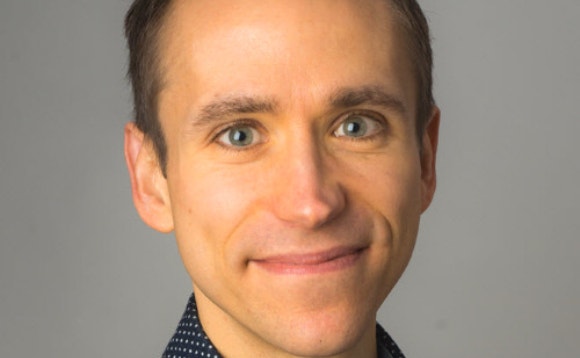
Chris O’Brien, products and services director, 18x Microsoft MVP, Advania UK
Do you see an AI bubble forming, and if so, where?
“We’ve had the bubble speculation for a while now and it’s certainly fair to say there’s some ‘irrational exuberance’ around major investments and big tech valuations.
“The frontier AI labs, platform providers, and the investor chains beneath them are chasing the opportunity behind a generational shift in technology, with increasingly big bets being made and sometimes with byzantine circular financing arrangements.
“That said, it’s important to distinguish between speculative activity at the top end of the market and the broader fundamentals of AI adoption across industries.”
Do you see this burst as inevitable, or more theoretical at this stage?
“While a correction in certain AI valuations seems plausible, I wouldn’t call a dramatic ‘burst’ inevitable.
“The hype cycle is real, but so now is the evidence of AI delivering genuine returns in production environments.
“A correction in big tech valuations may come, but the broader adoption and impact of AI across organisations is likely to continue, driven by proven use cases and genuine ROI.”