‘We’re thinking about how to engage the ‘Now Generation’’ – Dan Wensley on a new era of GTIA
165 days into his tenure, the CEO reflects on GTIA’s rebrand, new focus and the work still to be done
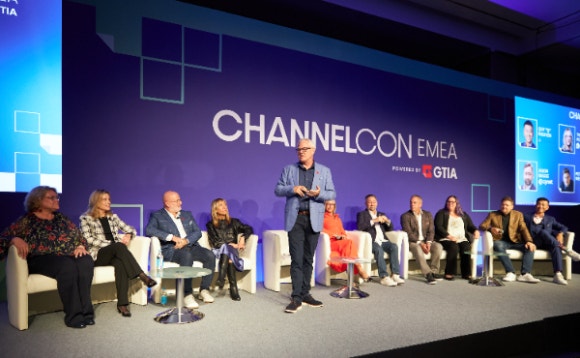
Six months into his tenure as CEO of the Global Technology Industry Association (GTIA), Dan Wensley is setting out to prove that the newly rebranded body can deliver tangible value to the IT channel.
Speaking to CRN at ChannelCon EMEA in London, Wensley (pictured) said his first 165 days in post had been defined by member engagement and by sharpening the association’s remit after its split from CompTIA.
“The biggest learning experience is the incredible desire and passion of our membership; what this organisation has done, can do and will do in the future,” he said.
“Now that we’re singularly focused on the channel, we’re building on CompTIA’s legacy while narrowing our focus to what matters most to our members.”
That focus, he insisted, is growth, of both the organisation and its members.
“Growth strengthens the entire community,” Wensley added. “It’s not just about numbers; it’s about geographic diversity, expertise and even generational diversity.
“We’re thinking about how to engage the ‘Now Generation’ and deliver value for them too.”
He also framed GTIA’s purpose in business terms.
“We’re not-for-profit, but our members are for-profit,” he said.
“We need to have a growth mindset for them, providing not only education and philanthropy, but resources that move their businesses and careers forward.”
That commercial edge runs through much of GTIA’s current activity.
Research led by Carolyn April into AI adoption and shifting business models is intended to turn data into actionable guidance.
“The real member value is in translating research into action,” Wensley said.
“What does AI adoption look like for SMBs? How do IT service providers monetise it? That’s where our members’ collective experience turns data into best practice.”
Internally, GTIA has grouped its work around four pillars: people, resources, community and advancement.
The latter is centred on making discussion and research “actionable”.
Advisory council chairs will now serve three-year rather than two-year terms, a move Wensley said was designed to increase continuity.
“Two years simply wasn’t enough. Year one is learning, year two is impact, and then you’re out,” he said.
“The three-year term gives leaders enough time to deliver meaningful results.”
A significant part of GTIA’s expansion strategy is aimed at smaller IT service providers, which Wensley said remain under-represented.
“They’re still the backbone of the SMB IT services market,” he said.
“They often don’t have the resources to attend paid conferences, but through GTIA membership we can offer those opportunities for free.”
On the question of industry terminology (reseller, VAR, MSP or “managed intelligence provider”) Wensley said GTIA had settled on the more inclusive label of IT service provider.
“The buyers are younger, more tech-savvy and want to consume services differently,” he said.
“Marketplaces and AI are accelerating that evolution, and community is now more vital than ever to keep pace.”
GTIA’s charitable arm has also seen activity rise.
Its endowment fund collected more than £1.2m in the past year, funding youth and technology initiatives worldwide.
“We were overwhelmed by the number of submissions,” Wensley said.
“The endowment allows us to give back in perpetuity, and it’s the members’ participation that drives it.”
The organisation is pursuing growth outside North America too.
Wensley cited the DACH region as a current investment focus and highlighted Jakarta, Indonesia, as an unexpectedly strong market.
“We held a one-day event there with more than 250 channel professionals attending, which actually exceeded our member numbers in that region,” he said.
ChannelCon London, GTIA’s first flagship event in EMEA, also met its capacity limit. “We surpassed our registration targets,” Wensley said.
“We could have accommodated more if we’d had the space.”
Looking ahead, GTIA has set a numerical goal to double the number of IT service providers attending ChannelCon in both North America and EMEA over the next two years.
“We have a mandate to increase value to everybody,” Wensley said.
For Wensley, who has spent three decades in the channel and led multiple vendor and membership organisations, the task now is execution.
The new brand has been introduced, the structure reset and the growth metrics published.
Whether GTIA can maintain that momentum will become clearer as those targets come due in 2026.