100 more datacentres in the UK: Business enabler or sustainability killer? The channel chimes in
Tech leaders weigh in on datacentres’ environmental impact, and whether their importance for the UK development justifies the green risk

100 more datacentres are to be built across the UK over the next five years.
With more sites expected around London, South Wales, and the Northern Powerhouse, the new facilities raise questions about sustainability.
Datacentres currently require huge amounts of water and energy to operate; in Ireland, they already account for a fifth of the country’s electricity consumption.
The UK government, however, is more determined than ever to build them. Last year, datacentres were classified as critical national infrastructure (CNI), placing them on the same level of importance as sectors such as water, health, and energy.
There have also been instances of the government overturning local councils’ rejection of planning permission for datacentres, with deputy prime minister Angela Rayner citing their importance to the country’s infrastructure and the government’s growth plans.
But does this race for technological and economic advantage need to come at the expense of the environment?
CRN spoke with IT leaders from SCC, Agilitas, 3stepIT, and Asanti to understand the impact of these facilities on the climate and what can be done to address the growing issue.
Carmen Ene, CEO, BNP Paribas 3 Step IT

CRN: What solutions exist to limit the ecological impact of datacentres, and are new approaches being developed?
“Datacentre providers are implementing several solutions to mitigate the environmental impact of datacentres, with a specific focus on reducing energy consumption, minimising water usage, and managing electronic waste.
“Energy reduction solutions include deploying more efficient hardware (such as solid-state drives), leveraging software solutions like virtualisation to maximise the use of each server, and improving cooling efficiency by separating hot exhaust air from cold intake air to avoid unnecessary energy waste.
“Many providers are also transitioning away from fossil fuels by utilising renewable energy sources, such as solar power.
“Finally, the more innovative providers are exploring ways to reuse the heat produced by the datacentres, thereby reducing the need to rely on additional power sources.
“Water usage is another significant issue for the sector. Cooling systems use a substantial amount of water, so providers are attempting to redesign workloads to reduce consumption or even transition to dry-cooling methods.
“Many are also developing closed-loop systems that reuse the same water, eliminating the need to draw fresh water, and others have even begun to use ground or rainwater.
“Finally, providers are also striving to be part of a circular economy by reducing the amount of e-waste they generate.
“This can be achieved by extending the life of their hardware through smart software usage and lifecycle management, which includes refurbishment and resale.
“This approach helps recover value and materials while preventing toxic substances from entering landfills.
“To fully understand the ecological impact of datacentres, I believe that it’s also important to examine how they integrate with their surroundings.
“Ideally, the design and architecture of new facilities should harmonise with the natural environment; for example, a datacentre could be built into a hillside or could feature a grass roof.
“These approaches not only lessen the climate, energy, and environmental impacts of new facilities but also foster stronger community acceptance of their development.”
CRN: Given current cooling methods and sustainability technologies, is building 100 new datacentres realistic, or will they be demanding more water and electricity than infrastructure can reasonably provide?
“I can’t say whether the figure of 100 new datacentres is realistic, but what is clear is that the UK’s datacentre industry will need to continue expanding if the country is to remain competitive in the global digital economy.
“At the same time, this growth must be managed responsibly, and it will be imperative to incorporate sustainability considerations into the design, location, operation, and decommissioning of datacentres from the outset.
“Close attention will need to be paid to power availability, grid capacity, and environmental impacts, including water use.
“Striking the right balance between competitiveness and responsible infrastructure planning will be essential moving forward.”
CRN: With datacentres already accounting for one-fifth of Ireland’s total energy demand, how can UK partners prepare for potential cost increases, supply constraints, or sustainability pressures as demand rises?
“Key steps to take will include diversifying energy sources (such as wind, solar, and battery storage), planning to utilise naturally occurring groundwater, and locating datacentres in colder parts of the UK (so they require less energy for cooling).
“Another crucial step could be integrating circularity into the design, operation, and end-of-life processes of datacentres and their server farms from the outset.
“For instance, providers could adopt circular lifecycle management models for the servers, switches, laptops, smartphones, tablets, and other IT equipment they use.
“This approach would ensure that these devices are either repurposed for a second life beyond the datacentre or responsibly recycled when reuse is not possible.
“This would reduce sustainability pressures while also ensuring a quality second-hand market for datacentre equipment.
“Importantly, as I mentioned earlier, regularly reviewing strategies will also be crucial: the pace of change, especially with AI, means that assumptions made today may need to be recalibrated tomorrow.”
Daniel Cartter, Director of innovation, SCC

CRN: What solutions exist to limit the ecological impact of datacentres, and are new approaches being developed?
“As the demand for digital services continues to soar, the datacentre industry is making sustainability a top priority.
“The core focus is on minimising environmental impact by reducing energy and water consumption.
“A key measure of a datacentre's efficiency is its Power Usage Effectiveness (PUE), which aims to get as close to a score of 1.0 as possible.
“To achieve this, companies are turning to a range of solutions, including optimising cooling and power distribution, and adopting 100 per cent renewable energy sources through power purchase agreements.
“Cooling is a major energy user, and the industry is moving away from traditional air cooling.
“Instead, operators are using more efficient water-based and closed-loop systems that recycle water.
“An innovative approach gaining traction is liquid immersion cooling, where servers are submerged in a non-conductive fluid.
“This method is far more efficient than air cooling and supports the high-density computing required for AI.
“Datacentres are also finding new uses for the heat they generate.
“This ‘urban mining’ of heat can be repurposed to warm nearby homes, offices, and greenhouses, creating a circular economy.
“Looking to the future, new approaches are already in development.
“Modular and prefabricated facilities reduce construction waste and can be deployed quickly, while AI for operations uses machine learning to optimise cooling and power loads in real-time, preventing wasted energy.
“As technologies like quantum computing emerge, the industry will continue to innovate to ensure its growth is sustainable.”
CRN: Given current cooling methods and sustainability technologies, is building 100 new datacentres realistic, or will they be demanding more water and electricity than infrastructure can reasonably provide?
“Building 100 new datacentres in the UK is a realistic goal, but it demands careful collaboration between the industry and the government to address concerns about electricity and water supply.
“While there's sufficient power for the nation, the challenge lies in local grid capacity.
“To counter this, many new facilities are being planned for regions with robust grid infrastructure or where new connections are being built.
“Furthermore, modern datacentres are being equipped with on-site power generation and battery storage to reduce their dependence on the main grid during peak hours, which also enhances their overall resilience.
“Water usage has also been a point of contention, but the industry is making significant strides in efficiency.
“According to a recent TechUK report, over half of the datacentres in England use waterless cooling systems.
“For those that do require water, most employ highly efficient, closed-loop systems that continuously recycle water.
“On a per-facility basis, a datacentre's water consumption is often lower than many other industries.
“The key to a sustainable rollout is to build these facilities in areas that are not ‘water-stressed’ and to ensure they use the most efficient cooling technologies available.
“Ultimately, the UK’s ambition to be an AI leader depends on this infrastructure. The focus isn't just on building the centres, but on building them smartly and sustainably.”
CRN: With datacentres already accounting for one fifth of Ireland’s total energy demand, how can UK partners prepare for potential cost increases, supply constraints, or sustainability pressures as demand rises?
“As demand for datacentres rises, particularly with the growth of AI, it will put pressure on energy prices and the national grid.
“To prepare, UK partners can adopt several strategies. First, they can reduce operational costs and energy demands by implementing highly efficient hardware and advanced cooling systems.
“Second, they can secure long-term power purchase agreements (PPAs) for renewable energy, providing both price stability and a pathway to meeting sustainability goals.
“To ensure a reliable supply, strategic site selection is key, favouring locations with robust grid connections and renewable energy potential.
“Investing in distributed energy solutions like on-site solar, battery storage, and even small-scale nuclear power can also reduce reliance on the main grid during peak times and increase overall resilience.
“Finally, to address sustainability pressures, the industry must be transparent, reporting on metrics like PUE and WUE.
“Innovation in technologies like liquid cooling and heat reuse will be crucial to demonstrate a commitment to environmental stewardship.”
Interested in Sustainability? Find out more about CRN's Sustainability in Tech Summit & Awards here.
Stewart Laing, CEO and founder, Asanti Data Centres
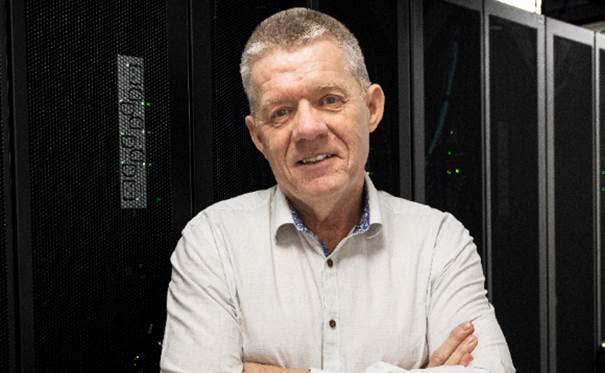
CRN: What solutions exist to limit the ecological impact of datacentres, and are new approaches being developed?
“Modern datacentres are very different to the power-hungry image people often have.
“Closed-loop cooling systems mean facilities don’t continuously draw on water - once the system is filled, the coolant is continually recycled.
“Operators are also constantly improving their PUE, to keep power consumption low and to keep pricing low, relentlessly looking for operational efficiencies.
“The bigger issue isn’t whether the technology exists - it does.
“In fact as a recent article in The Telegraph highlighted “the UK paid around £500m switching off wind farms this year to avoid overloading the creaking power grid”. That’s just in one year!
“Since the scheme started, it is reported to have paid out close to £2bn to halt production of green energy.
“This is because of the decaying state of the National Grid and the lack of available capacity to carry the energy to consumer or store it for future use.
“If we unlocked private wire arrangements to funnel the excess energy to consumers or industries like datacentres, we’d cut carbon, reduce bills and be a more energy stable nation.
“In fact, the idea that datacentres drive up household energy prices is a misconception - they don’t set consumer tariffs. In addition, better access to renewables would actually help stabilise costs over time.
“That’s the opportunity. As an industry, we need cheaper energy to be competitive, right now, we’re losing out to datacentres in countries like Norway because they have much cheaper energy than the UK.”
CRN: Given current cooling methods and sustainability technologies, is building 100 new datacentres realistic, or will they be demanding more water and electricity than infrastructure can reasonably provide?
“We can’t tell whether 100 is realistic or not, but we need to accept that our digital lives need a physical home.
“Every app on your phone, every online transaction, every AI tool is powered by datacentres. They’re not optional.
“The idea that they’ll place unmanageable pressure on water and electricity is misplaced.
“Closed-loop cooling means no constant draw on water.
“And on energy, the UK already has a surplus of renewables that are being wasted because of grid constraints.
“With regulatory reform, we can put that clean energy to use and build the infrastructure we need to help drive the UK economy forward.
CRN: With datacentres already accounting for one fifth of Ireland’s total energy demand, how can UK partners prepare for potential cost increases, supply constraints, or sustainability pressures as demand rises?
“The answer lies in the smarter use of the green energy we already generate.
“Right now, huge amounts of renewable energy are curtailed because the grid can’t handle it.
“If we allowed private wire connections, datacentres could tap directly into power generators, which would lower costs and emissions at the same time.
“We also need investment in storage technology and grid upgrades. If we get those pieces right, demand can be met without driving prices up or compromising sustainability.”
Gary Lomas, CRO, Agilitas

CRN: What solutions exist to limit the ecological impact of datacentres, and are new approaches being developed?
“There are proven technologies such as renewable integration, liquid and immersion cooling, and AI driven energy optimisation that can reduce the environmental footprint of datacentres.
“However, the bigger challenge is that too many operators and partners pursue sustainability in isolation.
“Every organisation has its own goals, but without an aligned approach across the value chain, the impact is limited.
“Collaboration could mean joint investment in renewable capacity, shared standards on lifecycle management and hardware recycling, or coordinated reporting frameworks that allow customers to make meaningful comparisons.
“If the sector works together on common goals, sustainability progress will be much faster and more measurable.”
CRN: Given current cooling methods and sustainability technologies, is building new datacentres realistic, or will they be demanding more water and electricity than infrastructure can reasonably provide?
“The expansion of datacentre capacity is inevitable given the rising demand for AI, cloud, and edge services.
“The challenge lies in balancing this growth with the pressures it places on energy and water infrastructure.
“If facilities continue to rely on legacy cooling and power models, the strain will be significant.
“The growth becomes realistic when it comes hand in hand with innovation through renewable energy, advanced cooling methods, and investment in wider green infrastructure.
“Ultimately, sustainability and expansion must progress together.”
CRN: With datacentres already accounting for one fifth of Ireland’s total energy demand, how can UK partners prepare for potential cost increases, supply constraints, or sustainability pressures as demand rises?
“UK partners need to take a proactive approach.
“This could include planning for rising energy costs, improving efficiency, and managing IT lifecycles more carefully.
“For example, partners can help customers extend the life of existing hardware, reuse or redeploy equipment across sites, and optimise workloads to reduce energy consumption.
“By preparing in this way, partners can mitigate supply constraints, manage costs, and support customer sustainability goals more effectively.”