‘Partnerships are like dancing, it takes two’: Tech firms reflect on Dynatrace Innovate Roadshow
Partners tell CRN about their key takeaways from the event, their relationship with the vendor, and the importance of observability

“Our vision is to deliver a world where software works perfectly,” said Dynatrace CEO Rick McConnell during the company’s Innovate Roadshow in London last week.
During the event, the observability platform developer’s leaders placed the emphasis on the importance of agentic AI.
In addition to the new tech that’s transforming channel relationships, the US-based vendor highlighted how observability, the ability to measure a system’s performance based on data such as logs, metrics, and traces, will play a key role in the future.
CRN spoke with IT leaders who attended the event, such as SCC, Computacenter, DXC Technology, and Visibility Platforms, to gather their insights on the event and their perspectives on working with Dynatrace.
Jean-Phillipe Barleaza, EMEA software GM, Rigby Group - SCC

Have there been any announcements today that surprised you, or anything you were particularly looking forward to that was addressed?
“I had the chance to attend Dynatrace’s global event in Las Vegas and today has mostly been confirmation that they’re continuously innovating and adding new functionality to their solutions.
“Nothing unexpected, just further validation of their progress.”
What’s your relationship with Dynatrace? Are you a long-term partner? And how do you use their technology?
“We’ve been working together for one year now.
“It’s a relatively recent partnership, but one that has already become incredibly strong.
“They’re now among the top seven most strategic vendors for our business.”
“We’re the largest privately owned systems integrator in EMEA, operating across France, the UK, and Spain.
“Although we work with a wide range of vendors, we’ve categorised them based on strategic importance.
“Dynatrace sits right at the top; it’s the foundational technology we use to deliver observability to our customers.
“As soon as a customer identifies a need, we aim to provide consultancy, architecture, manage the transaction, and critically with Dynatrace, ensure the customer can consume the technology and measure its business impact.
“In the end, customers aren’t buying a brand, they’re seeking business outcomes.
“IT environments today are extremely complex, with hybrid infrastructure, modern apps, and microservices, so companies must optimise and drive efficiency.
“That applies across all industries. Dynatrace has proven to be world-class in supporting those outcomes.”
Is there anything Dynatrace could do to further improve the relationship?
“There’s always room for improvement on both sides.
“Partnerships are like dancing; it takes two.
“But I must say, Dynatrace takes partnering seriously.
“Their business model and go-to-market approach are genuinely built around leveraging partners to deliver value to customers.
“Their channel programme is well thought-out and very much fit for purpose.
“Dynatrace expects partners to be highly competent, and we’ve made significant investments over the past year to ensure we’ve got all the required capabilities in-house.
“Now, we feel we’re fully aligned with them in terms of capacity and readiness to drive customer engagements and deliver best-in-class observability solutions.”
Rick McConnell, CEO of Dynatrace, said that now more than ever, observability should be on top of everyone’s agenda. Is it a key focus for you and SCC?
“Absolutely. Vendors and partners can have many opinions, but the real answer comes from the customer.
“Across the three countries we operate in, observability is one of the top use cases nearly every enterprise or upper mid-market company is prioritising.
“Again, it comes back to the complexity of modern IT.
“What’s powerful about Dynatrace is that it provides value across multiple personas within the enterprise, from executives to IT operations, DevOps, and platform engineers.
“That’s key, because enterprises can truly measure their business outcomes.
“With so many companies running a mix of legacy and modern cloud-native applications, it’s critical to have the right tools to monitor and optimise that environment.
“Observability is fast becoming a central priority for organisations that want to realise value and return on investment from their technology estates.”
James Morris, director of cloud and applications, Computacenter
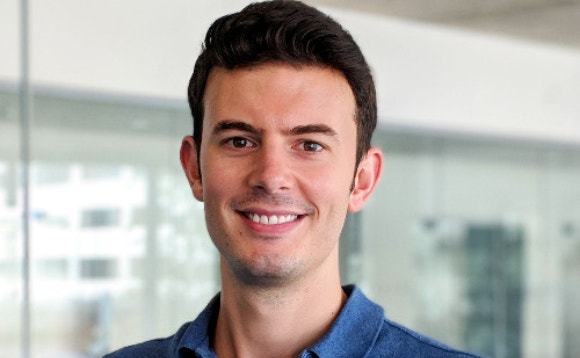
Have there been any announcements today that surprised you, or anything you were particularly looking forward to that was addressed?
“I just arrived, so I’ll catch up with some of my team in more detail.
“If I zoom out a bit, I’d say over the last couple of years, the additional platform development at Dynatrace has been very appealing, both to customers and to us.
“That’s why we’ve doubled down on the partnership recently.
“They’re doing a lot, but a key driver in the enterprise today is the need to harmonise, rationalise, and consolidate a broad range of monitoring, observability, and automation toolsets.
“Dynatrace has done a fantastic job in supporting that journey.
“There are lots of different components to the story, but overall, the continued expansion of the platform is very appealing to enterprises, in our opinion.”
What’s your relationship with Dynatrace? Are you a long-term partner? And how do you use their technology?
“We’re coming into our fourth or fifth year of properly partnering with Dynatrace.
“We’re not just reselling the product, but truly partnering.
“We go into customers together, deliver services together, and lead transformation initiatives together.
“Dynatrace operates in a large observability domain; it touches many parts of the enterprise.
“The work we’re doing with Dynatrace can be grouped into a few buckets.
“First, there’s a strong cost-saving drive in the enterprise.
“Our role often involves going in and reviewing the proliferation of tooling across the organisation.
“Some organisations we work with have 50 or 60 different monitoring tools that have been acquired over the years; siloed, scattered across departments.
“We go in, assess, and help build a vision for consolidating that.
“Dynatrace is a great end-state solution, going from 60 tools to maybe 30.
“That’s feasible. It’s a bit like a diet: you can sign up for it, but you’ve got to live and breathe it to make it work.
“Second, there’s customer experience.
“Observability helps you truly understand the end-user experience.
“In one joint project with a financial services client, the organisation had no real means of understanding what experience new users had when signing up for banking or ISA products.
“After implementing Dynatrace, they saw a 22 per cent drop in customer service queries and complaints.
“That kind of transformation in experience is critical.
“The third bucket is productivity.
“Again, in a financial services example, we found that by adopting Dynatrace, they saved 194,000 hours per year in full-time equivalent time, thanks to eliminating around 330,000 incidents and events that no longer occurred.
“That’s due to enhanced observability, AI operations, and proactive issue resolution.”
“Those are the three big buckets: cost savings, improved productivity, and enhanced customer experience.”
Is there anything Dynatrace could do to further improve the relationship?
“There’s always room for optimisation.
“Where we are now with Dynatrace is a place of mutual understanding; we understand our respective roles and the value we bring together.
“We work well in front of enterprise clients, presenting a shared story.
“The key to a strong partnership is simply to do more of that.
“For example, yesterday we had a session with about 30 people from both sides, talking about how to deliver more value to enterprises.
“More collaboration like that is always good.”
Rick McConnell, CEO of Dynatrace, said that now more than ever, observability should be on top of everyone’s agenda. Is it a key focus for you and Computacenter?
“Absolutely. At Computacenter, we built a business about five years ago centred on developer velocity, empowering developers and engineers to be more productive.
“If you get the builders in your organisation working well, good things happen.
“Observability is core to that: understanding the impact of the software you’re building, how workflows function, and what the end-user is experiencing.
“We’ve put observability at the heart of that journey from day one.
“Dynatrace has been part of that since the start because we saw their value and position in the market.
“Observability is also central to our cloud transformation messaging.
“When moving to the cloud, environments become more dynamic and distributed, and observability becomes even more critical.
“It’s also a core part of our managed and professional services.
“It’s been a key topic for four or five years now and touches everything, such as on-prem, cloud, network, developer experience, platforms like ServiceNow.
“You need eyes and ears across the enterprise.”
Alan Rosser, strategic business group leader, DXC Technology
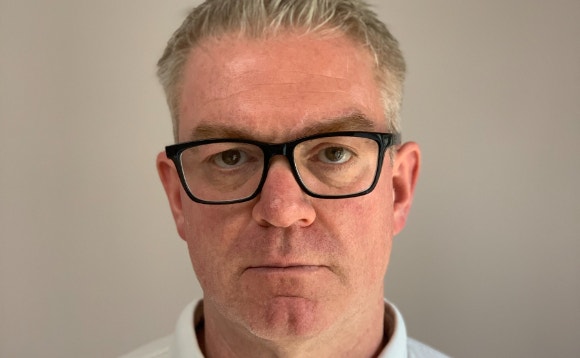
Have there been any announcements today that surprised you, or anything you were particularly looking forward to that was addressed?
“Yes, I was looking forward to hearing directly from customers, such as real-life stories, and then aligning those stories with the core messages coming from the Dynatrace executives.
“Real-life tool consolidation stories stood out, especially the one from Virgin Money.
“They shared how they were put under pressure by other vendors in the market, vendors who, upon learning they were being phased out, responded with aggressive tactics.
“It was really interesting to hear how Virgin Money dealt with that, and how they worked in partnership with Dynatrace to overcome those challenges and ultimately succeed.”
What’s your relationship with Dynatrace? Are you a long-term partner? And how do you use their technology?
“We’ve been a partner for over 15 years.
“More recently, we made a strategic decision to build all of our managed service practices, supporting over 200 customers, in collaboration with both ServiceNow and Dynatrace.
“These services are built on Dynatrace to drive innovation and productivity gains internally, and to deliver incremental value to our customers.
“I believe that gives us one of the largest install bases, if not the largest, of Dynatrace customers within the partner community.
“We also have the largest number of certified engineers globally, and that has allowed us to build a strategic business unit focused entirely on observability through our Dynatrace relationship.
“Building backend managed services has given us a platform to grow into full-stack and business observability, which is where the market is moving.
“That’s why we’ve built a strategic business unit to help us expand from infrastructure-only observability, which was more typical in the past, to full Dynatrace observability.
“Traditionally, tooling has existed in silos.
“Dynatrace enables us to break down those operational and organisational silos, something that hasn’t really been possible with other platforms before.”
Is there anything Dynatrace could do to further improve the relationship?
“One of the biggest challenges customers face is value realisation.
“That’s a core focus for us at DXC; we want our customers to not only adopt tools but to realise quantifiable value from their investments.
“Historically, many tools have sat in silos.
“Organisations would make a business case at the start, buy a tool, and then struggle to extract value over time.
“We, together with Dynatrace, can do more to help customers achieve measurable outcomes.
“Dynatrace is ahead of the rest of the market in this regard, but there’s still room for improvement.
“There are three essential players in this equation: the partner, who brings deep industry insight; Dynatrace, the market leader in observability; and the customer.
“Where I think we can all improve is ensuring that when a customer invests in observability, they understand that organisational change is needed to realise full value.
“It’s not just about replacing a tool, it’s about evolving their operational processes.”
Rick McConnell, CEO of Dynatrace, said that now more than ever, observability should be on top of everyone’s agenda. Is it a key focus for you and DXC?
“I think [McConnell] is absolutely right.
“For a variety of reasons, data and data management have never been more important.
“It’s not just a cost consideration, it’s now crucial to have your data well-organised and orchestrated.
“Observability is the play; there really is no alternative.
“It’s the vehicle for managing and leveraging that data.
“Most organisations are inefficient with their data, but with proper observability, you can transform that data into practical outcomes, like reducing mean time to resolution (MTTR), improving operational performance, and, more recently, aligning visibility with business processes.
“That kind of alignment with C-suite objectives has never been achievable before.
“When data is orchestrated properly and aligned to business goals, it allows partners to do things we couldn’t do before, or things that were historically much more difficult.
“It enables large-scale application modernisation, which can only be done safely and efficiently when you have a robust observability platform.
“Dynatrace provides the data source we need to drive this transformation at scale.
“It also helps with newer concerns like quantum resilience, which is something organisations are starting to worry about.
“With the data from Dynatrace, and our own intellectual property and industry knowledge, we can build real solutions to prepare for that future.
“Having full end-to-end observability allows us to innovate in ways that are both cost-effective and business focused.”
Greg O’Reilly, owner and founder, Visibility Platforms

Have there been any announcements today that surprised you, or anything you were particularly looking forward to that was addressed?
“I work with Dynatrace regularly - daily, almost hourly - so I’m well aware of what’s on the roadmap and what customers are asking for.
“A lot of the language used today, like ‘personas,’ is familiar to me.
“I use it all the time because, to me, observability is about personas.
“It’s about delivering value to the organisation as a whole, not just helping individuals solve isolated issues.
“Everything has been as expected, but it’s been great to see the customer use cases; it reassures me that I’m on the right track because what I heard aligns exactly with what I’m doing for my customers.”
What’s your relationship with Dynatrace? Are you a long-term partner? And how do you use their technology?
“I joined one of the first partner onboarding bootcamps, where I met other partners; some were new like me, others had been around for a while.
“We’ve all felt like part of the same family since.
“The partner network is quite different from what I’ve seen with other vendors.
“If I need help, I get it, any questions I have are answered quickly.
“Although the partnership is only a few years old, it’s been a very positive experience.
“It’s easy to label Dynatrace as just an observability tool, but it’s incredibly versatile.
“It speaks every language, handles every kind of data.
“No matter the vertical, the customer, or the problem, there’s always a way to solve it with Dynatrace.
“Other vendors struggle in some areas, but Dynatrace’s AI and data intelligence are game changers.
“In virtually every POC we’ve run, Dynatrace’s AI engine, Davis, has identified issues we didn’t even know existed.
“It’s like having a team member who always has your back.
“While Davis uncovers root causes, I can focus on business context, thinking not just about what’s happening now, but about the bigger picture.
“I often say, ‘I think about the climate, not the weather.’
“Davis handles the short-term issues so I can plan more strategically, considering how to present insights to different personas and expanding the value of observability.
“It helps teams move away from firefighting and treating symptoms and instead focus on solving root problems.
“That’s what makes the difference.
“It’s not a completely ‘easy’ tool, you still need to plan carefully, but I know the results will be immediate, which allows me to focus on long-term impact.”
Is there anything Dynatrace could do to further improve the relationship?
“Over the past 12 months especially, the engagement has increased.
“We’re now working on more projects together.
“Previously, I’d go out and find customers myself, but now we’re actively collaborating.
“Dynatrace might not always have the bandwidth or the right skillset for certain customer needs, and that’s where I come in.
“I bring technical expertise and experience across vendors, technologies, and industries.
“If a customer needs an immediate evaluation or problem solved, I’m agile enough to jump in.
“I’ve had new customer interactions and successes I wouldn’t have had otherwise, and I’ve learned more about Dynatrace in the process.
“Since I’m vendor-agnostic, I can provide broader insight - not just favouring Dynatrace, but understanding when and how it fits best.
“The proof-of-concepts (POCs) we’ve delivered together have been very successful.”
Rick McConnell, CEO of Dynatrace, said that now more than ever, observability should be on top of everyone’s agenda. Is it a key focus for you and Visibility Platforms?
“Without a doubt. My entire company is built around observability.
“I’m a bit of a veteran in this space; I’ve been helping customers solve problems even before modern monitoring tools existed.
“I’ve seen the evolution from basic monitoring to full observability.
“I also understand how to assess a customer’s maturity level and determine the right starting point in their observability journey.
“Some organisations buy an observability tool but end up just using it for basic monitoring because they don’t have the full coverage or strategy in place.
“As [McConnell] said earlier, it has to be broad and integrated; it’s an investment that needs to be part of an overall strategic approach. Choosing the right tool is key.”