From surgeon to CIO: TD SYNNEX’s Kristie Grinnell on how she landed in tech
Grinnell had dreamt of becoming a surgeon, but after her World War serving grandma questioned whether it was the right choice, she was left wondering where to turn
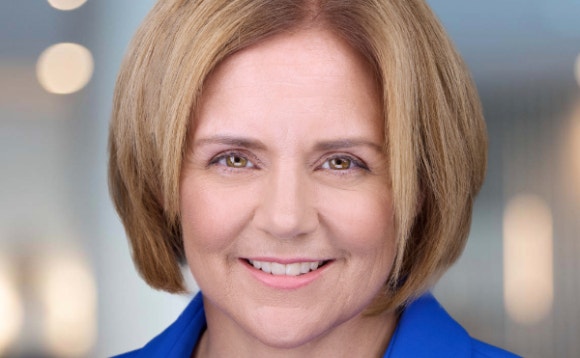
Christmas day isn’t traditionally the time for grandmothers to leave our teenage selves reconsidering our plans for the future, but this was the reality for Kristie Grinnell.
With hopes of becoming a surgeon, Grinnell’s grandma, who had spent time as a nurse in World War Two, sat her down when she was in high school and asked if she was sure of her choice.
“She said, ‘Kristie, I love that you want to be a surgeon, however, I want you to think not just about the skills that you need to get there, because I have no doubt that you will go through the education with flying colours, but I want you to think about when that first patient dies on the table. Do you think you can handle that?’
“It made me think because I have a lot of compassion. I lead from the heart,” Grinnell says.
“I'm so thankful to have my grandma, because I don't think I could have put that on my shoulders.
“So then I thought, ‘Well now what am I going to do?’”
Grinnell recalls how her high school guidance counselor suggested engineering owing to her good grades in maths and science.
“It was broad enough that even if I still wanted to go to medical school, I could. Or it might lead to something else.”
Now executive vice president and chief information officer at global distribution giant TD SYNNEX after being appointed in December, Grinnell shares with CRN the story of her tech career so far.
From General Motors to PwC
“I had an engineering background having graduated with a mechanical engineering degree from University of Pittsburgh.
“I started working at General Motors as my first job out.
“That might sound technical, but I wasn't in the technology group. I was designing machines to go on the production floor.”
The company had a program for new engineers where, following the completion of equipment design, you were required to supervise its first year of production.
This led Grinnell to realise her fondness for working with people more than working behind the screen.
“I thankfully had a mentor who suggested I go back to business school, which I did, and my internship with Price Waterhouse Coopers, which was very much around supply chain, then led into doing management consulting for PwC full time.
“Then a partner, who loved my engineering background and aptitude for technology, approached me and asked me to help them work on frameworks and strategies for this new portal practice.
“And I said, why not? It's a bridge between working with people and using that engineering methodology and critical thinking training that I had, and then the excitement of something new, like technology.”
And the rest Grinnell describes as history, after which she began creating strategies, portals and applications.
“I started out doing business analysis, then testing and PMO, then leading coders and architects and just growing in my career that way. But my love was always in strategy, which is how I ended up being a CIO.”
Prior to TD SYNNEX, Grinnell spent three years as CIO at DXC Technology and two and a half years as global CIO for General Dynamics Information Technology.
Keys to success
Having climbed the ladder to C-suite level, Grinnell attributes her success to three key areas.
“The first one is that I am always learning.
“As a CIO, we are meant to enable a business strategy to drive value in a business.
“We can only do that by that natural curiosity, questioning, why? Questioning, what if? Seeing the opportunity.”
Her second point centres on building relationships.
“At the heart of it, I'm still that people person. So I would have too much compassion for my patient, I want to see other people be successful in building that relationship and trying to ensure that I can get that trusted partner status with those that I work at.
“It really helps me to be the CIO where I'm asking the questions. I'm showing that I'm there for mutual success of the company and the person that I work with.”
Last but not least, Grinnell highlights her engineering background as a valuable trait.
“Third is that having that engineering training and in the background, I see things in a very methodical, analytical, logical way that helps us to get to a good decision.
“As an engineer, you're taught to reverse engineer problems, and I think that's the big benefit I have.
“As a CIO we have this broad perspective across the company. Where sales might see this, and HR might see this, and finance might see this. But I, as the CIO, see it across. So with that critical thinking and having built relationships and understanding the ‘why’, because I ask a lot of questions, I have this perspective, that I know that I can come and add more value across the way.”
Doing more for the community
Grinnell spends her spare time devoted to mentoring, speaking about women in leadership and what more can be done.
She sits on the advisory boards for non-profit foundation STEM for Her and The Cyber Guild, as well as chairing the United Women in Cyber Conference.
“I'm leading a group of ten female CIOs, and we are building a computer lab for women in Guatemala.
“The goal being to empower women, that if we can help the mother in the household to gain new technical skills that she can then use to support her family her sons will be raised to respect women because they're getting food on the table, they have shelter over their heads, and they are able to have clothes and shoes on their feet.
“And their daughters are raised to look up to their mother and say, ‘I want to do that too’”.
Advice on getting into tech
Grinnell acknowledges the hesitation from people put off by the intricate world of tech as a career for themselves, but simply advises them to “look at the land of opportunity of IT.”
“There are so many different facets to IT, it doesn't mean that you have to be this technical geek, nerd, whatever stigma you want to place in it.
“I actually don't know a lot about technology. I could not code for you, I could not draw an enterprise architecture.
“But what I can do is add value through technology for a business.
“There's so much opportunity. It could be creating apps, creating strategies, sales. There's all sorts of roles in technology.
“There are all sorts of roles in technology, so don't underestimate the opportunity that exists here.
“My whole career I’ve heard, ‘Kristie, you're really good with people. Maybe you should go back to business school.’ That's a good idea. I'm going to take that opportunity.
“Or, ‘Kristie I'd love to have you come work on this new eBiz bubble that's growing.’ Sure, I’ll do that.
“‘Kristie, I would love to have you come and help us lead this global IT transformation at PwC.’ Okay, I'll give it a try.
“Not knowing if I could do it or not, but it's a land of opportunity that landed in my lap. Now all of a sudden, I am the CIO of TD SYNNEX.
“That's it's because I took all those little opportunities that landed in my lap.”