‘There won’t be a single dollar of GDP that’s not influenced by GenAI’: Gartner talks 2025 IT spending rise
John-David Lovelock reflects on the impact of GenAI, uncertainty pause, and digital sovereignty
Worldwide IT spending is expected to total $5.43tn (£4.05tn) in 2025, an increase of 7.9 per cent from 2024, according to analyst firm Gartner.
Datacentre systems are forecasted to see the most growth this year, with a 42.4 per cent increase anticipated across 2025, totalling $474.88bn.
This surge in datacentre systems spending is driven by GenAI, with spending on GenAI servers predicted to triple that of non-GenAI servers by 2027.
Software comes second, with 10.5 per cent growth across the year ($1.23tn).
It is then followed by devices (5.4 per cent, $759.61bn), IT services (4.4 per cent, $1.69tn), and communications services (2.1 per cent, $1.28tn).
But an “uncertainty pause” has hit early in the second quarter of 2025, which encompasses a strategic suspension of net-new spending across various sectors, including IT.
This pause is driven by economic uncertainty and geopolitical risks, which has led the global corporate sector exercising increased caution, as organisations try to mitigate adverse impacts from global challenges.
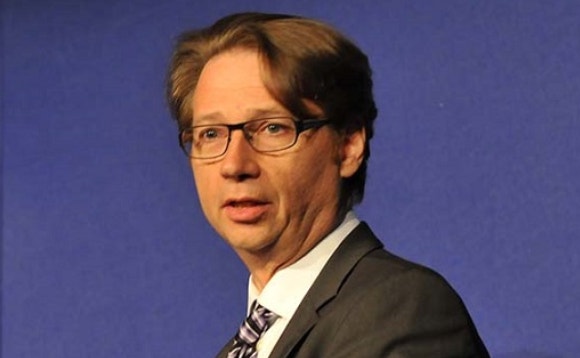
Gartner’s VP analyst John-David Lovelock explains to CRN that the consumer space is staying more resilient than originally thought.
Downturn and uncertainty pause
“There is a downturn, but blaming it solely on macroeconomic conditions isn’t quite right; GDP, unemployment, and interest rates are all fine,” he explains.
He instead attributes the problem to US policy changes.
“They are happening so quickly and unpredictably that the world has taken a strategic pause.
“Companies aren’t doing anything new right now; no new countries, no new factories, no new IT projects.
“Budgets aren’t being cut, this isn’t a slash-and-burn situation, it’s a strategic pause.
“The world becomes more uncertain, and the reaction is to pause, which is reasonable.
“It’s like walking down the street and something unexpected happens: you stop, then figure out where to go.”
Lovelock doesn’t see this break having a long-lasting impact.
In Gartner’s most likely scenario, the firm estimates the tariff situation to be stable enough for businesses to make decisions by Q4.
“The pause comes from a spike in uncertainty.
“If this becomes the new normal, people will adjust and move on.”
He also explains that without the push from GenAI, the forecast would have been much lower.
“By 2030, there won’t be a single dollar of GDP created anywhere in the world that’s not influenced by GenAI.”
On the other hand, the analyst sees a bump in 2026 for areas such as managed services, consulting, cloud, SaaS, PaaS, and IaaS.
Forecast and sovereignty
Gartner’s IT spending analysis, which relied on the analysis of the sales by over a thousand vendors across the entire range of IT products and services, revealed that only around two per cent of companies project to improve, explains Lovelock.
While countries like France were forecasting negative IT spend by three per cent in 2025, the US expects two to three per cent growth, and Germany around four per cent.
The UK came out on top, with IT spending projected to rise by seven per cent.
“Most of those drops weren’t due to poor performance, but because they didn’t grow as fast as the early GenAI winners,” says Lovelock.
“The key winners are Micron, Nvidia, Supermicro, Huawei, Samsung, Microsoft, Amazon, and Google.
“Apple stayed number one in revenue but had very low growth.
“If Apple continues lagging in GenAI, and others like Meta, Microsoft, and Alibaba keep surging, it could lose that number one spot in a few years.”
But for US vendors, the fall of the US dollar “is a bigger threat than anything else,” he adds.
“If you’re a US company, the euros you earn this year convert into fewer dollars.
“That’s a direct revenue hit. That affects Microsoft, Oracle, AWS, etc.”
While some tech companies aim to prioritise European technologies to avoid the impact of tariffs and other global macroeconomic, the analyst explains there is too much foundational US tech.
“There is no getting rid of Windows, Chrome, or core internet infrastructure.
“Intent is there, but full independence is a fantasy.
“You may wish to buy European, say you’re buying European, but you’re unlikely to accept a worse product at a higher price that no one will see or care about.”