AI skills gold rush: How channel partners are rethinking recruitment
AI skills are the new currency in tech, but are channel partners buying in? CRN speaks to nine leaders to find out if the AI boom is forcing them to rewrite their recruitment playbooks
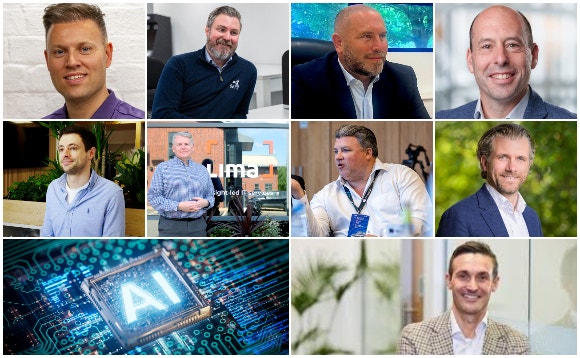
Talk of AI skills shortages are everywhere, but for many channel firms, the real question is whether they need AI talent at all, or just a workforce that can adapt to it.
Krome Technologies director Rupert Mills recently told CRN the AI revolution has brought about a new set of challenges on the people front.
AI’s need for cybersecurity means greater demand for AI and cyber skills.
“Resourcing around AI is going to be a point,” Mills stated.
This posed the question of whether AI is starting to shape channel partner hiring strategies.
“I think it will do, without a doubt,” Mills said.
“As people integrate AI into their day-to-day, it's going to change from having someone who understands how to use AI to improve efficiency to employing someone who understands you can't just rely on AI.”
Last year CRN asked Bytes, Computacenter and Logicalis if they were upskilling internally or hiring outside the business to gear up for generative AI demand.
The three leaders agreed that internal upskilling was the answer.
But following Mills’ comment, hiring for AI skills has once again leapt into the conversation.
Is the AI revolution in the channel partner workforce already happening or is it still on the horizon?
CRN reached out to nine channel orgs to hear whether or not AI is influencing their recruitment approach.

Jack Watson, MD, Bytes
Is the demand for AI skills influencing or changing your recruitment strategy?
Yes, we're pushing the central theme of the AI-powered seller. How does AI play a crucial role in developing skills, real-time coaching, advanced personalisation of prospecting and insight selling that is all driven to delivering the AI advantage to clients? This goes way beyond the use of our researcher agents for preparing for success ahead of all client engagements or summarising meetings.
We are in the advantageous position of exploring reasoning across more than £2bn software spend, half a billion of cloud consumption and the digital marketplace procurement overlap to accelerate solutions for customers.
Internally, adopting an AI-first strategy can optimise our operation, increase the velocity of helping customers realise the best solution or service outcome faster, better, more consistently. Mindset is at the core of every action we take at Bytes and recruiting for that is do or die.
If so, what roles within your company require AI skills the most, and why?
Sales. Customers are at the forefront of our work. Client expectations have grown exponentially and our ability to meet any customer where they are in their journey means sales adoption and versatility is vital.
Whether it’s the importance of social selling, translating technology insights or the co-ordination of our value proposition and cast of experts employed to deliver outcomes. It’s all vital to our continued success. Delivering innovation that matters rests heaviest on this team first and foremost.
What are the biggest challenges you face in hiring for AI skills - talent shortages, salary expectations, or lack of standardised qualifications?
I think there is no doubt that demand outsizes supply and that will be a battleground for talent now and for years to come. A more transient workforce is inevitable which will make retention very difficult.
With regards to hiring AI skills the demand is high and establishing strong partnership offers opportunity to utilise the limited skills in the market today. Good Copilot skills to expand the hyper growth of Microsoft AI in line with customer demand is challenging in itself.
Everyone has access to the world's best coaches in their pocket so really I think it’s a case of hiring for mindset and people who love to learn. You really can grow great people to deliver amazing things and that can go some way to addressing the skills shortage.
In 12–24 months, which AI-related roles will be most critical in the channel?
I think this is a tough one to predict. If you can quickly build the right data platform and leverage the unique data your organisation has access to you can be the founder in the AI-foundry of a killer “Agent boss”. That would be an ace in the pack.
There are 170 account managers at Bytes today who I believe can optimise the software spend of every customer in the UK no matter who their incumbent VAR may be. These are incredibly talented people.
Could we create a role that brings the power and promise of AI to every customer at scale through all these AI-powered sellers? Yes. The architect of that would revolutionise what it means to bring breadth depth of decades of expertise to customers and be agile enough to navigate the quantum computing and cryptography that comes next.
Are vendors and distributors pushing AI training/accreditation onto partners, and is that also shaping your hiring strategy?
The Microsoft AI literacy initiatives are beginning to land. I think SaaS vendor enablement is also beginning to introduce these concepts in a more programmatic way which is understandable given every SaaS company is seemingly an AI company these days.
The majority of cyber & resilience vendors have AI at the core of their solutions so aligning with them is advantageous. If hiring managers at Bytes, me included, keep hiring people smarter than us with a mental resilience and desire to learn then we are in a good spot.
If AI is not currently affecting your hiring strategy, do you see this happening in the future?
It is not yet a core component of every hire but I expect it soon will be. If a dinosaur like me can have six AIs on my phone in a bid to strap a jetpack on my output day-to-day then I expect digital natives to come with AI experience.
Not necessarily in our industry but in their thinking and utilisation of AI is an important lead indicator. ‘Tell me about a time you used AI to overcome a challenge in your life or rebound?’ We’re interested in learning how GPTs are improving personal development and performance but also assessing the resilience of how people cope with modern day pressures in the digital world.
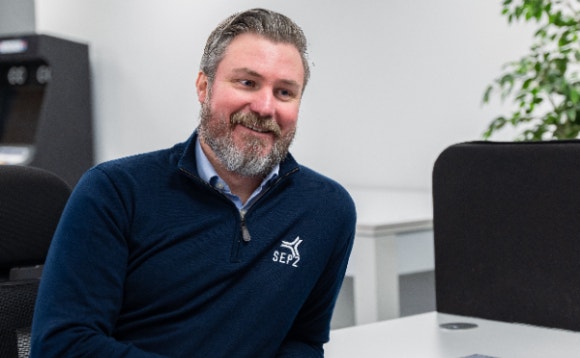
Paul Starr, co-founder and CEO, SEP2
Is the demand for AI skills influencing or changing your recruitment strategy?
I can confirm that while we haven't fundamentally changed our recruitment strategy to specifically hunt for AI skills, the demand for AI awareness and exposure is absolutely influencing the way we assess talent. It's becoming a talking point in interviews, and we're looking for how candidates are using and engaging with AI to enhance their work.
The integration of AI isn't just a discussion for our technical teams; it's affecting our entire workforce. We're developing our current employees across all departments to leverage AI tools and making sure that the business strategy and approval of these tools do not slow innovation or adaptation within SEP2.
The goal isn't to replace jobs but to augment human capability and free up our people to focus on higher-value, strategic work that requires critical thinking, creativity, and relationship-building.
Are you prioritising technical AI expertise, or AI literacy across non-technical teams (sales, pre-sales, marketing, consulting)?
We are investing in our people to become more comfortable with using AI tools and technologies as we are developing in-house AI tooling.
Our focus on developing an Agentic SOC is where this conversation becomes most relevant. The traditional SOC model, which relies on analysts manually sifting through thousands of alerts, is no longer sustainable and it hasn't been for a long time.
We are developing a new model that utilises AI agents to support our analysts. This will lead to time savings in threat triage and analysis, and ultimately faster remediation. As a result, analysts can dedicate more time to complex investigations and strategic defense planning.
In this context, we aren't necessarily looking for ‘AI specialists’ in every role. Instead, we're seeking curiosity, adaptability, and a proactive mindset.
What are the biggest challenges you face in hiring for AI skills - talent shortages, salary expectations, or lack of standardised qualifications?
It is fair to say, the answer is that all three - talent shortages, salary expectations, and a lack of standardised qualifications are significant challenges even before the introduction of AI and therefore can only be amplified by its introduction.
This is also impacted by the uncertainty amongst the sheer volume of investment and M&A activity in the AI space, particularly in cybersecurity. The challenge for a business like ours is to navigate this without making a bad bet. It's not enough to simply invest in AI: we have to be strategic about the companies we align with.
We are focused on solutions that solve our clients' most pressing security problems today while also being flexible enough to evolve as the market matures and inevitable corrections occur.
In 12–24 months, which AI-related roles will be most critical in the channel?
I think a number of AI-related roles are going to be important to the channel. At SEP2 we are significantly investing in our Agentic SOC and recognise the critical importance of human-AI collaboration.
Rather than rendering roles obsolete, we believe AI will transform and enhance them. AI will not replace analysts, architects, or governance and compliance leaders. Our focus is not on automating away jobs, but on cultivating a new workforce capable of leveraging both human and artificial intelligence to achieve unprecedented levels of security.
Are vendors and distributors pushing AI training/accreditation onto partners, and is that also shaping your hiring strategy?
As a strategic partner of Google, SEP2 benefits from comprehensive support, including excellent training and enablement in AI utilisation and innovation. Google provides extensive training on using and building in AI.
If AI is not currently affecting your hiring strategy, do you see this happening in the future?
This is already happening, and we are focusing on how we can benefit from this. Futureproofing our business in order to deliver the highest level of security to our customers has always been the priority for the leadership team at SEP2.
We're already seeing the impact of AI in all parts of our business, but we're seeing the value it's adding to our capability and outcomes as an organisation. We may see changes to how our team roles relate to the outcomes that are now being AI-supercharged, but we see AI and our team working hand in hand.
‘Human in the loop’ is a phrase we hear a lot, but it really resonates with the way we are adopting our Agentic AI powered SOC, and so with that in mind, we're still recruiting for the right people in both service delivery and sales roles as we continue to grow.

Jay Ball, CEO, Flotek
Is the demand for AI skills influencing or changing your recruitment strategy?
From a cybersecurity point of view, we outsource our SOC, and so Huntress handles all the initial detection and response when it comes to protecting our customers with AI-driven threat detection.
But AI is definitely shaping the tools we use. We’re currently trialing a new email security platform that doesn’t rely on traditional gateways. Instead, it's API driven and uses AI to learn from the user behaviour and spot threats in real time that we see Microsoft missing.
So while we’re not recruiting AI specialists ourselves, we’re making sure the tech we use is smart enough to stay ahead of the curve due to the increase of phishing becoming harder to spot.
From a general day-to-day element, our partners are looking for more AI support with tools like Copilot and creating internal AI bots, and so the demand is growing and we're certainly considering hiring a specialist AI dedicated engineer or working with trusted partners.
If so, what roles within your company require AI skills the most, and why?
There is a need for all techies to understand the power of AI, and how it can support them day-to-day - however with it changing so quickly I feel a specialist is needed across most MSP's who have a real interest in this.
Are you prioritising technical AI expertise, or AI literacy across non-technical teams (sales, pre-sales, marketing, consulting)?
As it's such a new field, we're not seeing engineers coming to us with this expertise already and so internal training is how we are managing the demand right now.
What are the biggest challenges you face in hiring for AI skills - talent shortages, salary expectations, or lack of standardised qualifications?
Although we haven't gone to market for an AI specialist right now - I feel as it's such a shortage and high demand in this area the salaries will outweigh the cost benefit to the customer unless we can internally train our people.
In 12–24 months, which AI-related roles will be most critical in the channel?
Developers I feel will be the ones who add most value to our customers, as they need to be able to understand the process that could be automated quicker with AI, so although the general consensus is that entry developers are less needed due to AI being able to write code faster, I feel these same developers could gain demand if they embrace AI fully and focus on the output.
Are vendors and distributors pushing AI training/accreditation onto partners, and is that also shaping your hiring strategy?
We're not seeing anything of the level needed right now other than basic understanding of AI and I feel this is a weakness in the channel completely.
If AI is not currently affecting your hiring strategy, do you see this happening in the future?
Absolutely, RPA engineers have been in high demand for the last few years and if we can add AI into this mix - we will enter a new wave of demand.

Stephen Richardson, CEO, Digital Origin
Is the demand for AI skills influencing or changing your recruitment strategy?
Not yet, but we can see the requirement coming. The nature of tasks across the business is changing, and that’s where the shift will start. As AI begins to influence how our teams deliver and support, we’ll inevitably need a slightly different skill set. It’s less about hiring new people right now and more about preparing our existing workforce for what’s ahead.
If so, what roles within your company require AI skills the most, and why?
At present, most of our AI capability sits within our internal development team. They’re focused on integrating AI into our systems and workflows, from automation in ticket management to smarter reporting and data correlation.
The next stage for us is using that internal experience to coach clients: helping them understand and apply AI safely and productively within their own businesses. A big part of our mission is to demystify AI and remove the perceived barriers that stop organisations from engaging with it.
Are you prioritising technical AI expertise, or AI literacy across non-technical teams (sales, pre-sales, marketing, consulting)?
We’re not prioritising either, just yet. Our approach is to build our understanding from within. Retrofitting AI skills can be complex and disruptive, so we’re choosing to ‘drink our own champagne’ learning and adapting with our existing team now. By doing that, we can show clients what’s achievable using their existing people, rather than suggesting a wholesale replacement is needed. It’s a more credible and inclusive way to evolve.
What are the biggest challenges you face in hiring for AI skills - talent shortages, salary expectations, or lack of standardised qualifications?
The main challenge is the lack of a standard qualification. There are so many ideas, models, and training routes available that it’s easy to get lost down rabbit holes. The difficulty lies in identifying what’s right for our business, balancing innovation with operational stability.
As an MSP, we can’t afford to experiment in ways that distract from servicing our clients’ infrastructure. AI needs to enhance our delivery, not replace it. We’re very conscious that adopting AI for the sake of appearances could devalue our proposition. Our goal is to prove and demonstrate how it genuinely makes us a better, more capable partner for our clients’ technical journey.
In 12–24 months, which AI-related roles will be most critical in the channel?
The AI security analyst will be the single most critical role. As AI tools become more accessible, the need to monitor, control, and secure them will grow massively. Following closely behind will be AI architects and adoption specialists, who can design and implement plans that move the industry from basic AI users and license sellers to true AI-driven revenue generators. Those roles will define the next evolution of the channel.
Are vendors and distributors pushing AI training/accreditation onto partners, and is that also shaping your hiring strategy?
It’s starting to appear in partner frameworks, but no it is not dictating hires. Over time, these programmes will shape how we benchmark internal capability, but right now our focus remains on building practical experience first.
If AI is not currently affecting your hiring strategy, do you see this happening in the future?
I do see this, yes, over the next two years AI will start influencing every job description. Not necessarily through new titles, but through new expectations. Whether it’s an engineer, a service manager, or a marketing lead, AI fluency will be part of their toolkit. We’re positioning Digital Origin to evolve naturally into that world, ensuring our team and our clients grow into and with AI rather than feel replaced by it.
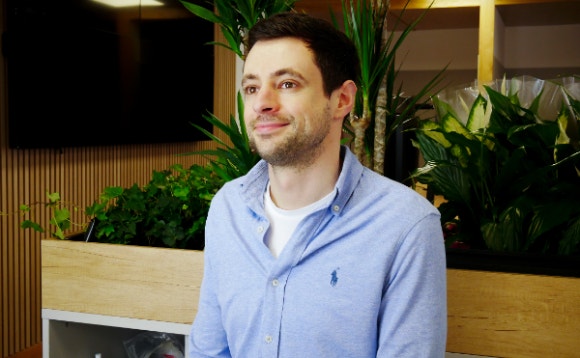
Tristan Shortland, chief technology officer, Infinity Group
Is the demand for AI skills influencing or changing your recruitment strategy?
Absolutely. While we’re actively seeking candidates with AI expertise (particularly in areas like cybersecurity and data), we’re equally focused on upskilling our existing teams.
AI is as much a mindset shift as a technical skillset. We’ve invested in internal training programs to help our people understand and apply AI tools in their day-to-day work. This dual approach ensures we stay agile and get the resources we need now, while also retaining and empowering our current talent.
What roles within your company require AI skills the most, and why?
AI skills are becoming essential across nearly every role. Of course, our technical teams – such as those working in cybersecurity, infrastructure and solution architecture - need deep AI expertise to help clients build secure, scalable AI roadmaps.
But we’re also seeing strong demand for AI literacy in non-technical roles. Marketing, sales, and consulting teams benefit hugely from AI tools that drive efficiency, automate tasks and generate insights. This makes AI a horizontal capability that enhances productivity and decision-making across the board.
Are you prioritising technical AI expertise, or AI literacy across non-technical teams?
It’s a blend of both. For technical roles, we need people who can build, deploy and secure AI solutions. But equally, we’re prioritising AI literacy across our wider teams. Sales, pre-sales, marketing and consulting staff are using AI to streamline workflows, personalise client engagement and improve campaign performance. We want everyone to be confident using AI tools like Copilot, not just our engineers. That’s why we’re embedding AI training into onboarding and ongoing development across the business.
What are the biggest challenges you face in hiring for AI skills?
The biggest challenge is the talent shortage. AI specialists are in high demand, and salary expectations have risen sharply. That creates pressure, especially for mid-sized organisations trying to compete with tech giants.
To address this, we’re investing heavily in internal development, identifying high-potential staff and giving them the tools to grow into AI-focused roles. We also look for adaptable thinkers rather than just technical credentials. AI is evolving fast, so curiosity and a willingness to learn are critical.
In 12–24 months, which AI-related roles will be most critical in the channel?
We expect roles focused on AI integration and governance to be key. AI solution architects, prompt engineers and cybersecurity specialists with AI fluency will be in high demand. As clients move from experimentation to deployment, they’ll need partners who can guide them through responsible AI adoption, securely and compliantly.
Additionally, roles that bridge business and technical teams - like AI consultants and pre-sales engineers - will be critical in helping clients translate AI potential into real world outcomes.
Are vendors and distributors pushing AI training/accreditation onto partners, and is that shaping your hiring strategy?
Yes, and it’s a positive shift. Vendors like Microsoft are leading the way with initiatives like Copilot Advanced Specialisation, which we worked to achieve earlier this month. These accreditations help us stay aligned with best practices and give our teams the confidence to deliver AI solutions responsibly.

Paul Hanagan, CTO, Conscia UK
Is the demand for AI skills influencing or changing your recruitment strategy?
AI is making it easier to develop and upskill the existing workforce, helping them become more productive and successful in their roles. Empowering people in this way means that there is less pressure on the recruitment process.
If so, what roles within your company require AI skills the most, and why?
Our development team is at the bleeding edge of AI, creating bespoke AI services for clients. So as AI continues to evolve at a rapid pace, our developers are advancing their technical skills equally as quickly.
As these AI services roll out, we’ll start to see other areas of the business increase their exposure to, and use of, the technology but without the need for a specific technical skillset.
Are you prioritising technical AI expertise, or AI literacy across non-technical teams (sales, pre-sales, marketing, consulting)?
Absolutely. While the development team is at the forefront of AI, the technology will roll out by osmosis to areas such as sales, pre-sales and support. These non-technical teams won’t need to know how the technology works, but instead will start picking it up by default to address specific problems or support their day-to-day activities.
What are the biggest challenges you face in hiring for AI skills - talent shortages, salary expectations, or lack of standardised qualifications?
The biggest challenge is retaining good AI talent. It’s important therefore to establish a strong company culture that nurtures talent and allows people to develop and perform to the best of their ability in roles that are fulfilling and rewarding.
In 12–24 months, which AI-related roles will be most critical in the channel?
Roles relating to security will become increasingly critical as the risk posed by AI grows. More organisations are turning to AI, but so too are the number of bad players getting involved.
Organisations therefore need to have the necessary guardrails and processes in place not just to protect its own data to avoid, for example a GDPR compliance breach, but also protect the company from exposure to fake tools, information or malicious activity.
Are vendors and distributors pushing AI training/accreditation onto partners, and is that also shaping your hiring strategy?
Yes and no! Some vendors are offering training courses and accreditation from a technical perspective while others, jumping on the hype, are ‘AI-washing’ and only getting involved at a service level which isn’t particularly useful.
As AI becomes more embedded in vendors’ tools, it will become easier to use and more ubiquitous, reducing the need to recruit AI specialists.
If AI is not currently affecting your hiring strategy, do you see this happening in the future?
It will do but in what shape or form, we need to wait and see.

James Clark, CEO, Apogee
Is the demand for AI skills influencing or changing your recruitment strategy?
While Apogee has not yet formalised a directive to recruit specifically for AI capabilities, we are closely monitoring the evolving landscape. AI is rapidly reshaping the expectations of our clients and partners, and we anticipate that our hiring strategy will adapt accordingly. We’re laying the groundwork to ensure we can pivot swiftly when the time is right. This includes hiring for capabilities we know will benefit individuals as Apogee moves into AI (understanding of data/code etc).
If so, what roles within your company require AI skills the most, and why?
As we’re still in the early stages of our AI journey, we haven’t yet defined specific roles requiring AI expertise. However, the use of AI to maximise output is already running throughout Apogee, with CoPilot being a cornerstone of this.
We foresee future demand only growing across data analytics for actionable insights; sales & marketing for tailored outreach and account management at scale; and customer experience optimisation for swifter support to our clients when they need us most. We believe these are core areas where AI can deliver measurable impact, competitive advantage and be a key enabler to our business strategy.
Are you prioritising technical AI expertise, or AI literacy across non-technical teams (sales, pre-sales, marketing, consulting)?
Currently, AI literacy is not a formal requirement in our recruitment process. That said, we recognise the growing importance of AI being embedded in the systems, tools and platforms we use, as well as the day-to-day activities of many of our non-technical teams in order to deliver a seamless customer experience.
We do expect to prioritise both technical proficiency and broader AI fluency across commercial and operational teams. Right now we have kicked off a major program in sales to use the capabilities of LLM’s to help identify the unmet needs of our customers and find better ways of sharing our solutions.
What are the biggest challenges you face in hiring for AI skills—talent shortages, salary expectations, or lack of standardised qualifications?
We haven’t yet recruited for AI-specific roles, but we have hired consultants to help with some projects – this means we are learning these challenges at the moment. However, we’re aware of the broader market dynamics, particularly the scarcity of experienced talent and the variability in qualifications.
In 12–24 months, which AI-related roles will be most critical in the channel?
To prepare for the future, we’ve launched an internal AI Ambassador Programme across all functions of the Apogee business. This initiative is helping us identify strategic opportunities, skill gaps, and productivity gains. We anticipate that roles focused on processing information for strategic insight and output, as well as customer experience optimisation to be increasingly vital across the channel.
Are vendors and distributors pushing AI training/accreditation onto partners, and is that also shaping your hiring strategy?
At present, we’re not seeing significant pressure from vendors or distributors to adopt AI training or accreditation. However, we expect this to change as AI capabilities become more central to product offerings and partner enablement strategies.
If AI is not currently affecting your hiring strategy, do you see this happening in the future?
Absolutely. We expect AI to become a key driver of transformation across our business. Over the next 12–24 months, we anticipate a marked shift in our hiring priorities, with AI-related competencies playing a much more prominent role in how we build our teams.

Ben Smoker, CEO, Sota
Is the demand for AI skills influencing or changing your recruitment strategy?
We are evolving our recruitment strategy to emphasise governance and platform readiness, ensuring we can scale both generative and agentic AI safely both internally and in client-facing engagements. Rather than broad headcount growth, our focus is on targeted capability building in areas that unlock responsible AI adoption.
If so, what roles within your company require AI skills the most, and why?
AI governance & data compliance (lead-level expertise): Critical for embedding responsible AI within our information security management system (ISMS), translating policy into operational controls (e.g., classification, retention, data loss prevention), and proactively managing the risks of generative and agentic AI.
Information architecture and data governance platform specialist (hands-on expertise): Key to designing the architecture of M365 environments and solutions, and implementing compliance and classification frameworks that underpin AI accuracy, security, and regulatory assurance.
Are you prioritising technical AI expertise, or AI literacy across non-technical teams?
Both, delivered in sequence. Our first priority is securing the technical foundations: governance, compliance tooling, and robust information architecture.
Alongside this, we are introducing structured AI literacy and use-case enablement for sales, pre-sales, and consulting teams, ensuring they can articulate value confidently without requiring deep engineering expertise.
What are the biggest challenges you face in hiring for AI skills?
Limited supply of Microsoft 365 professionals who combine compliance tooling, information architecture, and governance expertise.
High salary expectations for these rare hybrid profiles.
Immature and inconsistent certification pathways for responsible AI and Copilot-related skills, making capability benchmarking more complex.
In 12–24 months, which AI-related roles will be most critical in the channel?
AI governance & compliance specialists – as regulatory requirements tighten.
AI solutions architects – designing generative/agentic AI solutions across M365 and line-of-business applications.
MLOps/AI platform engineers – enabling safe deployment through retrieval, evaluations, and telemetry.
AI-focused customer success managers – driving adoption, ROI, renewals, and expansion.
Are vendors and distributors pushing AI training/accreditation onto partners, and is that also shaping your hiring strategy?
Yes, particularly Microsoft, in shaping Copilot readiness and governance standards. We are capitalising on vendor-led enablement to upskill existing staff, while using selective recruitment to address skills gaps that cannot be closed quickly through training alone.
If AI is not currently affecting your hiring strategy, do you see this happening in the future?
It already is, though carefully managed. Over the next 12–24 months, we expect AI capabilities to become a fundamental requirement across both technical and non-technical roles.
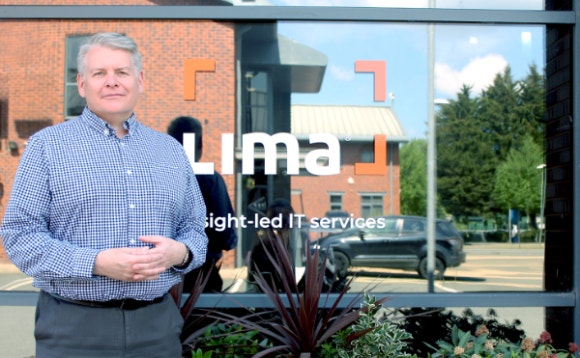
Danny Masters, CEO, LIMA
How is AI impacting your hiring strategy?
We’re tending to recruit people that are happy to embrace AI and are prepared to be proactive in how they use it to remove repetitive tasks and become more efficient.
AI has put a new lens on the hiring process. People fall into two camps: those who see AI as something they can embrace to learn and improve, and those who see it as a threat and want to steer away from it. We want more of the first group.
We want our people to free up their time wherever possible to focus on the bigger opportunities and challenges we have in the business.
We already have a lot of the skills in place around managing the data and platforms that underpin AI, and so it's a natural evolution for us.
It’s part of our culture that people in LIMA are always striving to learn, grow and see what's happening in the market. We're naturally inquisitive and it helps that we’re in the technology sector.
We are looking at some specific roles at the moment to look at our processes and our workflows and where AI can support us.
Are vendors and distributors pushing AI training accreditation onto partners?
We’re starting to see the likes of ConnectWise and LogicMonitor training our team on how to make the most of the AI functionality in their systems. Helping us embrace their technology.
So we’re seeing it happen, but right now it’s more around the use of vendor solutions in house, rather than specific AI accreditations or certifications from partners as we see in other technology areas like cloud or security.