‘I’d like to grow through acquisitions’: Itcom Services founder and CEO
Jean-Benoît Carsin talks buyout drive, green IT, and recovering from lost clients
Marseille shines by its high deeds, as its coat of arms proclaims.
The city seeks to keep its light alive, thanks to the people who sustain its place as a beacon on the northern edge of the Mediterranean.
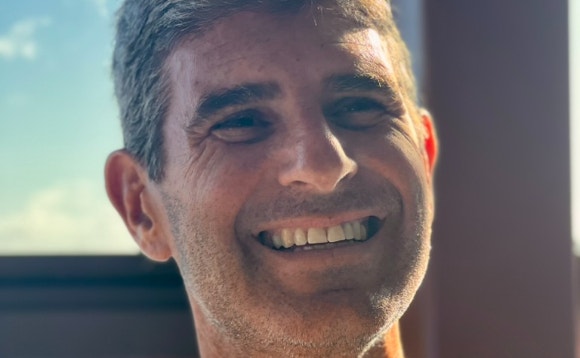
One of these people is Jean-Benoît Carsin, the founder and CEO of Itcom Services.
The MSP, launched in 2011, is now worth €2m, serves about 100 clients, and is heading toward ten per cent growth this year, Carsin tells CRN.
To fuel its evolution, the organisation partners with cybersecurity vendors such as Malwarebytes, Datto and Autotask (now part of Kaseya), Acronis, usecure.
It also works with cloud-managed IT vendor Cisco Meraki.
“We’re also beginning to deploy Cisco ISE for endpoint control, as well as Cisco Umbrella.”
Other partnering vendors include Mailinblack, Microsoft, 3CX, Dell, and Keeper.
In terms of distributors, it collaborates with firms in the likes of BeMSP, TD SYNNEX, Hermitage, and ALSO.
While the company is now on an upward path, it has experienced setbacks in the past, according to Carsin.
In 2023, it had already reached €2m in revenue but lost a client that represented around 40 per cent of its revenue, after the latter grew to 500 employees and built its own IT department.
This event drastically reduced Itcom’s earnings and forced Carsin to part ways with eight employees.
In 2024, the MSP grew 40 per cent, making up for the previous year’s decline, and is now back on a double-digit evolution.
Buyouts focused on proximity
Beyond organic growth, the company also intends to expand through M&A moves.
“I’d like to grow through acquisitions, ideally finding a company already on Kaseya Autotask,” says Carsin.
The buyout drive also lies in the potential to increase proximity with its clients.
“Acquiring a company in Lyon, Paris, or Lille could give me local presence.”
International footprint and Mediterranean focus
The company serves SMEs who have between ten to 100 staff, in industries with “strong IT needs” such as “engineering and architectural firms.
“We’re primarily SME-focused, but operate nationally as well as in Europe - Spain, Italy, Portugal - mostly remotely, supported by partners like Tibco for occasional onsite needs.”
The company is also involved abroad through French clients with an international presence, who operate in countries such as South Africa, Chile, and the US.
Even though it has a national and international presence through some of its clients, the core of its activities still remains in Southeast France, says Carsin.
Verticals and tech opportunities
The company counts three verticals: managed services, cybersecurity and telecoms.
Managed services account for 50 per cent of its revenue, 60 per cent of which comes from hardware sales, and the rest from services.
Telecoms and cybersecurity each represent about 25 per cent of the company’s revenue.
The CEO also wants to develop the MSP’s green IT services, even if the company is “struggling to move forward on it,” especially on the hardware side.
“Focusing on green IT means moving into an industrial repair model, and I haven’t yet found the right partner,” he explains.
“When I sell you a machine, it should have a repairability index - RAM not soldered, components easy to replace.
“I get that from TD SYNNEX, but during the machine’s lifecycle, if I need to upgrade RAM or replace a hard drive, it’s still too expensive.
“It immobilises the machine for three days, which is impossible to accept for my clients; they can’t go without their PC for three days.”
When it comes to software, the founder and CEO would like to develop consumption monitoring tools to encourage clients to archive cold data.
He also wants to explore the opportunities brought by zero trust technology, a cybersecurity framework that is “a big trend in the US” and that he would like to bring to France.
“We’ve tested a few zero trust solutions from some vendors.
“It interests me because it could either reduce my revenue - since I’d stop selling certain services - or maintain revenue but deliver much stronger security for my clients.”