‘The last 12 months have been hard’: Nine23 new CEO on getting the company back on track
Steve Jewell discusses five-year growth plan, leadership reshuffles, and costs volatility
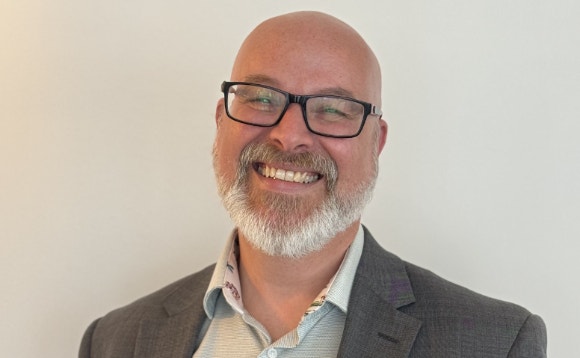
Southampton-based MSP Nine23 has recently named Steve Jewell new CEO, replacing Stuart McKean after over a decade.
The last 12 months have been hard for Nine23, as the company, which aims to achieve £10m to £12m in revenue over the next three to five years, has gone from three years of 100 per cent year-on-year growth to now expecting flatline in FY25.
Jewell tells CRN that the company has not been able to grow “in the way [it] wanted to.”
“Just prior to the start of FY25, which for us runs June to July, we made some investments in the team, brought some new people in, and invested in products and services.
“We’ve not yet seen the return on those.”
With “plenty in the pipeline that’s effectively waiting for approval and signature,” the company intends to catch up on its growth plans.
“Right now, we’re targeting £10m to £12m in the next three to five years as our turnover, which would be significant growth.
“This year and next year are about catching back up on that original plan and getting to where we expect to be in three to five years.
“That should set us back on the path to growth over the next two years.”
Security sectors focus
To bring back revenue on an upward trend, the MSP intends to double down its focus on its main markets; defence, national security and public safety, and central government.
“We’re very focused on those sectors specifically, and we’re aware that there’s a read-across between them and other regulated clients, like CNI, nuclear industries, and so on, where a similar level of assurance is required, but we are very focused on the three sectors where we have a good footprint.
“We believe there’s plenty of growth opportunity for us just within those three.”
The organisation also has a particular interest in policing, where it has reportedly built a number of proof of concepts and feasibility studies.
It expects, from this involvement, to get further interest and support from central law enforcement bodies to strengthen its position in the sector.
In addition to remaining focused on these three markets, Jewell tells CRN he intends to keep working within the UK in the foreseeable future,
“The services we provide, the clearances we hold, are all based around UK sovereignty,” he says.
“While we are aware there are national programmes we may well be involved in, it’s about meeting the UK requirements for security and information sharing.”
Channel relationships
When it comes to its partner ecosystem, CEO explains that the company has “a significant number of technical relationships with product vendors.
“We’ve traditionally been a VMware stack approach but tried to remain technology-agnostic regarding any other equipment, products, and licenses we use.
While the organisation usually tries to find the right products for the right customer set, Jewell tells CRN it can the clients dictating what the right kit is for them.
Recently, Nine23 partnered with Pulsant to deliver a set of solutions on a UK sovereign, resilient, accredited, compliant stack across the physical datacentre and infrastructure.
“We’ve partnered with Pulsant because they are investing in the UK.
“They’ve got sovereign services that match our own, and between us, we can offer more resilient solutions.
“We’re not leaving our current datacentres and partnerships, but we’re expanding our capability to ensure we don’t have a single point of failure in our supply chains.”
The firm also works with CDW, but it “tends to be more tactical” as the company is not reselling.
“We’ve made a big play in the new messaging around Nine23 as a high-assurance managed service provider, not what’s typically seen in the market as a cybersecurity company.
“Ultimately, it’s about the delivery of a managed service. That’s what Nine23 is all about.”
Among “thousands of MSPs”, the CEO says that Nine23’s point of difference is the level of clearance, the type of data, and the projects it gets involved in.
C-suite swing
To stoke the fires of development, the organisation does not solely rely on its partner ecosystem, but on its own people, including its leadership.
The firm’s C-suite has been through changes, with the appointment of a new CTO, a new CFO, and a new chief growth officer within the last two years.
It has also added two people into its sales team to generate more interest and bring additional revenue, as well as a couple more engineers.
“The headcount we’ve planned to follow is really about increasing engineering, project delivery, and support as we start to see the pipeline build,” he adds.
US disruption
While macroeconomic uncertainty has added pressure to the sector, Jewell says Nine23 has weathered the impact by locking in long-term contracts where possible, particularly as the company is reliant on US-based technology and licensing like many in the IT space.
“Our costs are far more volatile,” he says.
“We’ve been keeping a close eye on that and trying to ensure we get long-term commitments and contracts where we can keep pricing consistent for the client.”
Jewell explains that while discussions around UK digital sovereignty are now gaining interest across the industry, Nine23 has long been advocating for a hybrid approach between public cloud and private infrastructure.
“We’re not anti hyperscaler or anti American; the technology offers huge benefits in the right environments,” he says.
“But we’ve been consistent in our message: protect the information that needs protecting in the right place and deliver the best service using the available technology.”
AI and emerging tech
Jewell admits that while AI is reshaping the IT services landscape, Nine23 is deliberately taking a measured, practical approach.
The company is actively engaged in proof-of-concept (POC) projects with partners working in national security and law enforcement to explore how machine learning and quantum-safe technologies can be adopted in high-assurance environments.
One such project involves a partnership with Arqit to test quantum-safe encryption key management services.
Nine23 also collaborates with Nexor on cross-domain services, exploring ways to move beyond traditional hardware-based platforms.
On the AI front, the company is currently not developing its own AI platforms but is instead focusing on enabling partners’ solutions by providing secure infrastructure.
“We’re more interested in the machine learning part and the high-performance computing infrastructure,” Jewell explains.
“We’re at the start of our journey, monitoring where it goes, and making sure we can deliver it safely within private infrastructure.”
Buyouts and benchmarks
Although the company isn’t planning any mergers or acquisitions of its own, Jewell insists that Nine23’s position in the high-assurance space makes it an attractive acquisition target for larger MSPs looking to enter the sector.
“It’s quite difficult to build the experience and capability in this space; it takes years and the right relationships,” he says.
“There’s certainly potential for someone to acquire that capability rather than build it themselves.”
The organisation, which started as a “home office startup”, instead relies on organic growth.
Nine23, which Jewell describes as a “very mature startup,” has spent nearly a decade hovering around the £1m mark before doubling, then doubling again.
“We're on that curve now, we're breaking through that initial SME startup type phase,” he tells CRN.
Now entering what he calls a “scale-up phase,” the MSP aims to concentrate its efforts on executing existing strategy, reinforcing its position in sovereign services, and ensuring the pipeline translates into revenue.