‘It’s about evolution, not revolution’: Proact CEO on picking up the torch
Magnus Lönn intends to drive the company back on the up by putting customers first
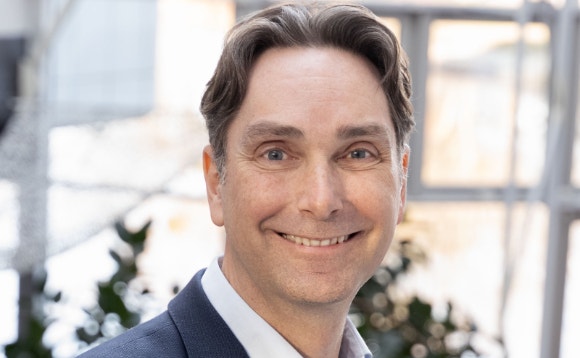
Proact recently named Magnus Lönn its new CEO, after the company went through a period of turmoil, seeing its revenue decline in 2024.
Having taken the top job in February, he is now tasked with righting the course. Löhn is confident in the market demand, he says in an interview with CRN.
He recognises that the macroeconomy presented a challenge for the company last year, with the UK seeing sales decrease in support services.
Germany also went through strong financial pressures, adds the CEO.
Despite this, Lönn believes the opportunity exists, and that it’s down to Proact to “stay focused, prioritise the right activities, and deliver value.”
“Macroeconomics are what they are, we can’t control them, but we can control how we operate and how well we support our customers.”
The VAR also wants to tackle challenges such as increasing cybersecurity threats, macro uncertainties, and what Lönn refers to as the “cloud hangover.”
“Many customers are finding cloud not as easy or cost-effective as they’d hoped – this reinforces our position, helping them manage and protect their data with the flexibility to choose the right infrastructure.”
After closely working with former CEO Jonas Hasselberg for the past three years, he tells CRN he doesn’t intend to reshuffle (all) the cards.
“I’m not coming in to radically shift the strategy,” he explains.
“It’s more a case of evolution than revolution.
“My aim is to create focus, replicate some of the success we’ve had in the Nordics, and apply those learnings to accelerate growth in other business units.”
He explains that the company’s success in the Nordics and the Baltics comes from putting customers’ needs at the centre and growing alongside them, a strategy he aims to replicate in the UK.
While the firm can share best practices across businesses through its presence across 12 countries, the CEO says he doesn’t believe in a one-size-fits-all solution.
“The needs and behaviours of customers in the UK are not the same that those in the Nordics.
“You need to be close to your customers, understands the specific challenges, and tailor your approach.”
The VAR currently works in Sweden, Norway, Finland, Denmark, the UK, Belgium, Czech Republic, Estonia, Germany, Latvia, the Netherlands, and the US.
The Nordics still represent Sweden-based Proact’s largest market.
In FY24, the Nordics and Baltics stood at SEK1.69bn (£132.1m), accounting for nearly 35 per cent of the company’s global revenue (FY24: SEK4.9bn).
Revenue in the UK was SEK330.9m (£25.95m).
The British arm of the organisation ranks number 80 in CRN’s Top VARs List.
M&As across Europe
Beyond organic growth, the organisation recently showed an appetite for acquisitions, with the buyout of UK-based cloud-native consulting, engineering, and managed services business BlakYaks in March.
The investment adds 50 new people to Proact’s ranks in the UK, bringing its headcount to around 260.
Moving forward, the company is still actively looking to do mergers in the UK, as the country has “strong potential.”
“Markets like Germany, the Netherlands, and Belgium also present growth opportunities.
“But it’s not just about making acquisitions for the sake of it, it’s about finding the right fit.
“Acquisitions are a great way to accelerate and bring in new competencies, but just as important is taking care of our existing business and growing organically.”
Customers, partners, and competitors
The company also counts about 400 customers in the country, and 4,000 globally across industries relying on infrastructure and technology.
The VAR focuses on enterprise and large customers, rather than smaller ones.
“The solutions we offer are best suited to larger organisations with more complex infrastructure needs,” the CEO tells CRN.
To deliver these solutions, the VAR partners with Microsoft and has “strong capabilities” around Azure, Kubernetes, and related technologies.
It also has partnerships with NetApp and Dell.
In the AI space, it works with Nvidia for acceleration cards and infrastructure components.
In the UK, the CEO identifies Softcat as its main competitor.
“In the Nordics, you have a few dominant players, like Atea.
“In the UK, there are many more companies operating in this space.
“If I had to name the biggest one, I’d probable say Softcat.”
Remaining relevant through technology and sustainability
The CEO also claims that Proact is an expert in infrastructure, as it is at its core and “is the foundation on which everything else in tech is built.”
“You can’t do anything in tech without storage, servers, connectivity, and compute.
“We’re experts at building the right infrastructure, whether that’s on-premises, as a service we provide, or even AI infrastructure.”
Unsurprisingly, Lönn sees growing opportunities in infrastructure off the back of AI demand.
“If you want to get real value out of AI, you need good data to train your models and a reliable platform to run them on.
“That’s where we’re bringing value.”
The organisation also wants to commit further to sustainability.
“If we want to remain relevant, we need to be focused on sustainability from every angle.
“Each year, the infrastructure we provide helps customers consume less energy and store more data in a smaller footprint.”
He adds that AI, by being resource intensive, has shifted the trend a bit, but that Proact aims to help customers with sustainability reporting and simplifies it for large enterprises.
To the CEO, ESG needs to make business sense as well.
“I believe sustainability and business value can and should go hand in hand.
“If you can quantify the cost of carbon and compare it with business impact, you can make smart, sustainable decisions.”