Qodea CEO: ‘I'm very impatient to grow this business’
Alan Paton lifts the lid on his $1bn goal and Qodea’s M&A strategy following its Nordics debut with the acquisition of TIQQE
Google Cloud consultancy Qodea is firmly on the acquisition trail to achieve $1bn in valuation.
Qodea was only established in September last year following the 2023 merger of CTS and Appsbroker, propelling the brand to the number 76 spot in CRN’s Top VARs.
The Marlin Equity-backed firm has since been on a roll in its growth journey, snapping up Swedish consultancy TIQQE to enter the Nordic market earlier this month.
The group also bought North American company Beyond in July to immediately gain a presence in the region.
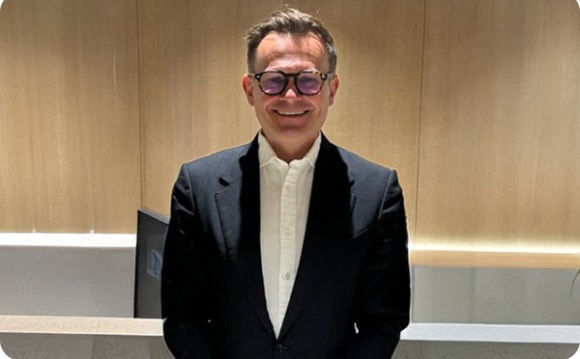
Qodea CEO Alan Paton (pictured) only took the helm of the Google partner in January but is eager to deliver on his ambitious growth targets.
“I'm trying to build a business that could achieve an enterprise value of $1bn,” he tells CRN.
“The businesses we look at buying are typically in the $10m to $15m revenue range. So, we're not buying businesses at $250m revenue.
“But we're trying to buy businesses which are profitable, growing, and are of the right scale that we can integrate and be able to consume.”
Paton breaks down his M&A strategy and the most important thing to note when buying businesses.
M&A wishlist
The Manchester-based company’s last two acquisitions allowed it to expand into brand new geographies, something Paton highlights as “very important” in an M&A deal.
“There are certain markets where we are very strong and others we are just entering.
“The Nordics was somewhere we didn’t have any real presence, so that was a really good reason to buy TIQQE.”
By November, Paton states Qodea will have completed three acquisitions and expects to do “at least one more” between now and Christmas.
“The next acquisitions will most likely be in Central Europe, which is an area in which we have a lot of customers.
“Also in the US. The scale of that market makes it really attractive for us to grow into.
“The Middle East still remains a bit of a black spot for us. We don't do anything really in the Middle East, and it has been a massively interesting area for us. So I think we'll see some expansion there as well.”
But the most important thing to consider before he can determine whether a business has the right profile is the relationship with the leadership team, Paton stresses.
“Right now, there's a lot of businesses looking to divest, and I think that makes it fertile ground for us, from a purchasing perspective.
“But for me, it's about the synergy between the leadership teams.
“Can we work together? Just at a basic level, are we people that like each other, and can we work together?”
He adds that a diverse customer base is also alluring in a potential buyout.
“When you bring together two businesses, having the same customers doesn't really make any sense to me. So having a business where there is no overlap in customers, but we're delivering very similar services, but to a brand new set of customers that help us from a cross-fertilisation perspective.”
Most important of all? Integration
To spearhead the firm’s development, Paton eyes organic growth and increasing business through M&A.
While he acknowledges the importance of integrating these new businesses post-acquisition, Paton admits the timeframe of the whole process can leave him champing at the bit.
“I'm very impatient to grow this business, and we need to buy good businesses.
“We need to integrate them properly, and we need to bring those advantages to our customers. And I think really, the only restriction on the number of acquisitions we make is the amount of time that we have.
“There’s only so many you can do at pace.
“It’s a bit like dating. You don’t marry everyone you date. You need to take the time to get to know each other.
“You have to understand the nuances of businesses and get to know the personalities. Because once you're there, you're there forever. That's quite time consuming.”
The most important success category for Paton at the end of the year is to properly integrate newly bought companies and get them operating as one.
“Professional services, particularly, is a market that's full of misadventure in that space. So for me, success is that we properly integrate and we add value to these acquisitions, and it's not just buying companies for the sake of it.
“I'm spending a lot of my time to make sure the integration of these companies is done efficiently and properly.
“It’s interesting about people businesses, just by their very nature, it's all about the people. And the minute you lose hearts and minds, then you lose value.”
New challenge of talent
Paton notes how the market has changed significantly surrounding talent.
He says a year ago, one of the biggest challenges was getting the talent to be able to deliver the work.
“But in the last six months, and I don't know whether this is more of a what's going on in the British economy, particularly in the UK market, or it's just the skill sets that we look for, but we're inundated with people looking for work,” says Paton.
“Engineering talent is becoming much more available than it ever was.
“I think it's definitely become a buyer's market for talent than it was a year ago.
“Today, our challenge is that we have a lot of work, but there's a huge amount of supply, and I think that's changing the dynamic around the cost profiles and the ability to get people with significant skills at a differentiated rate.”