‘Leadership isn’t about a title or age, it’s a mindset’ - XChange EMEA Day 2
Day 2 of the pan-European conference delivered important discussions about NIS2 compliance, succession planning and developing future leaders, as well as mental health in a high-pressure role
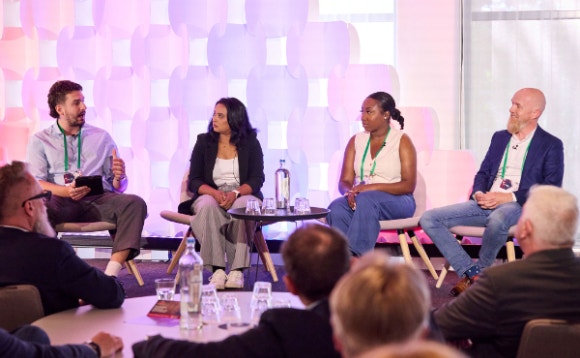
The second day of XChange EMEA, hosted by CRN in the Netherlands, provided a stage for important discussions, including compliance with emerging cybersecurity frameworks, maintaining work-life balance, and developing the next generation of channel leaders.
Read the recap of the main stage sessions below.
For the highlights of Day 1, click here.
Staying ahead and keeping compliance in a NIS2 world
Kicking off the second day’s sessions, Tiberiu Baraboi delivered a compelling keynote on the rising importance of NIS2 regulations and how channel partners can turn compliance demands into valuable service opportunities.
Baraboi outlined the expanded scope of the NIS 2 directive, which now covers a broader array of sectors and imposes stricter cybersecurity obligations than its predecessor from 2016.
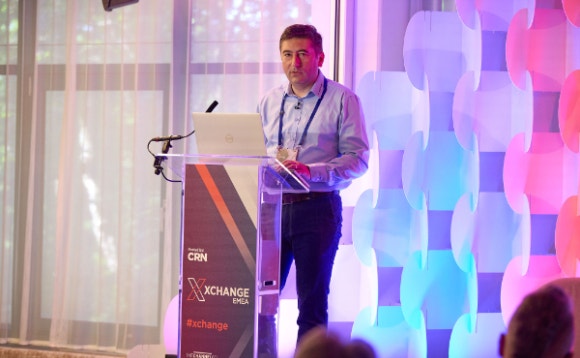
“It expanded the scope. So now a lot more sectors are inside the scope of the NIS 2 directive. It also introduced risk management and organizational requirements,” he explained.
He flagged a critical service gap for many smaller organisations, noting that “not many small organisations will have the budget, neither the need of a full-time CISO, so they will rely, potentially on you as an MSP to do a CISO as a service or a part-time CISO job.”
For MSPs and service providers, this presents a clear chance to expand their consultancy and managed security portfolios.
Baraboi also highlighted the role of national agencies and the new European Network Information Security Agency (ENISA), which oversee compliance and foster cross-border cooperation.
He added: “Those agencies are in charge of establishing a National vulnerability disclosure programme…where any affected entities can report their incidents.”
One of the most pressing compliance requirements Baraboi underlined is incident reporting.
“We must report any incident which we detect in 24 hours to the national agency, and within 72 hours we need to provide a detailed report,” he said.
This swift reporting obligation is designed to improve collective cybersecurity resilience but demands rigorous internal monitoring something many SMEs currently lack.
“Many SMEs don’t even have that monitoring, so attackers get persistence on their infrastructure and sit there for months, if not years,” Baraboi warned, stressing the urgency for better detection capabilities.
In addition to incident management, the keynote covered technical controls mandated under NIS 2, such as “embracing multifactor authentication, privileged access management just-in-time access, ensuring encryption at rest and in transit, and network segregation.”
Baraboi stressed these are no longer optional add-ons but essential pillars of compliance and security.
Business continuity planning also featured as a vital element, with Baraboi reminding attendees that “backups and recovery are something we should do anyhow,” but under NIS 2 they gain increased regulatory scrutiny.
The keynote emphasised that compliance is backed by tough enforcement measures.
National agencies have powers to conduct “unannounced site inspections, ad hoc audits,” and levy “very, very high” fines for non-compliance.
Baraboi’s session closed with a clear message to channel partners: “This is not just a regulatory burden, it’s an opportunity.
“You can grow your business by offering traditional value consultancy services that meet these new needs.”
Read on for insights on mental health in the workplace and developing the next generation of leaders...
Next-gen leadership: Identifying and elevating tomorrow's business leaders
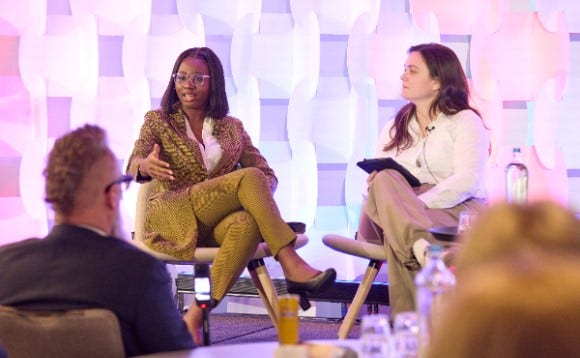
Talent can sometimes be found very early on: Dr Adaora Dagogo launched Stechad Ltd, her second tech business, at the age of 25.
But she first became a leader even younger, when she was only nine years old.
“That might sound surprising, but leadership isn’t about a title or age - it’s a mindset,” she stated onstage at XChange EMEA.
As even the strongest trees need water to grow, she explained that young and future leaders cannot explore their full potential without the help of a mentor.
“I had people who believed in me before I even believed in myself - they gave me space to grow, to fail, to learn - and to lead,” said Dagogo.
“They didn’t just invite me to the table; they let me help shape the table.”
But to help someone become the best version possible, mentors must rethink the way they approach next-gen leadership.
Dagogo said that educating tomorrow’s leaders is not just about preparing replacement, it’s about planning for evolution.
“Give young people visibility; let them lead projects, not just internal initiatives.
“Let them present to stakeholders; exposure creates growth.”
She recalled a moment where she was asked to join a top exec meeting, where she really felt like her opinion and ideas mattered.
“I was stunned. I left the meeting dancing!
“That moment boosted my confidence immensely - they saw something in me.
“That changed everything.”
In an industry that goes through constant transformations, empowering a younger leadership isn’t just important; it is essential in order to survive.
AI, remote work, climate change; with every change comes its share of challenges, which is why trusting new leaders who are agile, tech-savvy, and globally aware, can solve the problems of today and tomorrow, explained Dagogo.
A major obstacle to inclusion is also the lack of representation, said the speaker.
“I remember walking into rooms filled with older leaders - and I don’t just mean by age, but by experience - and instantly feeling like I didn’t belong.
“People need to see someone who looks like them to feel like they belong.
“Another big challenge is earning credibility.
“The phrase ‘that’s not how we do things here’ can kill innovation.
“When young people feel unheard, they withdraw.”
Strong from her experience, Dagogo now applies her mentality and vision to her own company.
Stechad runs a programme called Skill Share where anyone, regardless of their title, can run training sessions for the whole team.
The company also put in place Sticker Sandbox, where junior staff can solve real-world problems with actionable solutions, as well as Leadership Lab, a space where emerging leaders can facilitate weekly business reviews, the MD added.
Externally, the organisation runs an initiative called Empower Tech, to train and invest in the next gen of female leaders in ICT.
Managing stress and avoiding burnout
The afternoon continued with a frank and insightful session, titled “Managing stress and workload as a leader”, which saw a group of technology leaders reflect on their own journeys and the techniques they have implemented to avoid overwhelm and find balance in their roles.
Ralf van der Eerden, CCO at SMT Simple Management Technologies, who described himself as someone who previously tried to do it all, explained how health issues forced him to reassess his lifestyle and responsibilities.
He described the pressure to keep up and do more and the peace that came once he decided it was okay to ease off.
“Nobody else was going like, well, now you’re a failure. Instead, the feedback was: you’re human and you’re vulnerable.”
For Vanessa Boachie, cognitive behavioural psychotherapist at Inside Out Wellbeing, a key message was the importance of making intentional choices about health and lifestyle.
“From my perspective, we can’t leave things like our health down to luck. You can’t leave it to chance.
“It’s really important that we start to put things in place before those things actually happen.”
She advocated thinking about well-being in financial terms, making deposits to account for future stress and responsibilities.
“Everyone has their own well-being bank account.
“If you are in your overdraft, how then can you be the best person for the people around you as well?
“It's important for us to take time to make those investments into our well-being.”
For Bharti Lim, group security strategy manager at Computacenter, a key breakthrough came through a combination of workplace mentoring and boundary-setting.
“I had some coaching at work, and she asked me to list all of the things that I was trying to work on.
“She said, ‘No, you need to have three priorities.’ And that boundary might not mean ‘no’ forever, sometimes it means not right now and then I'll come back to it.”
The ability to say “no” and live with that decision is a powerful form of stress reduction, Lim explained.
“I find it really hard, because I get FOMO, thinking ‘Oh, I could have maybe just done that’, but having the acceptance of, ‘actually, this is really good for me to say no. Just because I said no now doesn't mean it won't ever come back’ - that’s really important.”
Van der Eerden challenged the very notion of a rigid work-life balance.
“There’s no such thing as work-life balance - unless we’re all dead while we’re working. It’s about managing stress and maintaining peace of ming.
“If I come home and I bring back my stress, then I will be stressed at home, and it creates a cycle. But if I have to escape something in life, I’m doing the wrong things. So I have to think what am I escaping? I have to confront and fix that.”
Meanwhile, Boachie insisted that balance looks different for everyone.
“I believe that work-life balance is possible, but it looks different for everyone. You cannot pour out of an empty cup. You cannot give if you are not giving to yourself.”
Together, the panel challenged the industry to rethink its attitudes toward stress, boundaries and health.