XChange MSP 2025: From M&A to mental toughness
Here’s what you missed at CRN’s flagship UK event for managed service providers
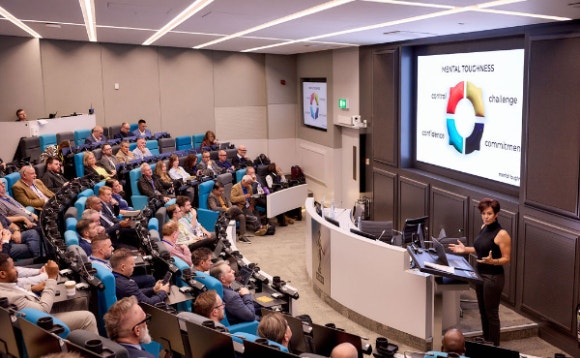
At yesterday’s XChange MSP, hosted by CRN, attendees heard from main-stage speakers on topics ranging rom increasing profitability, to AI-driven data leakage, to growth through M&A.
If you missed out, read on for CRN’ s wrap-up of the day.
Pricing volatility, higher customer expectations: the key trends affecting MSPs
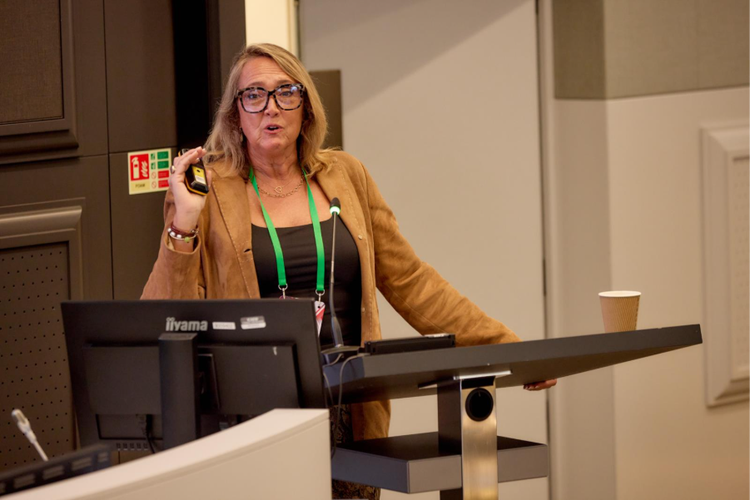
Beth Vanni, senior director of research and senior consultant at IPED, TCC’s research arm, kicked off XChange MSP with a data-rich overview of where managed services providers stand today and the pressures they face in sustaining profitability.
Vanni set the tone early by pointing to the double-edged nature of emerging technologies.
“There’s huge opportunity in monetising Copilot, whether you’re using it internally in your business or as a revenue stream, but there’s also a significant short-term security risk.
Long term, agentic models and other AI developments will only expand that opportunity,” she said.
Pricing volatility was another concern affecting MSPs.
“When you’re an MSP with a dozen vendors in your core stack and four of them change pricing at the same time, it can be brutal.
“Locking customers into long agreements under those conditions creates serious challenges.”
On the customer side, expectations have risen sharply, so partners need to stay close to their customers and build knowledge-based relationships, she emphasised.
“Customers now expect you to be involved earlier in the architectural process, especially with emerging technologies like AI.
“They’re asking tougher strategic questions, whether it’s about modernising networks, repatriating workloads from the cloud, or balancing risk versus benefit.”
That shift has broadened the outsourcing mandate.
“Where you may have once just managed endpoints, customers now want you managing entire infrastructures: networks, IoT, storage, the full stack.
“It’s a great opportunity if you can figure out the pricing and contracts.”
Vanni also highlighted the market momentum behind the managed services model itself. “Recurring revenue, whether subscription licenses or added services, now makes up 60 per cent of solution provider business on average.
“That’s a dramatic shift, and it fundamentally changes how you price, package, and automate.”
Acquisitions are accelerating too.
“Seventeen of the top UK partners and 15 of the top 20 in Europe have done M&A deals in the past 18 months.
“The number one driver for those acquisitions has been mature managed services capabilities, particularly in hybrid environments.”
Despite the pressures of margin compression and heightened security risk, Vanni pointed to a clear playbook.
“The most successful MSPs share three qualities: they’re strategic about where they invest, they’re intentional about retaining talent, and they’re aggressive in automation and platform integration.
Those three factors show up consistently in the firms we see growing the fastest.”
Growing through buyouts: Insights from Flotek
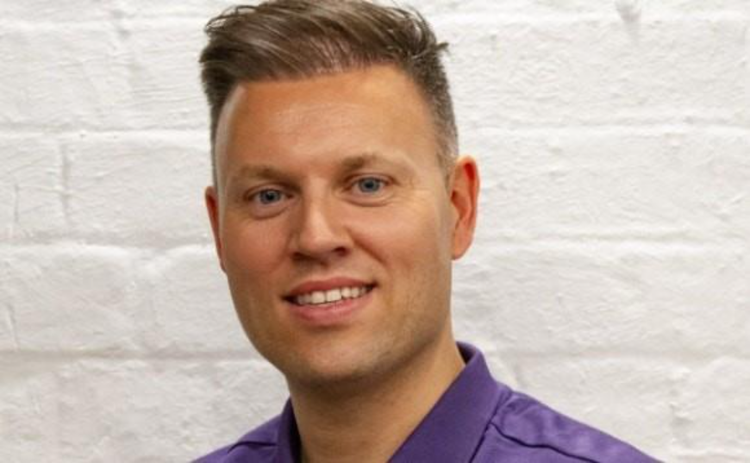
Jay Ball, CEO of Flotek gave his top tips for embarking on an M&A journey.
The Cardiff-HQ MSP has made a whopping 14 acquisitions since its inception in 2022, three of which were made in 2024 alone.
Growth through acquisitions has allowed the company to swell from two people to a roster of 125 staff with £18.5m in revenues.
Ball told the XChange MSP audience he decided to pursue inorganic growth to quicker achieve his ambitious target.
“I spent 12 and a half years growing a business organically. And as we all know, finding new customers is hard, and I wanted to do it a lot quicker,” he said.
“Our ten-year plan is to reach £100m, and we weren’t going to do that organically.
“So, acquisitions play a big part.”
Organic growth is still impacted by M&A, however, as Ball told delegates.
“We're fortunate in the market. We've got a really good sales strategy around our own organic growth profits.
“Because we've got such a good senior leadership team, it allows myself to focus mainly on the acquisition side of the business, on our sales strategy.
“A lot of businesses, when they go into M&A their organic growth stops. Every acquisition we've done has grown, and in fact, two of them have actually doubled in revenue.
“Our first deal in 2022 was doing £1.5m, and within three years, we've doubled that to £3m.
“We always invest in an acquisition to try and grow it and take it to another level. And so far, it's been very successful.”
For the MSPs in the room wondering when the right time will be to pull the M&A trigger, Ball had an answer.
“We tend to speak to people quite early on.
“When you build a business up and you’re thinking of selling it, you want to be talking to people early on and building that trust and confidence.
“And then have you got the people, the systems, the processes, the funding in place to do that?
“Everyone wants to acquire, but it’s such a distraction to your main business that you have to have the people and the processes in place, otherwise you're going to get distracted from your core business, and that's going to decline.”
Flotek has added a fair few new names to its rota through its non-stop acquisition trail, and therefore had practical knowledge to share on how to handle the restructuring of people element.
“Our approach when it comes to people is, when we're buying a business, especially sub £5m revenue, it's going to be powered by those people.
“If you hemorrhage staff, you can hemorrhage customers.
“So, we spend a lot of time investing in the people. Myself and our group managing director will go out and we’ll do one-to-ones with every member of the team.
“It takes a lot of time, but we often get our best people from acquisitions.
“And in regard to brands, a lot of people are precious about keeping their brand.
“But we don't want to be a mix of companies with different colors, brands and messaging.
“It’s important that our group is Flotek.”
Finally, Ball touched on how to ensure the investment you make in a business is a safe one.
“When you’ve done 14 acquisitions you do find negative people who don’t fit your culture.
“The good thing is, when you have a really strong culture, that will push those damaging people out of your business eventually.
“When you're spending a lot of money on an acquisition, there's always going to be risk, and you've got to accept that.”
Containing AI-driven shadow IT
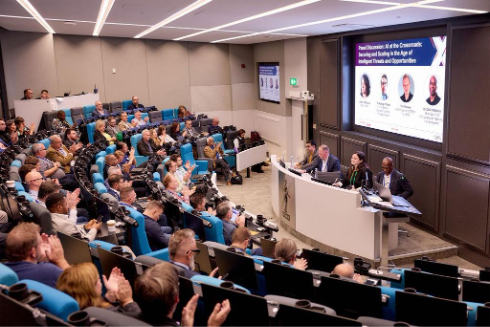
As employees experiment with generative and agentic AI chatbots, the risk of sensitive data slipping outside the business has never been higher.
Security leaders Dr Aditya K Sood, VP of security engineering and AI strategy at Aryaka, Tim Rookes, chief experience officer at Truly SMB, and Dr Colin Williams business CTO at Computacenter, came together for an experience exchange on containing AI-driven shadow IT.
“My biggest concern is many employees don’t even realise what they’re doing is wrong and has a potential for catastrophic vulnerabilities at an organisational level,” opened Williams.
“They actually think they’re optimising work by enhancing it with AI.”
Williams therefore stressed the critical importance of an internal policy.
“If you don’t articulate to your organisation what good looks like, how will people know they’re contributing to your policies?
“Even at enterprise level when the implications are so colossal, there are so many organisations I speak to where my first question is, ‘What does responsible AI look like in your organisation?
“What is the policy that you articulate to your employees, and how did they consume it?’
“Responsible and safe AI, the articulation at the highest level to cascade throughout the organization, that that's the only AI we ever deliver in that way helps you to make sure that people who matter understand how to use these key tools effectively.”
Giving the vendor perspective on where MSPs can sometimes trip up, Sood told delegates Aryaka heavily focuses on education.
“Recently we were talking to customers and the biggest concern they had was AI adoption.
“We start with an education approach, sometimes starting with an AI analysis.
“Which means, what are your network demands?
“Because, as an MSP, we believe that at the end of the day, convergence is the key. And the road to resilience goes through an implementation of a structured security in a very structured network.
“So do education side-by-side, as opposed to pitching a solution, because eventually you will meet there, but you can help them to understand what are the risks associated with details about the AI ecosystem and threats.”
Mental toughness as a business skill
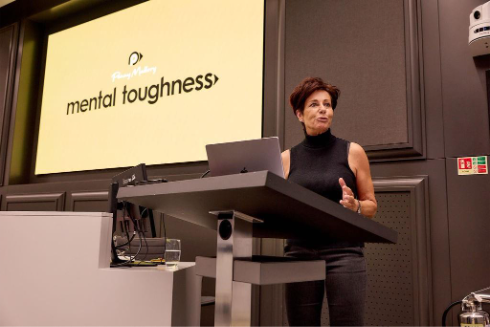
To close the day, Penny Mallory, former British Rally Championship driver and keynote speaker, shared her thoughts on how to build mental toughness and thrive under pressure.
She explained that only about 30 per cent of what people achieve in life comes down to talent, skills, and intelligence.
The remaining 70 per cent is determined by mental toughness, which she described as qualities such as grit, confidence, courage, bounce back ability, fortitude, and perseverance.
“Our mental toughness will play a more important role than anything else in anything that you set out to achieve,” said Mallory.
To back this idea, the speaker broke mental toughness into four core principles; control, challenge, commitment, confidence.
She described control as having a sense of direction even when things go wrong.
“If it all goes horribly wrong, I just make another plan,” she explained.
“I feel like pretty much whatever you throw at me, I can deal with it and I'm in control of it.
“It's a growth mindset. It means anything's possible.”
On challenge, she told the audience that it is how we react to setbacks that shapes us.
“We are all challenged all day, every day. It's never going to change.
“No one wants to get out of their comfort zone. Nobody really likes change.
“But there is something brilliant hiding in the challenge or the problem you're facing, and overcoming is what makes you evolve.”
She described commitment, the third principle, as the ability to set a task and complete it.
“Mentally tough people love to commit because they know it's going to take them on a journey.
“They love the idea of putting in the hard yards, because the sense of satisfaction when they get there is so fantastic. It's worth it.”
Finally, she tackled the notion of confidence
“People are going to make a judgement about you in half a second based on the confidence you display.
“Even if you have none, display that you are confident, because you're going to need it if you're going to interact with people, do your deals, and make things happen.”