ALSO and Westcoast’s CEOs on combining forces and growing in Europe
Top execs tell CRN what their strategy is following ALSO’s takeover of Westcoast’s operations in the UK, Ireland and France
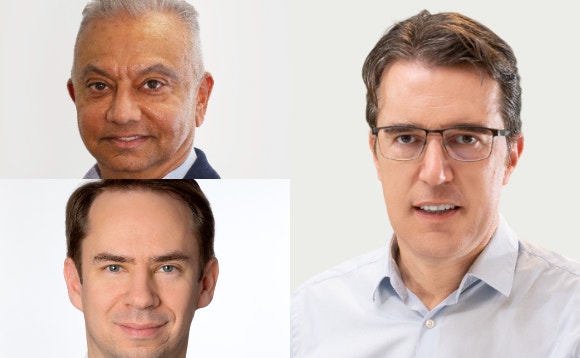
Born in Switzerland, ALSO has gone far beyond the Alps, with operations now spanning North America, the Middle East and Central Asia.
Yet despite that international expansion, Europe remains the distributor’s primary growth market.
Speaking to CRN following the group’s Q1 results, CEO Wolfgang Krainz says the distributor sees significant room for progress across its existing European footprint, where cloud adoption, commercial business and reseller transformation continue to drive momentum.
“Our main growth focus is in Europe and EMEA,” he says.
“We believe there is super strong potential to further increase our business in these markets.”
The group’s top line soared 31 per cent year-on-year to €4.3bn (£3.7bn).
Net profit jumped 69 per cent, while EBITDA climbed 46 per cent to €89m.
Momentum was reportedly fuelled by the firm’s core business models (Supply, Solutions and Services), alongside completed acquisitions, a focus on higher-value offerings and inventory optimisation.
The increase also follows ALSO’s takeover of Westcoast’s operations in the UK, Ireland and France.
The transaction was announced in 2024, cleared by European regulators in early 2025 and formally consolidated into ALSO’s financial results from 1 March last year.
More than a year later, executives from both organisations say the focus is no longer on the transaction itself, but on how the combined business can use its increased scale, vendor ecosystem and expanded geographic reach to drive future growth.
The UK sits at the centre of that strategy.
“The UK is one of the very largest country organisations within the group,” Krainz says.
ALSO’s strategy to build on Westcoast’s UK foundations
For Sunil Madhani, CEO of Westcoast, one of the biggest advantages of joining ALSO has been the ability to leverage capabilities that would have been difficult to build independently.
“As a private company we would have been restricted by ERP, platforms and web presence without bigger investments,” he tells CRN.
“Now, as part of a larger group, we can leverage everything ALSO has created across EMEA.”
The UK and Ireland business currently generates approximately £3.5bn in revenue.
Around two-thirds of that business is focused on B2B activities, while the remaining third comes from retail operations.
Rather than focusing on partner numbers alone, Madhani says revenue mix and business structure provide a more meaningful reflection of the company’s position within the market.
The retail business nevertheless remains a major component of Westcoast’s operations and one of the foundations on which the company built its reputation.
“The retail landscape in the UK has been our business for many years,” he explains.
“People like Argos, AO.com and John Lewis are very prevalent for us.
“We’re very proud to say we’ve been a key member of that supply ecosystem to the retail community for decades.”
At group level, commercial activities continue to represent an increasingly important growth driver.
“Commercial business is far north of 50 per cent of our business operations,” Krainz says.
“This is one of our biggest growth ambitions moving forward.”
ALSO and Westcoast on their ‘catalytic integration’
While buyouts often result in significant operational standardisation, ALSO deliberately took a different approach with Westcoast.
Rather than imposing group-wide structures onto the business, the company adopted what it describes as a “catalytic integration” model focused on preserving agility while encouraging the exchange of expertise across the wider organisation.
“We saw a risk in imposing ALSO processes onto Westcoast because Westcoast is very successful and very well managed,” ALSO COO Thomas Meyerhans tells CRN.
“We wanted to make sure not to lose the agility that defined the business.”
That philosophy has influenced decisions across multiple areas of the organisation.
“At the beginning everybody wondered whether we would implement SAP at Westcoast,” adds Meyerhans.
“For Westcoast, we decided not to do that.”
Instead, ALSO focused on connecting reporting and operational structures while maintaining Westcoast’s existing ERP environment.
The integration has also extended beyond systems.
According to Madhani, the Westcoast UK and Ireland leadership team is now directly aligned with ALSO’s senior management structure.
Several UK execs have also taken on wider responsibilities across the group and work across legal, finance, operations, marketing and centres of competence.
The objective is reportedly to facilitate the exchange of best practices and know-how across the organisation rather than forcing a single operating model.
Structural changes across Europe
The integration programme remains ongoing and continues to reshape parts of the wider business.
One of the most significant developments involves Westcoast France, which has been separated from Westcoast and is currently being integrated into ALSO France, with completion expected by the end of H1 2026.
Meanwhile, Westcoast Cloud and ALSO Cloud UK are being combined into a single organisation with one management structure and unified systems, with the completion expected by the end of H1 FY26.
According to Madhani, alignment across IT, operations, finance, sales, product and marketing functions is helping strengthen service delivery to both vendors and customers while creating enhanced opportunities internally for employees.
The relationship is also influencing vendor engagement.
Madhani says supplier onboarding activity over the last 12 months has reached historically high levels for Westcoast, helped by access to ALSO’s wider international ecosystem and market reach.
The distributor currently works with more than 800 vendors globally and maintains relationships with more than 140,000 resellers.
“We constantly look at market opportunities, growth areas and trending technologies,” Krainz says.
“The goal is to make sure we always offer resellers the latest technology developments.”
The distributor’s Cloud Marketplace platform propels expansion
One of the clearest examples of the benefits created by the combination is cloud.
Westcoast had already been leveraging ALSO’s cloud marketplace technology for roughly a decade before the acquisition.
“To move from renting that platform to actually being part of that ecosystem gives us much more leverage,” Madhani says.
Cloud has become one of ALSO’s most important strategic assets and increasingly acts as a foundation for international expansion.
The distributor generated €1.6bn through its Cloud Marketplace last year and continues to use cloud services as a route into new geographies.
The company has launched operations in Saudi Arabia, the UAE, Kazakhstan, Uzbekistan and Azerbaijan, while also continuing to expand its US cloud marketplace business.
“We are constantly evaluating territories where we could land our offering,” Krainz says.
“There’s no better launch activity than starting with Cloud Marketplace operations because it allows us to test the waters with investment under control.”
The distributor believes cloud maturity gaps across Europe also present significant opportunities for future growth.
“There are major cloud countries with high adoption rates, like the Scandinavian countries, and there are countries with big potential to adapt to higher cloud adoption rates and as-a-service business models,” Krainz says.
“This is exactly one of the growth opportunities for ALSO Group for the years coming.”
Strong momentum across the group
The comments come as ALSO continues to report strong financial performance.
According to Krainz, all three of the distributor’s core pillars, supply, solutions and services, delivered growth during Q1.
“There was no country which stood out extraordinarily, but it looked like the ecosystem or the ICT sector really played out well and produced super strong results in Q1,” he says.
The company reported more than 60 per cent year-on-year growth in net profit during the quarter.
While the continued consolidation of Westcoast contributed to those figures, Krainz says the majority of the increase stemmed from operational performance.
“There’s a consolidation effect contributing less than one-third to the year-on-year surplus, and two-thirds of the surplus was operational growth and operational profitability growth.”
The distributor says that momentum has continued into the second quarter.
“April also shows good momentum and now we’re into the early days of May, so it also looks like we are going to continue the successful start into 2026.”
Where next for ALSO’s M&A ambitions?
Despite the scale of the Westcoast merger, ALSO says it remains active on the M&A front.
“Our M&A team did not retire after the Westcoast transaction,” Krainz says.
The company continues evaluating opportunities both around geographic expansion and specialist technology capabilities.
“One approach is market share, country by country,” explains the CEO.
“The other is identifying specialised technology distribution companies that could complement our ecosystem.”