Bell Integration’s Vicky Withey: Someone has to get things moving forward on ESG
Speaking to CRN, Withey, governance, risk and compliance (GRC) director at Bell, said the industry must work closer together around Net Zero goals
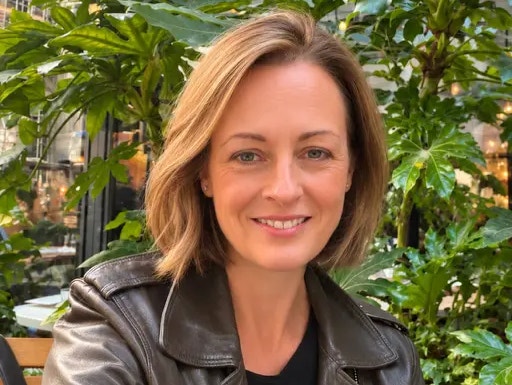
Tech leaders need to join forces and work out how they are going to collaborate to achieve increasingly ambitious Net Zero goals, particularly in the AI era.
Speaking to CRN, Bell Integration’s Vicky Withey highlighted how her firm had achieved significant ESG progress in its latest sustainability report, progressing its approach to science-based target setting and joining the UN Global Compact, and reducing Scope 1 and location-based Scope 2 emissions by 32 per cent and 22 per cent respectively between FY25 and 26.
But she said the industry as a whole has the opportunity to accelerate progress by working better together.
“Getting to Net Zero by 2040 is going to be our biggest challenge and I believe it will be difficult to achieve without greater collaboration,” Withey says.
“Tech businesses are facing increasing regulatory and customer expectations, but we have an opportunity to do more to move the needle.
"There is more we can do to mature our approach, how we engage with communities and how we bridge the AI fluency gap within organisations including our own. All that builds up around the sustainability story, and also affects how we will reduce our carbon emissions.
"One of the areas our customers increasingly ask our GRC team about is sustainability, they are helping to drive change.”
But to make those changes, the industry needs to be more joined up, Withey says.
“We have to look at sustainability through a shared lens – see what tech we’ve all got under the hood and understand its impact. We need to have some consistency out there. We also need to be more visible with one another.
"Building on existing frameworks with common metrics within the tech space where we can benchmark ourselves and hold ourselves to account against our own peers.”
Withey said with AI, firms should be questioning which tools they really need in their businesses, and making sure they get proper ROI as well as monitoring the carbon footprint.
“When tools are available for free, it is easy to overlook the resources they consume, but there are models out there that are very resource-intensive and very expensive, and the question is do all businesses need to use them?
"From a sustainability aspect it is about understanding how these tools operate, which will help us better understand how sustainable they really are and what the true cost base is versus the savings that are made when they are used the right way.”
AI sustainability ethics will become a challenge for the channel
One of the biggest opportunities for industry is to share more knowledge and experience for the for the common good, Withey said.
“I know people need to protect their secrets or their IP, but there are still areas where we can collaborate and I see it as one of our biggest opportunities to create better solutions that create better outcomes if we can share information,” she explained.
“We have to look beyond our individual organisations and consider the bigger global picture. I know everybody is at different stages on their sustainability story, but if we could come up with just five things we could all positively contribute to and do more of, we can form a collective in that space and grow from there.”
Withey said she is willing to challenge conventional thinking if it achieves results, and has learned from experience.
“I’ve done this before with an AI ethics panel that I sit on for the police. If we are using AI in policing, I want to be part of helping to guide how we do it responsibly, particularly around my area of expertise in risk management. I wanted to know the criteria underneath what it is we are building and I see sustainability as no different,” she says.
“It takes courage to put yourself out there, but somebody has to take that first step to make things happen. I don’t mind being a bit more outspoken and I’m happy to be a constructive voice for change.”
Withey adds: “Some people would say ‘why bother, why do you want to do this?’, but it is because I care, and I care about sustainability. If you are in the right room, then you can encourage people to change and get people to buy in,” Withey says.
“We are far more powerful as a group rather than each person standing up on their own, and for me, that would be the ultimate win to have that collective power, because then we’d be unstoppable.”