War in the Middle East: Channel leaders weigh business impact
Partners operating in the region discuss how the escalation could affect expansion plans, operations and revenue
While the Middle East has long faced geopolitical tensions, the situation escalated sharply in February.
The war in Iran triggered exchanges of missiles and strikes across the region, taking a heavy toll and leaving what many fear will be a blood-inked mark on the Middle East for years to come.
In addition to the loss of life and widespread destruction, the instability is also raising questions for the IT sector.
Key markets such as Israel and the UAE, both major expansion hubs for Western tech vendors and partners, are now operating in an increasingly uncertain environment, while other business centres including Saudi Arabia and Cyprus have also been affected.
The developments are already being felt across the infrastructure and cloud ecosystem, with reports that three AWS datacentres were struck during the escalation.
Against this backdrop, channel partners operating in the region are reassessing expansion plans, operational resilience and long-term revenue expectations.
So what does the situation mean for the future of the channel in the Middle East? Are partners changing their approach to growth in the region or doubling down despite the risks?
Tech experts from Westcon-Comstor, Park Place Technologies, Bell Integration, Performanta, Nebula Global Services and Assured Data Protection take a stance.
Rakesh Parbhoo, EVP MEA, Westcon-Comstor
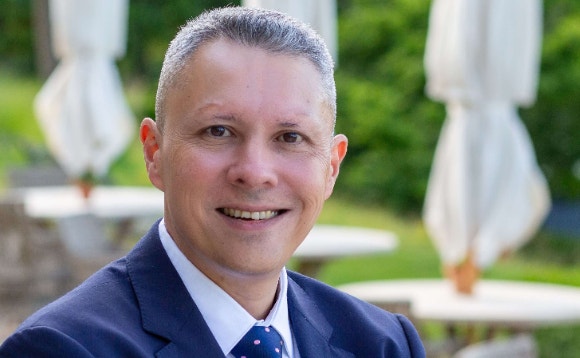
Has the current situation affected your approach to current or future expansion in the Middle East?
“The Middle East remains a strategically important region for Westcon‑Comstor and our long‑term commitment to supporting partners here is unchanged.
“We remain optimistic about the region’s long‑term growth potential while taking a measured and responsible approach in the short term.”
Has the conflict led to a rise in demand for cybersecurity, resilience or risk mitigation services?
“It feels almost inappropriate to discuss commercial opportunities arising from what is a live, raw crisis that is causing loss of life and affecting people across the region.
“It is true, however, that we are seeing some early signs of increasing focus on cyber resilience and business continuity, with more organisations reassessing risk and prioritising protection and recoverability.
“This is a natural response when operating conditions become less predictable
“The channel has a crucial role to play here and we stand ready to work closely with partners to help them respond to this demand through the right mix of technology, skills and enablement.”
Do you anticipate any impact on revenue performance from the region if instability persists?
“It is too early to draw firm conclusions and we would not want to speculate, particularly given how fluid the situation remains.
“What we can say is that we continue to monitor developments closely and stay very close to our partners and vendors.
“In periods of uncertainty, spending priorities often shift rather than disappear, and we are committed to supporting partners in whichever direction demand evolves.”
Drawing on your experience, how prepared do you think the IT channel is for sustained geopolitical disruption?
“The IT channel is better prepared for managing disruption than it has ever been, thanks partly to more mature cloud, security and distributed operating models and also the muscle memory that comes from having dealt with other seismic events such as the COVID pandemic.
“The current situation here is a reminder that resilience must be designed for a broad range of scenarios, including physical disruption as well as cyber risk.
“There is no room for complacency, and partners that invest in robust continuity planning, resilient architectures and strong security practices will be best placed to support customers through sustained disruption.
“Distribution has an important role to play in helping the channel navigate change, and we’re committed to fulfilling that role across the technology supply chain.”
Rob Mackle, CRO EMEA and co-founder, Assured Data Protection
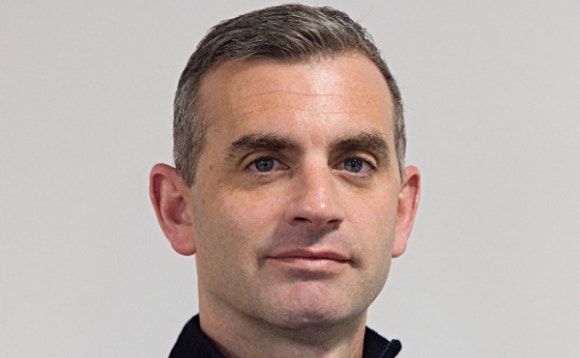
Has the current situation affected your approach to current or future expansion in the Middle East?
“No, our expansion plans remain the same.
“Our Middle East strategy has always been a longer-term play. The market is still a little behind where we are in Europe and the Americas, but it is catching up.
“In terms of cyberthreats, the challenges organisations face there are just as relevant as they are anywhere else in the world.
“Our strategy therefore remains unchanged, but we expect the Middle Eastern market to accelerate over the next five to ten years.”
Has the conflict led to a rise in demand for cybersecurity, resilience or risk mitigation services?
“Yes, absolutely. Cyber is increasingly used as a weapon during conflict.
“Even when we’re not talking about physical attacks, cyberattacks are one of the quickest and most damaging ways to disrupt organisations.
“Because of that, businesses everywhere need to consider how they mitigate these risks.
“If they are hit by a cyberattack or breach, they must be able to recover operations as quickly as possible.”
Do you anticipate any impact on revenue performance from the region if instability persists?
“From our perspective, no. We have a number of customers in the Middle East, as well as large global customers with operations there.
“Those sites are treated like any other within our service model.
“We build resilient solutions so that if a datacentre is impacted or a cyberattack occurs, we can recover data quickly to the last known good state.
“Because resilience and recovery are core to what we do, it should remain business as usual for us.”
Drawing on your experience, how prepared do you think the IT channel is for sustained geopolitical disruption?
“The market is becoming increasingly prepared for it.
“The Middle East situation is only one example - we’ve already seen disruption from conflicts such as the Russia-Ukraine war, and global supply chain pressures affecting hardware availability and pricing.
“Because of this, many organisations in the IT channel are adapting their strategies, for example by securing supply chains, pre-purchasing hardware or building greater operational resilience.
“Ultimately, geopolitical disruption is something the industry now expects, and the focus is on mitigating risk and ensuring continuity for customer.”
Ross Teague, CEO and founder, Nebula Global Services
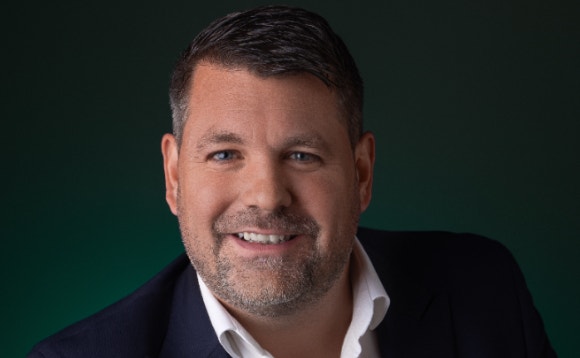
Has the current situation affected your approach to current or future expansion in the Middle East?
“Currently no, it hasn’t changed our long-term view of the region as a fantastic growth opportunity for all businesses across the tech sector.
“The Middle East region continues to be a very dynamic and fast-growing market for digital infrastructure, cloud, and enterprise IT services. This period of geopolitical uncertainty has of course sent shock waves through the region and the wider global economy.
“However, I am confident this will be short-lived and peace and prosperity will resume before too long.
“From our perspective, the region remains a positive growth opportunity, and we continue to see strong medium to long term potential.
“Our confidence is of course matched by our desire to see the region get back to stability and peace.”
Has the conflict led to a rise in demand for cybersecurity, resilience or risk mitigation services?
“Periods of geopolitical uncertainty tend to sharpen the focus on resilience and security.
“Only being a couple of weeks into this direct conflict I’m not certain we have seen the spike in demand from customers directly however I am certain we will see this over the coming weeks and months, especially when we start to see military conflict slow and stop and perhaps more clandestine tactics deployed.
“I am sure this is something customers and partners who have interests in the region are already looking at and planning for.”
Do you anticipate any impact on revenue performance from the region if instability persists?
“In the short term, the biggest impact we are seeing relates to project timing rather than demand.
“Some projects are moving slightly slower because of supply chain challenges or customers taking additional time to review operational considerations.
“However, the underlying demand for infrastructure and services remains strong, and we haven’t seen any structural decline in activity.
“Short term yes due to supply chains, however, at this stage we have not seen a major drop in demand. Obviously the longer this plays out we may see a shift in this trend.”
Drawing on your experience, how prepared do you think the IT channel is for sustained geopolitical disruption?
“I think post COVID the channel is unbelievably prepared and has a resilience to it that pre-COVID I would argue was nowhere near as adaptable and resilient.
“Modern digital infrastructure is designed with resilience, redundancy and geographic distribution in mind, and that provides a strong foundation.
“That said, events like this are always a reminder that technology doesn’t operate in isolation from the real world.
“The key for the channel is to continue focusing on resilience, adaptability and strong partnerships, which ultimately help customers navigate periods of uncertainty.
“Business prudence is also a key factor in ensuring your business has the ability to withstand geopolitical jolts from time to time.”
Ian Anderson, senior director of partner sales, Park Place Technologies
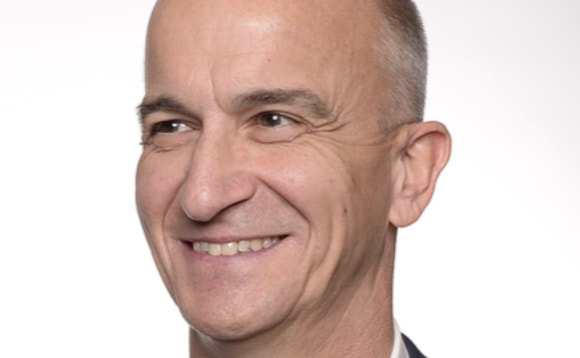
Has the current situation affected your approach to current or future expansion in the Middle East?
“At present we have not changed our approach to the Middle East. It remains an important market for us and we continue to support our partners and customers across the region.
“We are closely monitoring developments, but our expectation is that the situation will stabilise and allow businesses to continue growing in the region over the longer term.”
Has the conflict led to a rise in demand for cybersecurity, resilience or risk mitigation services?
“We have not yet seen a noticeable increase in demand linked directly to the current situation.
“However, events like this often prompt organisations to review their backup, disaster recovery and broader resilience strategies.
“We expect many customers to revisit their business continuity and risk mitigation plans as part of normal operational reviews.”
Do you anticipate any impact on revenue performance from the region if instability persists?
“At the moment our customers and partners continue to engage with us on a business-as-usual basis, although many teams are working remotely rather than from offices.
“It is difficult to predict the longer-term impact if instability continues, but we are monitoring the situation closely while continuing to pursue growth opportunities across other parts of the EMEA region to help mitigate potential risk.”
Drawing on your experience, how prepared do you think the IT channel is for sustained geopolitical disruption?
“The IT channel has shown strong resilience in recent years, particularly during the COVID-19 pandemic.
“That experience forced the industry to adapt quickly and strengthened its ability to deal with disruption.
“While geopolitical uncertainty always presents challenges, the sector has demonstrated that it can adjust rapidly and continue supporting customers effectively.”
Guy Golan, co-founder and CEO, Performanta
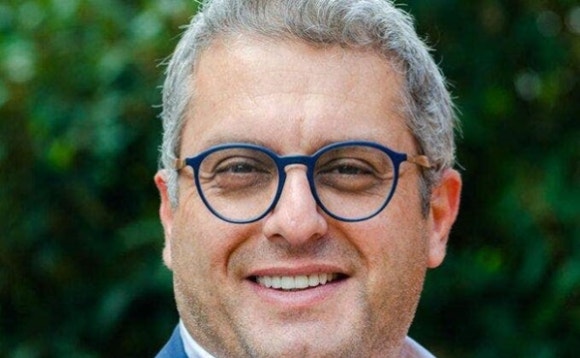
Has the current situation affected your approach to expansion in the Middle East?
“Performanta has never positioned the Middle East as a primary growth market.
“Our clients operate in the region, some in challenging territories, but we serve them primarily through headquarters based in Europe and Africa.
“As such, the current climate has not prompted any strategic shift for us.
“That said, there is reason for cautious optimism.
“Some forward-thinking investors view this moment as a potential inflection point, the early stages of a longer-term stabilisation that could unlock significant economic opportunity across the region.
“Markets such as Saudi Arabia and the UAE have long been robust, while countries like Iraq and even potentially Iran could emerge as powerful investment and growth destinations if the geopolitical trajectory improves.”
Do you anticipate revenue impact if regional instability persists?
“For most sectors, I do not foresee meaningful revenue disruption.
“Israel is a case in point: despite near-daily security incidents, businesses continue to operate effectively and without interruption.
“Markets like Bahrain, Kuwait, the UAE and Saudi Arabia are similarly insulated from the most acute impacts of the conflict.
“The notable exception is the energy sector, which is significantly affected by disruptions to Hormuz Strait shipping routes.
“This will have global, not merely regional, consequences.
“For all other industries, however, the damage does not translate into material revenue impact.
“Iran presents a distinct and more complex scenario.”
Drawing on your experience, how prepared is the IT channel for sustained geopolitical disruption?
“The IT channel has, in effect, been stress-tested for nearly four years, through the Ukraine war, the events of 7 October 2023, and the escalating tensions involving Iran.
“Organisations that have not yet built resilience into their operations face a genuine challenge.
“However, the channel as a whole has demonstrated a strong capacity to adapt.
“If tensions were to escalate into a broader global conflict, the impact would be more severe and widespread, critical national infrastructure (CNI) providers and government-aligned organisations would likely weather it better than others.
“But for the current trajectory, I am confident the IT channel is well-positioned to absorb the disruption.
“Key factors underpinning this resilience include years of accumulated experience operating under continuous geopolitical pressure across Eastern Europe and the Middle East, the demonstrated ability to adapt quickly, as seen through trade policy shifts including the Trump administration's tariff measures and the ongoing digital boom across delivery, cybersecurity and adjacent sectors, which continues to generate growth and opportunity
“The organisations most at risk are those not actively monitoring the global dynamics and preparing accordingly.
“For those that are, the digital world remains a place of considerable momentum and opportunity.”
Paul Mayo, delivery and operations director, Bell Integration
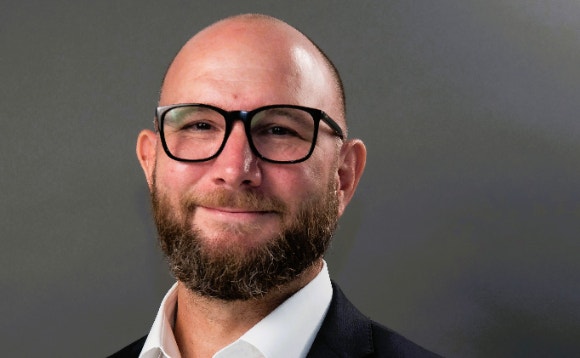
“Our thoughts are with everyone affected by the recent events in the region, and we hope that people on the ground are safe and supported during what is clearly a very difficult time.
“At Bell, we have long‑standing business continuity and contingency plans in place, built around ISO 22301 best practice, to make sure our services remain stable and resilient wherever we operate.
“This includes ongoing risk assessment, scenario planning, crisis procedures, and tested recovery processes that help us protect day‑to‑day operations and maintain service for our customers.
“We keep a close eye on geopolitical developments as part of our normal governance and risk management approach.
“That means regularly reviewing any potential impact and taking proactive steps where needed to ensure we continue to meet agreed service levels.
“At this time, we don’t see any material risks to the services or deliverables we have committed to provide.
“Our plans for growth and expansion in the Middle East remain unchanged, but we’ll continue to monitor the situation carefully and review any matters that may require attention as the situation evolves.”