Synchronised swimming to cybersecurity: How Chorus CEO Nicola Saner took an unconventional route into tech
Before leading Chorus, Saner had lived several careers: competitive synchronised swimmer, drama school dropout, personal trainer and adviser on disability hospitals. Now, she’s applying those lessons in psychology, resilience and saying yes to growth in the channel
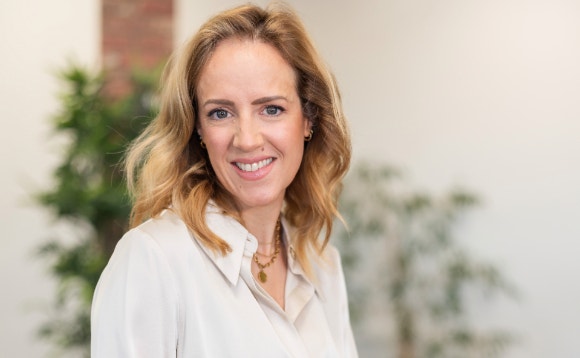
For many technology leaders, the route into the industry follows a familiar pattern: university, graduate scheme, technical specialism, management. Nicola Saner’s path to the CEO chair at Chorus could hardly have been more different.
“When I was in school, I was a competitive synchronised swimmer.
“I did drama at the University of Bedford but dropped out after two weeks.”
The decision to leave drama school quickly pushed Saner into a career far removed from software and cybersecurity. She started working as a personal trainer in London, specialising in rehabilitation work.
“I did personal training with disabled people with frontal lobe brain damage to get them back into an able-bodied world.
“That’s where my psychology first came into it, and that’s what I always reflect back on in business now, because business is all about psychology. Working from person-to-person to find out what motivates them.”
Although she never formally studied psychology, Saner says understanding people became the foundation of her leadership style.
Her career took another unexpected turn when she began working with the Saudi Arabian ambassador in London for personal training and sports therapy.
“He then introduced me to some diplomats who introduced me to the Sheikh, who asked if I could go out to Saudi Arabia to do personal training and sports therapy. He then asked if I could stay and help set up some disability hospitals.
“That’s where I got heavily involved in business.”
The experience exposed Saner to operational leadership and organisational strategy long before she entered the technology sector.
Discovering tech through business
Despite eventually becoming the CEO of a Microsoft solutions partner, Saner insists she was never motivated by job titles.
“I was never chasing a title.
“When I was really young, sitting with my family watching Tomorrow's World, a BBC series about predicting technology in the future, I became fascinated with tech.
“But I never chased a title. What always interested me was, how do businesses work? How do businesses make money? How do businesses create culture? I was fascinated by business, and it was about saying yes.
“If I didn’t say yes to the things that people said no to, because I didn't know how to solve the problem, then I would never get anywhere.
“There’s a solution to every problem. The challenge is figuring out how.
“And that put me in more rooms and more meetings where I then had a choice to step up or step aside.”
Her entry into the channel came indirectly. After returning to the UK, she worked for a business that used technology services provided by Chorus.
“Then I became more interested about what Chorus did, and eventually transitioned over.”
Saner joined the Bristol-based business as head of project delivery in 2016.
She then climbed the ladder to head of operations, ops director, MD and finally CEO in 2025.
Founded in 1999, Chorus is a UK Microsoft specialist with around 110 employees, increasingly focused on cybersecurity services delivered through the channel.
Building a channel-first cyber business
Under Saner’s leadership, Chorus has shifted away from a direct-only model towards working more closely with distributors and MSPs.
“The vision came of not just doing direct, but being a channel model where we work with all the big distributors like TD SYNNEX and Infinigate.
“Our managed cybersecurity services are now focused on doing it through the channel.
“So, they're offering it out to partners and to their customers.”
Chorus still works directly as an MSP and Microsoft partner, helping organisations with Microsoft 365, AI & Copilot, CRM and more.
A major part of its strategy centres around managed cybersecurity services and Chorus’ own SOC.
“It’s too hard for MSPs to set up their own SOC.
“Last year our cyber business doubled in revenue.
“While the growth there is increasing, it is still way too slow for what it should be given the risks.”
For Saner, the opportunity in 2026 lies in balancing AI innovation with what she describes as “true 24/7 cybersecurity”.
“I want to continue in the same direction as we did in 2025, continue pushing the message of Microsoft with true 24/7 cybersecurity.
“The focus for me is to look at what we can do with AI and automation, powered by people.”
The company’s growth strategy also leans heavily on education and talent development.
“Leading with tech, education to partners and MSPs of cyber and the difference between a true 24/7 operation versus people who do cyber.
“The other thing is recruitment, which is more of a challenge.”
Like many channel firms, Chorus faces an ongoing skills shortage.
“Recruitment is a challenge because tech is so fast-paced, everything's happening at the moment.
“So, to try and keep skills up to date - as there's a real skills shortage - we train people in-house a lot, we recruit a lot of attitude and aptitude and a curious mindset, but it's trying to find a recruit that has the skills.”
Diversity as a growth strategy
Saner also sees diversity and inclusion as directly linked to innovation and commercial growth.
“And then equality, diversity, and inclusion (EDI) is a major part of my strategy, using diversity correctly.
“The more diverse a business, that's where we get innovation, that's where we grow. But within cyber and tech, it's really hard to have that diversity, because there is not much diversity there. So that's always part of my strategy, is to make sure we are leading the tech, we've got the right innovation in place, which means we need the right diversity in place, and keeping a close eye on the technologies.”
Part of that effort includes outreach work aimed at younger students, particularly girls.
“We do school talks.
“One of my things is trying to get to younger females because sometimes the mind's been made up by the time they’re in secondary school.
“We’re trying to go into primary schools and get in front of years five and six.
“We also do colleges, and then another one we do for children who've been expelled or excluded from school.”
“Ask to be in meetings”
For Saner, technology remains appealing because of the pace of change and the constant problem-solving involved.
“I find it fascinating what you can do with tech and how quickly it evolves. There’s nothing it can’t do.
“Again, it’s saying yes to problems and then seeing the result when you fix those problems is a great feeling.”
Asked what advice she would give to women considering a career in technology, her answer reflects the same mindset that took her from synchronised swimming to Saudi hospitals and eventually to the helm of a channel business.
“Find a mentor.
“Ask questions. People who ask questions are always more successful.
“If you don’t push yourself forward, especially as a young woman, you’ll get left behind.
“So, get used to saying, ‘Yes, I can do that.’ Ask to be in meetings, ask to get involved.”