‘We’re very close to breaking the £50m revenue ceiling’: Creative ITC CEO
Keith Ali talks international expansion, M&A drive and data sovereignty
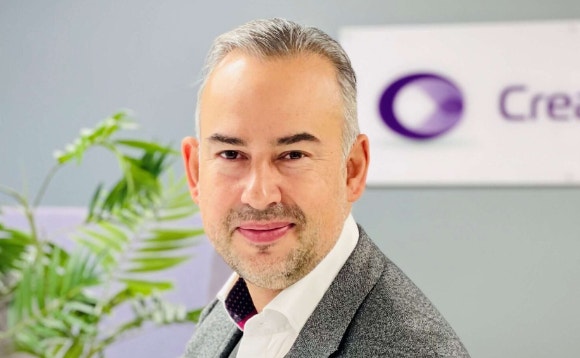
Following the launch of its Houston headquarters last month, Creative ITC is now focused on acquisitions and organic growth to fulfil its vision.
In an interview with CRN, Keith Ali, CEO of Creative, explains the move marks a step change in the firm’s North American presence, after years of operating in the region with only a small on-the-ground team.
He now expects the Houston base to become a meaningful contributor to its evolution over the next 12 months, while overall top line is nearing the £50m mark.
“I fully expect us to break that ceiling, if not this year then absolutely next year.
“We’re growing high at 20 per cent year-on-year and have done so for the last three years. We see even more over the next two years.”
He notes reaching that level would represent a milestone for a business that started with just two employees.
The London-based cloud computing solutions provider currently employs around 175 people globally, a growth of around 35 to 40 per cent over the past year.
The organisation also appointed Lewis Pinner as CRO last week in what is reportedly the most senior hire it has ever made.
US ambitions
Ali adds the launch of the new headquarters has been supported by private equity investor LDC since its backing in 2024.
“We’ve invested over £1m in the new geolocation,” explains the CEO.
“That’s a really good number to say we’re serious about this. This is not a dip your toe in the water.”
He notes the decision to invest more heavily in the US was driven by a surge in interest over the past 18 months, particularly after presenting at industry forums in the market.
“We’ve always been in the US but now is the right time for us to really throw some heavy resources at it and execute against the opportunity that’s there.”
Houston is now set to become the centre of the firm’s US operation, with 15 staff already hired and plans to double that headcount before year-end.
Ali says Houston was chosen partly because of its position as a major hub for energy clients, a sector that aligns closely with the company’s specialism in high-performance IT environments.
“It’s a really good location to spread out from and go and hit East Coast, West Coast and the Midwest.”
Canada, UAE and M&A on the radar
Beyond the US, the CEO explains that Canada continues to be of interest, helped by relationships with engineering companies such as AtkinsRéalis and WSP.
The UAE is also emerging as a possible development area outside North America, driven by a small number of active customer discussions.
On takeovers, the firm is actively looking for a small number of strategic deals rather than a broader roll-up play.
“We’re not prepared to do a knee-jerk acquisition that doesn’t add the value that we want.
“We’re not desperate for an acquisition, but we are looking for acquisitions.”
Potential deals could be driven by either geographic expansion or capability growth, with the organisation assessing targets in the US, UK and Europe.
Strengthened vendor relationships and targeted new logos
Ali says Creative’s proposition differs from more generalist MSPs and cloud providers because it is built around sector expertise in areas such as architecture, engineering, construction and energy.
That specialisation, he argues, is increasingly relevant in sectors with demanding performance requirements, whether around GPU-heavy workloads, latency or industry-specific applications.
The company’s vendor portfolio in the US mirrors its wider global model, with the business relying on major infrastructure suppliers including NetApp, Dell, Cisco and Nutanix across its 12 datacentres worldwide.
“We’re coming to the market with trusted, reliable, high-performance, cloud-based services with all of the major vendors that we’ve always operated with.”
Creative reportedly serves fewer than 100 customers globally, but deliberately operates a “low volume, high value” model built around deeper infrastructure engagements rather than a broad customer base.
“We’re not interested in onboarding as many customers as possible if that comes at the expense of the exemplary service that we currently deliver,” highlights the CEO.
The company typically adds between ten and 20 new logos a year, preferring to focus on long-term trusted relationships.
Macro conditions and data sovereignty
On the wider environment, Ali says macroeconomic uncertainty has not materially affected the organisation, partly because business continuity and resilience are already core to the conversations it has with customers.
“It wasn’t Covid itself that was the problem, it was the uncertainty.
“Most businesses can deal with almost anything. It’s the uncertainty they struggle with.”
He adds that data sovereignty is becoming a bigger topic, particularly in the UK, and expects it to gain further traction in the coming years.
“It’s definitely a topic that is going to increase over the next few years.
“As long as you’ve got the capability to accommodate data sovereignty and meet compliance requirements, which we do, then I don’t see it being a bad thing.”