From the Editor: behind the scenes of the Women and Diversity in Channel Awards judging day
What really happens behind closed doors on awards judging day? Nima Sherpa Green lifts the lid, and speaks personally on why this campaign means so much
Every year, despite all the evidence to the contrary, I still hear the same questions about industry awards.
"Do you need to buy a table to win?"
"Are the winners already decided?"
"Do sponsors get preferential treatment?"
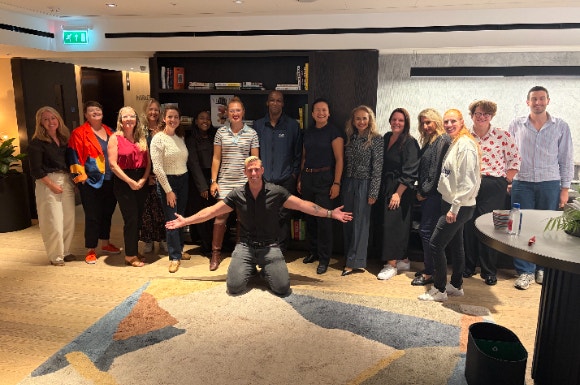
Having spent the day at the Women and Diversity in Channel Awards judging day this week at the Pan Pacific Hotel in London, I can say with complete confidence that the answer is no.
If you could spend just ten minutes in those judging rooms, many of the myths surrounding awards programmes would disappear.
This was our process.
The judging was structured as:
- 29 independent channel industry judges
- 6 judging groups
- Categories spread across six rooms/sessions. Three in the morning, three in the afternoon
- 375 entries assessed across 27 company and individual categories
- Four CRN team members to record the results on the day from the individual groups
What many people don't see is how much work happens before the judges even walk into the room.
In two separate shortlisting sessions judges were tasked with reading through specific categories that were assigned to them. And they do not see which other judges are assigned alongside them.
There is no room for conferring even among themselves as they considered the 1,181 nominations for the 2026 awards.
It’s only after the final shortlisting was closed did they learn who they would be debating with on the day.
And wow, were there debates! One judging group took 40 minutes of discussion to choose the winner for one individual category.
In fact, perhaps now is a good time to share why these awards matter this deeply to the judges.
And to me.
Why do diversity campaigns matter?
Some of you may know I was born in Kathmandu, Nepal to a mother who never had the opportunity to go to school.
Through the gift and privilege of an education, I find myself a leader in the media industry as EMEA Editorial Director.
I do not take this for granted.
I am no smarter, nor more talented than my mum. Certainly, no harder working! But the opportunities I have could not be further from what she experienced, and endured.
It’s a difficult thing for me to write about, and I feel the emotion it evokes.
People did not believe in her in the same way. She didn’t have the same networks; didn’t attend coaching sessions paid for by her employer. And taking chances were always riskier for her.
I’m painfully aware of how much smaller her horizon of opportunities were as a result.
I know in businesses across the country today, there will be some reading who also don’t feel yet that they fully belong.
We spend so many of our waking hours at work. I need to believe we can make a positive impact with this time. The channel is the most personable market I have ever reported on in my career. I know it shares this hunger for asking the question: what is possible?
This is how I see the Women and Diversity in Channel Awards making a difference.
Over the years I have heard former winners – some who now make up part of our cohort of industry judges –share the impact on their confidence and how they have a broader horizon of what they believe is possible for them to achieve.
That belief is so powerful for success.
Back to the judging day: visibility doesn't happen by accident
Every role model starts with someone believing in them.
So, on the blustery rainy day our 25 senior leaders met, they were looking for who the next winners should be.
These are busy people running businesses, leading teams and shaping our industry. Yet they willingly dedicate hours and hours to reviewing entries before judging day and then commit a full day to robust discussion and debate.
Long before the submission deadline closes, we actively share guidance from judges, former winners and our editorial team to help entrants craft the strongest possible submissions. We want every candidate to have the best possible chance of success. The stronger the entries, the stronger the competition and, ultimately, the more meaningful the recognition.
Category by category, entry by entry, judges challenge one another's views. They defend candidates they believe deserve recognition. They scrutinise evidence. They ask difficult questions. They compare achievements, impact, innovation, leadership and measurable outcomes.
As one of our judges shared after coming out of the room “it was a privilege”.
“The incredible talent, achievements and diversity represented across the channel made the judging process both enjoyable and challenging.”
And as someone who has facilitated these discussions for many years, one of the things that continues to inspire me is how seriously judges take their responsibility. Nobody is looking for the easiest decision. They are looking for the fairest one.
What I have never seen is a discussion about who bought a table.
I have never seen a discussion about commercial relationships.
And I have certainly never seen a winner selected for any reason other than merit.
The reality is far less dramatic and far more reassuring. Winners are chosen because a room full of respected industry leaders believes they have earned that recognition.
This year’s judging day also gave me an opportunity to reflect on how far the Women and Diversity in Channel Awards have come.
Eight years of channel winners
When we launched the Women in Channel Awards in 2018, we were taking a genuine leap of faith.
At the time, there was a clear editorial rationale. The UK government had introduced mandatory gender pay gap reporting for larger organisations, prompting important conversations around representation, progression and equality in the workplace.
Yet when we first tested the idea with the industry, not everyone was convinced.
Some questioned whether dedicated awards for women in the channel were necessary.
Others wondered whether interest would fade after a year or two.
A few dismissed the idea altogether.
What began as an attempt to shine a spotlight on talented women in our industry has evolved into something much bigger. The awards have grown in scale, quality and impact year after year. More importantly, they have helped create visibility for people whose achievements might otherwise have gone unnoticed.
Some entries spoke about what awards like these mean to them personally. Not simply because they could win the award, but because they encourage them. For those who were nominated by colleagues, several reflected on how powerful it felt to have their contribution recognised by their peers.
That matters.
Because at its heart, this programme has never been solely about celebrating winners.
It has always been about ensuring people can see what is possible.
It has always been about creating visible role models.
It remains a way for us to help talented people understand that there is a place for them at every level of our industry.
My hope for every person who enters these awards, whether they ultimately take home a trophy or not, is that they recognise something important.
You belong here.
You belong in the channel.
You belong in leadership.
You belong in the conversations that will shape the future of this industry. And perhaps that is the most important outcome these awards can deliver.
Awards programmes only have value if people trust the outcome.
That trust does not come from trophies, gala dinners or sponsorship packages.
It comes from hundreds of entrants who are willing to share their stories. And from judges who dedicate their expertise and personal time to making difficult decisions.
After another judging day, I am more convinced of that than ever.
I left feeling incredibly proud of what this programme has become and deeply grateful to the judges, entrants, finalists and winners who have helped shape its journey.
Eight years on, the Women and Diversity in Channel Awards are not a flash in the pan as some predicted.
They are a reflection of an industry that is becoming stronger, more inclusive and more representative of the talent within it.
And that is something worth celebrating.