GTDC Summit EMEA: Circularity, macro pressures and AI reshape the channel
Distributors, vendors and analysts share advice and insights into where the industry is heading and how to prepare for what’s ahead
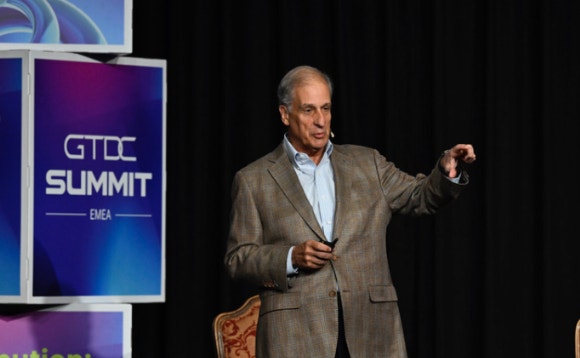
The channel distribution landscape is entering a deciding moment, as AI, sustainability, cybersecurity demands and services-led models reshape how distributors, vendors and partners create value.
CRN attended this year’s GTDC Summit EMEA to hear the latest insights from distributors, vendors and analysts who took the pulse of European distribution.
Located in the heart of Europe, the Netherlands, attendees from across the continent and beyond sat down, exchanged and listened to understand what will shape tomorrow.
Mother Earth has been spinning all her 4.54 billion years. And the blue marble hasn’t been granted rest, as the world continues to rapidly evolve.
But for disties, going with the flow is not enough; they need to actively lead the change, alongside partners and allies, not just to stay on top but to lead the way.
Missed out on the event or interested in what lies ahead for distribution and the EMEA channel? Not to worry, here is CRN’s recap of the two-day summit.
Circularity and sustainability: From nice-to-do to must-have for growth
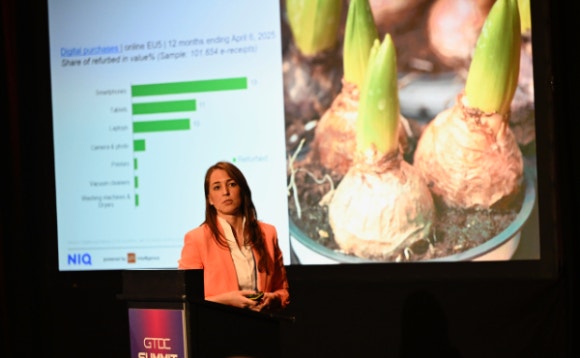
A clear message from the summit was that sustainability is no longer a reporting exercise, but an increasingly important commercial lever.
That shift comes despite - and partly because of - the scale of the challenge.
Global material consumption has now surpassed 100 gigatonnes per year, while the share of circular materials is falling, dropping from 9.1 per cent to 6.9 per cent.
“Over 90 per cent of materials do not return to the economy,” said Jacco Jochemsen, co-founder of IT lifecycles services firm Current, warning that consumption continues to outpace progress.
At the same time, demand signals remain strong.
According to Tatjana Wismeth, head of distribution and supply chain intelligence at NIQ GfK, products carrying sustainability claims continue to outperform, delivering higher growth, higher average selling prices and stronger margins.
Yet nearly half of consumers (47 per cent) do not recognise those claims, pointing to a gap between vendor messaging and customer understanding.
For the channel, that gap represents an opportunity and vendors are already shifting strategy.
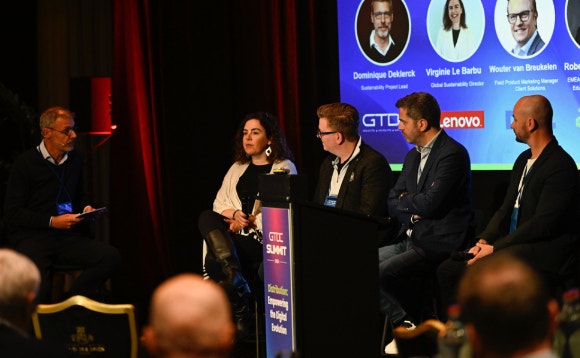
During a panel featuring Lenovo, Acer, HP and Dell, lifecycle thinking came out as a central theme, driven in part by the more than 60 million tonnes of e-waste generated globally each year.
“We’re looking at everything from design through to refurbishment and reuse,” said Virginie Le Barbu, executive director of global sustainability - international sales organisations at Lenovo.
On the other hand, execution remains uneven.
“Repair is still expensive,” noted Roberto Rosaschino, EMEA senior business manager - education at Acer, explaining the economic barriers that continue to slow adoption.
The panel agreed circularity is no longer optional, but scale will depend on making it commercially viable and easier for partners to deliver.
US to the West, China to the East: Can EMEA find its place?
Sustainability is growing in importance, but in a far more challenging economic environment.
The event repeatedly returned to the impact of geopolitical instability, from tariffs and trade fragmentation to energy disruption and shifting global alliances.
These pressures are feeding directly into customer behaviour, with cost and risk now dominating decision-making.
Models that were previously positioned as sustainable, such as refurbishment and lifecycle extension, are now being driven by economics.
At a structural level, businesses are also changing how they operate.
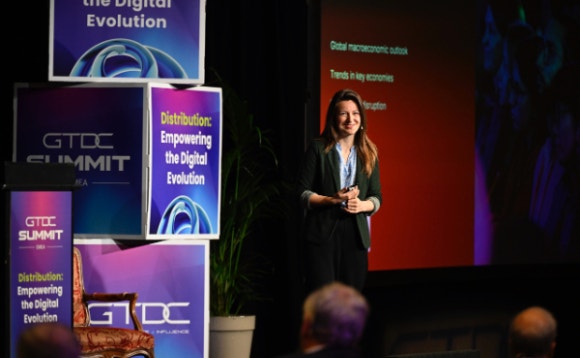
Emily Mansfield, principal economist at the Economist Intelligence Unit, pointed to a “shift from efficiency towards resilience.”
“Companies are diversifying supplies and holding more inventory, even at higher cost.”
That shift is particularly relevant in Europe, where dependency on external energy and raw materials has exposed vulnerabilities.
The contrast with China’s investment strategy was also highlighted, with the country scaling solar capacity from 0.1 gigawatts in 2010 to more than 570 gigawatts today, and a further 700 gigawatts in development.
The implication for the channel is clear: macroeconomic pressure is not just a backdrop but a driver of structural change in both demand and strategy.
AI acceleration and evolving partner role
Alongside sustainability and macroeconomic pressure, technology - particularly AI - is accelerating the shift towards services.
While adoption is increasing, readiness remains uneven.
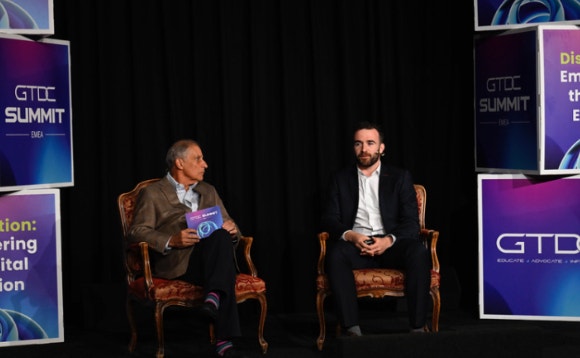
“There’s a lot of usage, but not necessarily a lot of readiness,” highlighted Joe Turner, global director at CONTEXT, in a fireside chat with GTDC CEO Frank Vitagliano, noting a gap between experimentation and structured deployment.
At the same time, AI is introducing new layers of complexity, particularly in cybersecurity.
“It’s a massive opportunity, but also a massive risk,” Turner said, referring to the rise of autonomous AI agents capable of operating independently across systems.
This is already reshaping investment priorities.
Areas such as identity protection and zero trust are seeing rapid growth, with increases in zero trust investment in Q1 alone.
“It’s no longer just users and devices,” Turner added.
“You’re now managing thousands of AI agents.”
That growing complexity is also changing the structure of the channel itself.
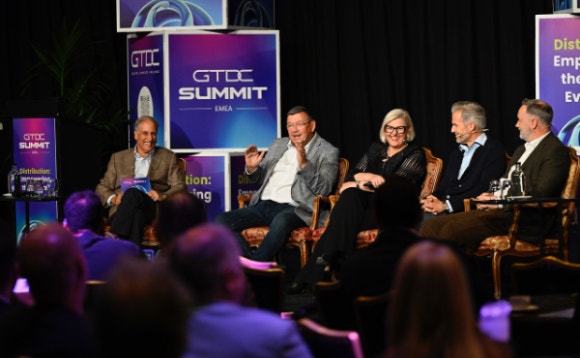
Execs from TD SYNNEX, Arrow, Ingram Micro and Exclusive Networks also highlighted the scale of the ecosystem, with Vitagliano noting that the panel alone accounted for “$125bn of revenue,” underscoring distribution’s influence across the market.
At the same time, the mix of partners is becoming increasingly diverse.
“It is so much more complex when you look at the map,” said Miriam Murphy, president, Europe at TD SYNNEX, pointing to the growing presence of MSPs, MSSPs and other partner types alongside traditional resellers.
This shift is also redefining how value is created.
“I actually think the value of the transaction element of the distributor is diminishing,” highlighted Jesper Trolle, CEO of Exclusive Networks.
“The value is moving to the pre and the post side.”
Longer-term, service-led engagements are becoming the norm.
“You’re looking at transactions that are three, five, seven years in terms of the commitment,” added Murphy.
For customers, that complexity is becoming increasingly difficult to manage internally.
As a result, MSPs are emerging as a central pillar of the channel.
From managing AI deployments and cybersecurity to handling compliance and sustainability reporting, MSPs are taking on a growing share of operational responsibility.
With European distribution revenues reaching around $97bn (£71.7bn) in 2025 based on data from CONTEXT, evolving about five per cent year-on-year, value is increasingly being created beyond product, through platforms, services and lifecycle enablement.
“The term distributor doesn’t even come close anymore to really depicting what these folks do,” said Vitagliano, describing the industry’ shift towards ecosystem orchestration.
With around 86 per cent of vendors now leveraging distributor platforms, that role is becoming central to how solutions are delivered.