HPE sees growing demand for refurbished IT as supply chain costs squeeze customers
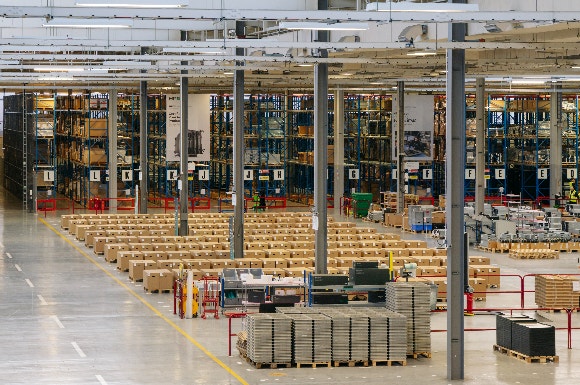
CRN was at HPE’s Technology Renewal Centre in Glasgow. The vendor shared how rising memory prices and continued supply shortages are forcing customers to reconsider buying new equipment, creating opportunities for partners
Customers struggling to get their hands on new IT kit are increasingly turning to refurbished hardware, according to HPE.
Matt Harris (pictured), SVP and managing director for UK, Ireland, Middle East and Africa at HPE, said a perfect storm of AI-driven demand, rising hardware costs, supply chain disruption and pressure on IT budgets is forcing customers to reconsider buying pre-owned equipment.

“You’re going to have customers, and those that our partners represent in particular – midmarket, local government as an example – who are now getting costed out from buying their basic needs. They’re having to think again,” he tells CRN UK.
Hardware costs have risen sharply during 2026, and although the pace of increases is beginning to slow, Harris said prices are continuing to climb. The company expects strong demand to continue into 2027.
“We don’t see the costs in the market coming down anytime soon,” he says.
The problem is exacerbated by the enormous demand for components from AI infrastructure projects, particularly memory and SSDs.
“Big AI build-outs, loads of demand, not enough supply available, and therefore that’s pushing prices.”
Refurbished IT becomes a more attractive option for end users
Customers are also grappling with higher VMware costs, post-Broadcom acquisition, and the need to fund AI initiatives, Harris said, adding to the pressure on already stretched IT budgets.
Some customers are responding by sweating their existing IT for longer. But Harris warns that this can introduce security risks and problems with equipment reaching the end of its supported life.
That’s creating an opening for professionally refurbished enterprise hardware.
“That’s changing the perception of ‘I need to, or I can even afford to buy new’, where maybe I’m going to get a refurbished, very professional asset from HPE, as an example, and it can deliver for me,” says Harris.
He acknowledges that buying refurbished technology still involves overcoming a degree of customer resistance.
“There’s a little bit of psychology in that, if I’m honest with people,” he says, comparing the preference for brand-new equipment with the hesitation some consumers might feel about buying second-hand products.
However, he expects the economics of the current market to make refurbished infrastructure an increasingly attractive option.
HPE opens renewal capabilities to channel partners
Harris was speaking during a visit to HPE’s Technology Renewal Centre in Erskine, Glasgow.
HPE believes these Centres can help partners respond to that shift without having to invest in specialist refurbishment and asset recovery operations themselves. The Erskine facility handles enterprise equipment at the end of its initial deployment, with capabilities covering asset recovery, data sanitisation, refurbishment and resale.
Eighty-four per cent of assets processed are refurbished and returned to active use.
HPE Financial Services also offers customers ways to recover value from equipment they no longer need, potentially releasing funds for new technology investments. It says it returned $1.25bn to customer budgets between FY2020 and FY2025 through its asset recovery services.
Asked how resellers could make use of the operation, Harris stresses that its capabilities are available across HPE’s partner ecosystem.
“Everything we have here is available to the channel community,” he said. “Not only that, we have partner programmes through financial services and working with my sales organisation.”
The service isn’t limited to HPE equipment. The Erskine operation processes technology from multiple vendors, including Cisco, Dell EMC and IBM, allowing partners to address a customer’s broader IT estate rather than individual HPE products.
Message to partners: more technology means more renewal opportunities
HPE expects the importance of IT lifecycle services to increase as AI adoption drives further infrastructure investment.
Harris pointed to three factors underpinning that outlook: growing volumes of technology, organisations’ sustainability commitments and increasing concern about data sovereignty and the traceability of IT assets.
For customers in regulated sectors, the ability to manage data sanitisation and asset recovery within the UK is another consideration.
The company is also developing its capabilities around second-life GPUs, with HPE identifying a growing secondary market for AI accelerators. It is currently building GPU testing and refurbishment capacity in Andover, Massachusetts, with plans to bring similar capabilities to Europe.
For partners, Harris suggests the wider opportunity lies in helping customers extract more value from technology throughout its lifecycle, rather than concentrating exclusively on selling new equipment.
“There is so much unlocked potential in the infrastructure that you already have, either from a utilisation perspective or a re-utilisation of that asset,” he says.
He indicated that HPE may have more to say about its renewal strategy at its Discover event in December, including how it can increase awareness of these capabilities across the partner community.