From acquisition machine to platform company: Inside Kaseya’s reinvention
A year after taking over as CEO, Rania Succar is attempting to transform Kaseya’s reputation, culture and technology strategy. But can a company long associated with aggressive acquisitions and fragmented products convince MSPs it has genuinely changed?
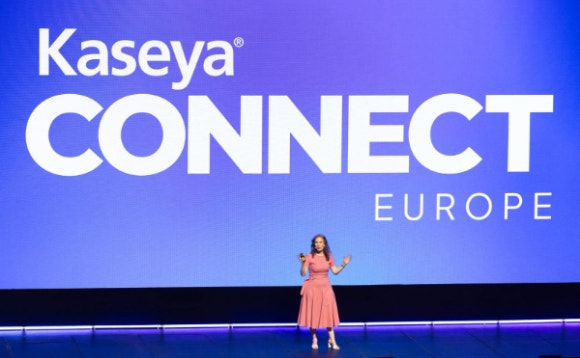
Kaseya has spent years building one of the largest portfolios in the MSP market through acquisition.
The strategy delivered scale, but it also attracted criticism from partners who questioned whether products were being integrated, whether innovation had slowed and whether the company had become too focused on sales growth at the expense of customer experience.
According to one MSP, “Products are acquired, form part of the Kaseya family, yet never progress. It’s almost as if they stand still.”
A year after taking over as CEO, Rania Succar is attempting to change that perception.
From acquisition to integration
Signs of that shift were visible throughout Kaseya Connect Europe in Prague this week.
Rather than announcing another acquisition, execs spent much of the event talking about platform engineering, product rationalisation and the challenge of bringing together technologies acquired over many years.
“We’re actually doing the hard work to connect the data and open up the APIs,” said Succar.
CTO Pratik Wadher also zoned in on the importance of a common data layer, unified APIs and a shared intelligence platform capable of operating across the company’s portfolio.
According to Greg Jones, SVP of MSP Success, the ambition itself is nothing new.
“That has always been the vision,” he said, but adding the “execution to that vision has been challenging."
Jones said the company is now focused on reducing overlap across its portfolio and creating a more coherent platform experience for MSPs.
“You don’t need four different products for this one thing,” he said.
The strategy represents a departure from the acquisition-led narrative that defined much of Kaseya's recent history. Rather than expanding the portfolio further, executives are now focused on simplifying and integrating what the company already owns.
“That becomes the innovation, how they work better together,” Succar told CRN UK.
The platform race
Kaseya isn’t alone in rethinking its tech strategy. Rival ConnectWise recently announced a major overhaul of its platform strategy, effectively retiring the Asio brand in favour of a rebuilt cloud-native platform designed to unify PSA, RMM and automation capabilities.
The move has prompted confusion among some MSPs, with several questioning whether the announcement represented a genuine platform rebuild or simply a rebranding exercise.
Whatever the answer, the debate highlights a broader trend across the industry. Vendors are increasingly being judged not by the number of products they own, but by how effectively those products work together.
MSPs say they’re increasingly frustrated by fragmented tech stacks. For Kaseya, however, the challenge is arguably greater because of the breadth of products it has accumulated over the years.
Jason Fry, managing director of UK MSP Global4, said the need for better integration is very real.
“The frustrating thing is I just spent the last year and a half building exactly that,” he said.
His team created its own reporting and automation layer to connect tools and workflows across multiple platforms.
The fact that MSPs have been forced to build those capabilities themselves helps explain why Kaseya is now placing so much emphasis on platform architecture.
From closed ecosystem to open platform
But the changes at Kaseya aren’t just about reducing product overlap – they’re also about how Kaseya works with the wider tech ecosystem.
Historically, MSPs often viewed Kaseya as a relatively closed platform, with integrations and third party connectivity taking a back seat to keeping customers within the company's own portfolio.
But that appears to be changing, too. At the event, execs highlighted integrations with AI platforms including Claude and Microsoft Copilot, alongside a broader push to expose more functionality through APIs.
According to Jones, that represents a significant departure from the past.
“They’ve opened up the platform to APIs, meaning they’ll talk to other vendors now and integrate,” he said. “In the past under different leadership... very much no, it’s all closed off.”
That was the message from Wadher, too: “We have to be open, because the world is not a closed ecosystem,” he said.
A different culture?
However, the tech is only part of the story. Several MSPs have pointed to concerns about Kaseya’s reputation under previous leadership, particularly around sales culture and customer relationships.
In response, Jones, SVP highlighted investment in engineering, customer experience and product development. He told CRN UK that more money has been invested in R&D and engineering than at any previous point in the company’s history.
Partners are beginning to notice some of those changes.
“That change of management has really seen that progressive change,” said Simon Gurner, managing director of Sunrise Technologies. “They were very, very siloed before, and they’re really pulling together now.”
The Datto question
Perhaps no acquisition looms larger over Kaseya’s reputation than Datto.
Many MSPs still remember Datto as a channel innovator, and some continue to question whether that pace of development survived the acquisition. Those concerns surfaced again in conversations around the event.
But rather than promising a return to rapid product expansion, Kaseya’s leadership team is making a different argument. The future, they say, lies not in building more products but in making existing products work together more effectively.
For Succar, that means creating a platform capable of supporting AI, automation and what the company calls autonomous IT.
Whether MSPs ultimately embrace that vision remains to be seen.
But as Gurner put it: “They were very, very siloed before, and they’re really pulling together now.”