‘We’re looking to grow on all fronts’: Intercity CEO
Charlie Blakemore discusses the £50m MSP’s M&A roadmap, international expansion and “holding our nerve” in the current geopolitical and economic environment while aiming for more sustainable growth
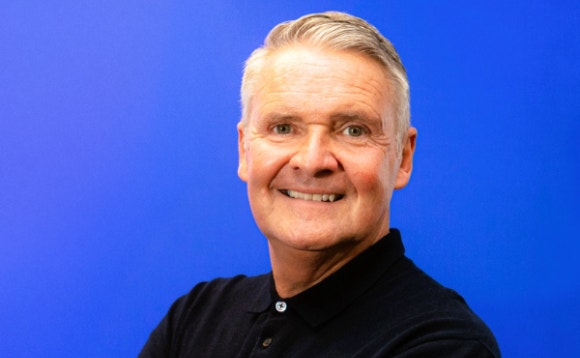
Intercity is gearing up for its next phase of expansion after almost doubling in size over the past five years.
The Birmingham-based partner has grown from £28m in turnover to more than £50m over the period, while its workforce has increased from just over 160 employees to nearly 300, CEO Charlie Blakemore tells CRN.
Much of that expansion has coincided with Intercity’s evolution from its telecoms roots into a broader MSP, with Microsoft becoming an increasingly significant part of the business following its buyout of Centrality in 2024.
But Blakemore stresses the MSP does not intend to focus its next stage of growth on one area alone.
“We’re looking to grow on all fronts, not just with Microsoft,” he tells CRN.
Alongside its Microsoft capabilities, Intercity continues to operate across managed IT services, managed LAN, SD-WAN, connectivity and communications.
The CEO says bringing those capabilities together has increasingly allowed the company to position itself as a single technology partner for clients looking to outsource larger parts of their IT estates.
“We’re a one-stop shop now for potential customers,” he says.
Intercity currently works with more than 1,000 customers across sectors including sport, education, public sector, manufacturing, professional and financial services, logistics, construction, retail and charities, while defence is also becoming a growing area for the company.
Earlier this month, the MSP was named managed IT services partner of rugby club Bristol Bears.
Centrality acquisition starts paying off
The MSP acquired Bedfordshire-based Centrality in 2024 after finding that demand for Microsoft services was developing faster than its ability to recruit the required expertise internally.
“We were growing our own Microsoft capability in house, but couldn’t recruit quick enough to for the demand,” notes Blakemore.
The search eventually led Intercity to Centrality, which brought a team of 95 employees alongside capabilities spanning modern workplace, cloud, Azure transformation and security.
Around two and a half years after the acquisition, Blakemore says the deal is generating a record pipeline of opportunities across both existing customers and new logos.
“We’ve now got sort of record pipeline from that acquisition in terms of bringing in new opportunities either within our existing base or within new logos,” he says.
Centrality also strengthened Intercity’s security credentials, including through membership of the Microsoft Intelligent Security Association (MISA).
The MSP now operates a Microsoft security operations centre in Bedford alongside a network operations centre that Blakemore says Intercity has operated for between 15 and 20 years.
The acquisition forms part of a broader strategy that combines periods of organic expansion with selective M&A.
The CEO says Intercity typically looks to achieve two or three years of organic growth before acquiring a complementary or strategic asset to help take the company to its next stage of scale.
That approach has already played a significant role in Intercity’s expansion.
Blakemore says the company’s growth from £28m to more than £50m in turnover has been roughly evenly split between organic growth and acquisitions.
“We had three, probably three or four years of really strong organic growth,” he says.
“Our growth from £28m to £50m, I think we’re £52m this year, has been really 50/50 split between organic and acquisition.”
Building for Intercity's next phase, in the UK and abroad
Future expansion could eventually take Intercity further beyond its home market.
The MSP incorporated a US entity around two years ago and currently provides services to a small number of customers across the Atlantic.
Blakemore says the operation remains relatively small, with only a handful of employees in the country, but gives Intercity a footprint from which it can support UK customers operating in the US as well as US organisations with UK operations.
Further international expansion is not being ruled out as the company grows as the CEO stresses that the UK will remain Intercity’s primary focus over the next two to three years.
“We’re now breaking out into the US under our entity there, but very much focused, I think, in the next two or three years around growing our business in the UK,” he says.
After years of rapid expansion, Blakemore expects Intercity’s growth to become more measured in the near term.
The CEO points to higher business costs, geopolitical uncertainty and wider economic pressures as headwinds, but says the company still expects to grow.
Intercity is targeting revenue growth of between six and eight per cent over the next few years.
“I want to exceed that, but I feel you’ve got to be realistic in the environment you’re in,” Blakemore tells CRN.
The MSP is simultaneously investing in the foundations needed to support another period of expansion.
That includes £1m spent on a new Dynamics 365-based core business system, alongside investment in new skills and capabilities.
For Blakemore, maintaining that balance is more important than pursuing rapid expansion for its own sake.
“In my experience, growing in a more measured and sustainable way is more important than having the vanity of a quick growth and then a crash and burn,” he says.
“It’s making sure we are following our strategy, we’re holding our nerve and we’re developing the right capabilities, investing in the right things to scale the business going forward.”