UK IT sector gender pay gap widens to a nine-year high – report
Integro Accounting research found women in IT roles on average earn 17.6 per cent less than men

The gender pay gap for IT professionals in the UK has widened to the highest level in at least nine years, according to new analysis.
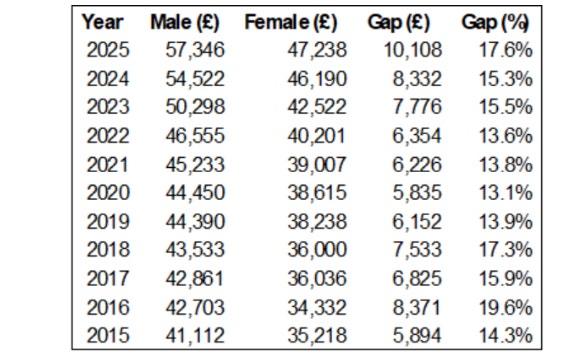
Integro Accounting examined HMRC PAYE data, which showed the median gender pay gap for IT professionals is now 17.6 per cent.
The pay difference has widened at an accelerating pace since the end of the Covid-19 pandemic in 2022, when the median gender pay gap stood at 13.6 per cent, the second lowest in a decade, according to Integro’s study.
The firm found that from 2022 onwards, men’s salaries rose sharply, reflecting rapid growth in high-demand, high-paid specialisms such as AI, cloud architecture and cybersecurity, while women’s pay increased at a slower rate, pulling the female median further behind.
The IT gender pay gap narrowed steadily from 2016 (19.6 per cent) to a low point in 2020 (13.1 per cent), coinciding with the high point of the pandemic.
The accountancy firm explained that during the pandemic the IT gender pay gap narrowed as factors that normally drive male salaries ahead of female salaries temporarily stalled.
Salary growth slowed across the sector, especially in the high-paid, male-dominated specialisms that usually push the male median upward.
At the same time, universal remote working reduced some of the structural disadvantages faced by women in tech, creating greater access to opportunities and progression.
The fastest-growing areas of tech draw heavily from STEM fields where women remain significantly under-represented, meaning the talent feeding into AI, cloud and cybersecurity roles is disproportionately male.
“While the IT gender pay gap narrowed during the pandemic, the figures show a clear upward trend from 2022 onwards, with the gap increasing year-on-year through to 2025,” said Christian Hickmott, managing director of Integro Accounting.
“During 2020 and 2021, universal remote working reduced some of the structural barriers that normally hold women back in tech, shrinking the gender pay gap. As the sector returned to rapid growth after the pandemic, male‑dominated specialisms saw the sharpest pay rises, pushing the gap wider.”
According to Integro, tech roles often demand long hours, on-call availability, or rapid upskilling. These conditions disproportionately disadvantage women returning from career breaks. At the same time, reduced flexibility tends to impact women more, especially those with caregiving responsibilities, affecting retention and progression.
“As companies pushed staff back into the office after the pandemic, women were disproportionately affected because they were more likely to rely on flexible or hybrid arrangements. The reality is that visibility still largely drives progression, so that shift favoured men and contributed to the widening pay gap,” Hickmott added.
Integro warns that unless female representation increases in the fastest‑growing technical fields, the gender pay gap in IT is likely to widen further as demand for AI and cloud skills continues to surge.