Lenovo: ‘Sustainability belongs in mainstream business plans’
On the first day of the vendor’s 360 Circle Summit, the audience heard how sustainability needs to be at the core of business plans, the role of AI, and the urgency to provide accurate and relevant emissions data to customers
“Once you take action and make a difference you become inspired to do more, and you inspire others.”
These were the words of the late Dr Jane Goodall, who made a surprise online appearance at the Lenovo 360 Summit last year shortly before she died. The sentiment was just as relevant at the 2026 event.
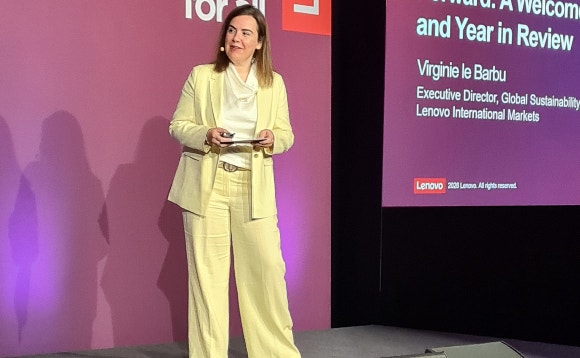
In her opening keynote, Virginie Le Barbu, executive director, global sustainability at Lenovo revealed how the 360 Circle network has grown to over 830 partners, covering more than 68 countries and with a revenue coverage of 45 per cent; close to Lenovo’s original goal of 1,000 partners and 50 per cent revenue coverage.
The key remit of sustainability has changed, Le Barbu explained.
“In the past, the focus was mainly on compliance, on reporting, disclosure requirements and data. Now today it is the leaders asking new questions around value creation, business resilience and how sustainability can support business growth,” Le Barbu (pictured below) said.
“What we have done over the past decade has been foundational because it has built the data set, the governance system, and the accountability, but now we need to move to another stage.”
Le Barbu added that six key forces are driving sustainability as a core business value: firstly, regulations are not expanding, but the industry is operationalising what already exists.
Secondly investors are no longer looking for ‘glossy’ ESG reporting and disclosure, they want demonstrable value that will guarantee them returns and show business resilience.
Thirdly, the climate and natural risks are financial risks, so these are now affecting operation supply chain insurance assets and growth.
“It now belongs in mainstream business plans and decision making,” she said.
Fourth, competition is shifting, and if sustainability is embedded into organisations, it will help secure talent, long-term value and innovation within a business.
Fifth, technology is able to unlock impact at scale so things like AI and digital tools are helping businesses move beyond measurements into optimisation, action and real business impact.
Finally, sustainability is now about long-term value creation, not short-term gain or costs.
Partners agreed that sustainability is a core requirement, but said there was still work that needed to be done around data to bring customers fully on board.
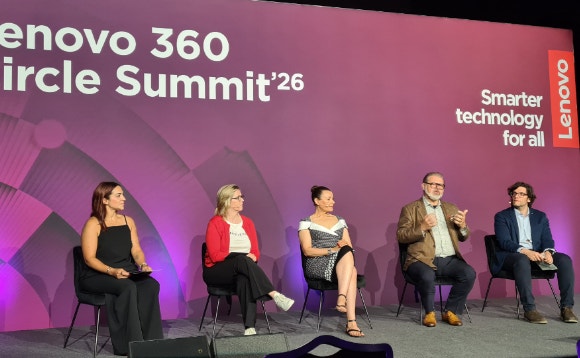
Speaking on a panel comprised of 360 Circle members, Julie Martin, EMEA chief of staff and ESG lead at Arrow, said vendors need to step up.
“Scope 3 data is not available across the board and is not standardised across vendors and it makes it difficult to report at scale and harder to reduce emissions. Also the maturity across EMEA markets is uneven. This data is critical to demonstrate business value and ROI because when the impact is not tangible and measurable, then sustainability is deprioritised.”
On the same panel Florence Fisher, group sustainability sourcing strategy manager at Computacenter, said: “As a global reseller we are seeing a lot more demand from customers [for data] and it is becoming more granular. When 99 per cent of our emissions comes from Scope 3 data it is absolutely key to us. Customers want proof of where the data is coming from and how to use that data to plug into their decarbonisation plans.”
Look out for part two of the summit write up covering AI, the politics of sustainability and much more.