Proact’s turnaround strategy pays off as Q2 revenue rises
The UK was the only geography where top line declined, impacted by lower system sales
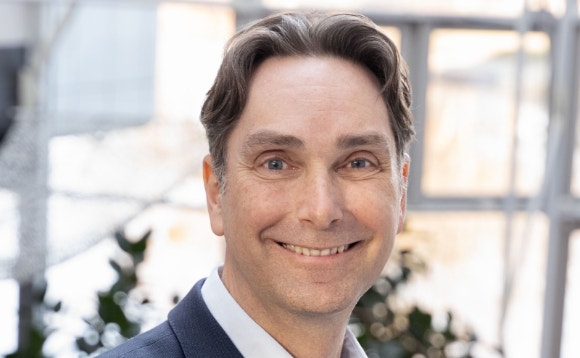
Proact’s turnaround strategy appears to be paying off as the organisation reported stronger Q2 results following last year’s cost-efficiency programme.
The Sweden-HQ VAR’s revenue increased 9.8 per cent to SEK 1.3bn (£99m), compared with SEK 1.2bn at the same time the year prior.
Systems earnings amounted to SEK 744m during the quarter, an increase of 16.1 per cent, driven by several major systems deals in the Nordic & Baltics and West regions.
Interim CFO Åsa Regen Jansson said momentum was driven by continued customer demand and higher hardware prices, although longer delivery times partially constrained sales.
Service revenue amounted to SEK 541m, representing an increase of 2.1 per cent.
Adjusted EBITA climbed 38.3 per cent to SEK 105m (Q2 FY25: SEK 76m).
For H1, revenue rose 10.2 per cent to SEK 2.5bn.
Systems top line amounted to SEK 1.45bn, an increase of 9.6 per cent.
Service turnover amounted to SEK 1.1bn, a 1.7 per cent rise.
Adjusted EBITA leapt 41.9 per cent to SEK 220m.
“We are delivering another quarter with strong profitable growth and continued progress in executing our strategy,” CEO Magnus Lönn said during the company’s earnings call.
Lönn noted that the latest figures demonstrated that the restructuring measures introduced over the past year were beginning to pay off.
“We have had some long-term downfall in our business units outside the Nordic region.
“I am very satisfied that the work that we have done throughout the spring with a cost-efficiency programme now actually is paying off.
“We see the second quarter in a row where both Central and West are moving in the right directions.
“UK has done a fantastic job and is also moving in the right direction and the Nordic region continues to deliver on a very, very high level.”
Regional performance
The Nordic & Baltics business, which includes Sweden, Norway, Denmark, Finland, Estonia and Latvia, remained the group’s top performer, with top line soaring 19.8 per cent to SEK 805m and adjusted EBITA jumping 20.6 per cent to SEK 81m.
In the UK, revenue fell 18.2 per cent to SEK 173m, impacted by lower systems sales and cloud services revenue.
Adjusted EBITA remained stable at SEK 12m.
Lönn acknowledged that systems sales in the UK remained challenging.
“UK on the system side had a weak quarter, but still the team managed to continue boosting the margin in the right direction,” he said.
In the company’s West division, which comprises Belgium and the Netherlands, turnover reached SEK 184m, a five per cent increase year-on-year.
The company also agreed to divest its consultancy business in the Netherlands to sharpen its focus on cloud and data services, with the disposal reducing reported revenue growth by 3.4 per cent.
In its Central division, which comprises Germany and Czechia, earnings amounted to SEK 150m, an increase of 3.2 per cent compared with the same period last year, driven by higher systems sales and service revenue.
Lönn on memory shortages and outlook
Lönn warned that supply constraints in the memory market are likely to persist for longer than previously expected, as he already predicted them to persist across this quarter.
“I think it’s even more clear now than it was a quarter ago that we will have memory shortage until autumn 2027,” he said, adding that lead times have stretched from weeks to months as manufacturers prioritise AI-related memory production.
The shortage is driving some customers to accelerate infrastructure purchases before prices rise further.
Lönn said Proact continues to see customers bringing investments forward, while the company enters the second half with its strongest-ever backlog, providing greater visibility despite an uncertain macroeconomic environment.
“Q3 will be more of the same and we expect that to be the case also for the quarters to come,” he explained during the earnings call.
“We base it on strong demand in our dialogue with customers. We base it on the backlog, which has never been higher.”
Moving forward, Lönn said the focus remains on improving profitability in the Central and West regions while continuing to invest in the group’s strongest-performing markets.
“We have a lot more work to do there, but we are on the right path.
“We continue to invest in UK and the Nordic area where we have a really good and strong position.”