‘The revenue will come’: Redcentric CEO targets VMware landgrab after £3m top line dip
Michelle Senecal de Fonseca and CFO Tim Sykes talk doubling VMware market share, the MSP’s return to organic expansion and life after its £125m datacentre sale
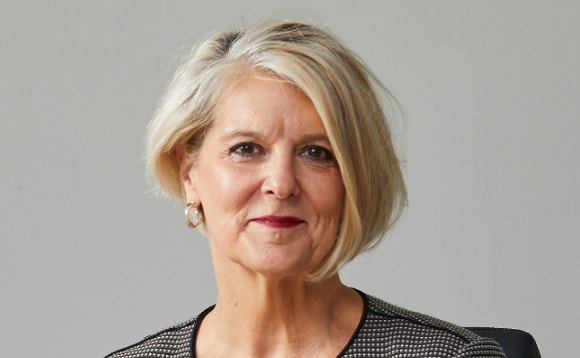
Harrogate-based MSP Redcentric looks to return to top line expansion following another year of declining revenues.
The AIM-listed MSP reported £132m in revenue for the year ended 31 March, down 2.3 per cent from £135.1m a year earlier, while adjusted EBITDA fell 7.4 per cent to £17.4m.
Recurring revenue slipped from £120.7m to £118.1m and accounted for 89.5 per cent of the total.
On the other hand, underlying annual recurring revenue (ARR), which strips out several historical and non-continuing factors, edged 0.6 per cent higher from £112.5m to £113.2m.
CEO Michelle Senecal de Fonseca tells CRN that the metric gives the company confidence it is beginning to turn a corner despite Redcentric expecting reported revenues to remain broadly stable in FY27.
One of the biggest opportunities is VMware, where Redcentric currently manages around 15 per cent of what it considers the addressable UK market as one of seven Broadcom Pinnacle Partners.
The MSP has visibility over a pipeline representing a further 12 per cent and ultimately wants to take its share to 30 per cent.
“Taking market share is really what I want to focus my team on,” Senecal de Fonseca tells CRN.
“The revenue will come. You just have to be there in the market.”
Redcentric ranks number 25 on CRN’s Top VARs list.
Redcentric looks beyond headline revenue decline
New CFO Tim Sykes, who joined Redcentric in June, tells CRN that ARR provides a better indication of the underlying direction of the business than reported revenue.
The MSP’s turnover decline was affected by three areas the company does not expect to continue indefinitely.
The first is ongoing churn from customer bases inherited through previous acquisitions, including Piksel, 4D and particularly Sungard, which was in administration when Redcentric acquired parts of the business in 2022.
“These customers had already said that they would leave before we bought it and we’ve been able to hold on to them over a period of time,” Senecal de Fonseca explains.
“But as they built their infrastructure, they’re now falling off, and that has affected us because it’s much harder, obviously, to sell at a faster rate to make up for that.”
The second was Redcentric’s decision to exit a significant loss-making contract, sacrificing revenue to improve earnings.
The final factor was a reversal of short-term on-demand VMware licence revenue which had boosted FY25 before falling back in FY26.
“When we take the impact of those out, we see marginal growth in the business,” Sykes says.
“Those three areas are non-recurring to some degree or non-continuing.
“That’s why we have that confidence of growth going forward. The rate of growth will be the question rather than anything else.”
The historical acquisition drag should largely wash through during FY27.
Senecal de Fonseca describes the current year as the “tail end” of that effect, while Sykes says Redcentric does not expect it to continue into FY28.
“There might be a little bit still to fall away during FY27 but not further forward into FY28,” he says.
The company expects FY27 revenue to remain broadly stable against FY26, with adjusted EBITDA in line with current market expectations.
£125m datacentre sale reshapes balance sheet
On 30 April, the group completed the sale of Redcentric Datacentres to Stellanor for £124.9m, leaving the group as a pure-play MSP.
It subsequently returned £90m to shareholders through a tender offer and reduced adjusted net debt from £36.8m at the end of FY26 to £2.8m as of 25 September.
Sykes argues the bolstered balance sheet is now a competitive weapon, particularly when bidding for public sector and long-term managed services contracts and adds that financial longevity increasingly matters when customers are choosing providers to support infrastructure for years at a time.
Senecal de Fonseca agrees.
“When you look at the strength and the solidity of our balance sheet and our capabilities at the moment, when I’m sitting talking with people who are trying to decide who they’re going to choose on a shortlist, we are more and more frequently becoming top choice.”
Organic expansion takes priority over M&A
The changing financial picture is feeding into a broader shift in how the firm wants to expand.
Having historically built parts of the business through acquisitions, Senecal de Fonseca says organic momentum is now the priority.
“I’m trying to focus the business on organic growth, because I think that has been missed and it gets hidden under acquisitions,” she says.
“You can hide a lot behind acquisitions. For me, the value of the business needs to be in its organic growth.”
But M&A has not disappeared completely.
Senecal de Fonseca says Redcentric could act opportunistically if it identifies a missing technology or capability, but acquisitions are no longer driving the strategy.
Redcentric is for now expanding its routes to market.
Its FY26 commercial investments included restructuring its marketing operation, which the company says generated an additional £8m in marketing-attributed pipeline while a new business team established from Q2 generated 11 per cent of FY26 sales.
It also secured places across all lots of the Technology Services 4 framework.
Senecal de Fonseca ultimately wants new logos to contribute 15 per cent of annual revenue.
“My goal is that we consistently strive for 15 per cent annually of new logos coming into the business because you need to refresh it.
“I don’t think we will hit it in FY27 because you can’t make a jump from 11 to 15 that dramatically. But this is our goal to get to.”
Redcentric’s distribution strategy pushed into H2
Redcentric is also continuing to develop an indirect route to market, although Senecal de Fonseca says progress with distributors has taken longer than initially anticipated.
The MSP has held discussions with Arrow and aligned teams around the services the two companies could take to market together.
But the organisation first needs to make its propositions easier for distribution partners to sell.
“This is probably more of an H2 FY27 initiative because we need to productise more of our services and make them easier for distribution partners to take to market,” she tells CRN.
“That requires us to have some systems changes and we’re not prepared well enough.”
Meanwhile, the MSP has put more investment into direct relationships with tech partners including VMware, Fortinet, Cisco and HPE.
Healthcare demand accelerates while security grows in importance
Healthcare is currently emerging as one of Redcentric’s strongest vertical opportunities.
While the MSP has a strong footprint across the NHS and public sector, Senecal de Fonseca says private healthcare, life sciences, pharmaceuticals and GP services are currently generating particularly strong demand.
The NHS itself has faced disruption from the reorganisation and consolidation of integrated care boards, notes the CEO.
Redcentric has also secured wins around national data quality and transfer, particularly in pharmaceuticals.
Cybersecurity is another area Senecal de Fonseca wants to embed more deeply across the business.
She argues MSPs such as Redcentric increasingly sit on the “front line” of protecting the UK economy as regulatory requirements around critical suppliers tighten.
Redcentric has also strengthened its leadership around the issue, bringing in Josie Smith, the former CTO of Marks & Spencer as its chief customer officer and CIO.
Senecal de Fonseca says the appointment gives Redcentric first-hand experience it can bring into conversations with customers about cyber preparedness.
“Security was incredibly important to me when I came into the business, not just because what we offer to our customer, but for our own internal requirements,” she says.
“The national security is looking to MSPs like Redcentric to be the front line of defending the economy here in the UK.”
The strategy is to take the lessons from boosting Redcentric’s own defences and package them into customer conversations.
“Our organisation is ready. Let’s now help our customers be more ready.”
Leadership revamp follows MSP restructure
Smith’s appointment forms part of a wider leadership overhaul under Senecal de Fonseca.
Redcentric has appointed a new CMO and CFO as it restructures around its pure-play MSP model.
The company has also moved away from its previous technology tower-based structure towards a flatter functional organisation.
Senecal de Fonseca argues that the old model made sense when areas such as cloud and connectivity were at different stages of maturity but had created too much duplication as Redcentric’s portfolio evolved.
“You can’t have two delivery organisations in multiple ways of how a customer actually sees you,” she says.
“We pulled the trigger in H1 of this year, doing the realignment around functions, and that also then gave me the opportunity to also upskill a little bit more.”
The restructuring follows a year in which Redcentric cut headcount by ten per cent from 637 to 574, decommissioned 370 systems and generated around £1.6m in annual savings through platform and infrastructure rationalisation.
VMware opportunity shifts into FY28
Senecal de Fonseca also admits she expected Redcentric’s VMware opportunity to materialise more quickly during FY26.
She points to resistance in the UK market to changes introduced by Broadcom, alongside chip shortages, hardware delays and costs, as factors that pushed some of the opportunity further out.
“I really expected to have come through a bit more heavily before the end of last year,” she says.
“A lot of it has shifted and I’m expecting more of it in Q3 and Q4 of this year.
“You will see that in our ARR, not so much on the top line. It will move into FY28.”
The company has already secured its first deal with Syntura, providing a fully managed solution for the firm’s Broadcom requirements and allowing it to continue serving customers using VMware technology until March 2033.
Senecal de Fonseca adds that the incoming changes to VMware’s channel model still provide a clear catalyst.
Broadcom has extended some CSPs’ administration rights, which Senecal de Fonseca says has delayed rather than removed the opportunity.
Redcentric has responded by developing an “Adopt” proposition, allowing customers to move onto its VCF platform with less immediate disruption before potentially taking additional managed services.
“The feedback that I get from Broadcom is we’re well ahead of the competition, being thinking about it and being agile. I feel that we’re doing the right things. Time will tell.”
Redcentric is also investing in VMware Cloud Foundation 9 and its AI capabilities, which Senecal de Fonseca believes could provide another competitive advantage as customers decide where to place their workloads.
AI roadmap centres on sovereign cloud
AI represents another key element of Redcentric’s strategy.
For now, much of the activity is internal.
Senecal de Fonseca says bringing AI into customer-facing services requires considerably more rigour because of the compliance, security and sovereignty requirements built into Redcentric’s portfolio.
The company is investing particularly in Broadcom’s VCF 9 platform as the foundation for private sovereign cloud services in the UK.
Internally, Redcentric is already applying AI to areas including first and second-line ticket triage, its customer portal, automation, sales and bid writing.
But Senecal de Fonseca is sceptical of some of the hype surrounding the technology.
“Many mid-market organisations can spell AI, but it's often a case of: AI is the answer, what's the question?” she says.
“What they really require are services that have already been tried and tested and AI is an integral part of it.
“I think there’s a lot of AI wash going on at the moment.”
She adds that customer adoption can also be constrained by how far organisations have progressed in their wider digital transformation.
“The demand is there, but not in the buying pattern that we seem to see in the frenzy.”
Redcentric eyes ARR, margin and new-logo progress in FY27
For Senecal de Fonseca, success over the coming year will not necessarily be captured by Redcentric’s headline revenue figure.
Instead, she wants to build an order book that demonstrates future expansion, increase new-logo business and continue pushing underlying ARR higher.
“I would like to share with you what my order book is in terms of what we’ve been able to put on our accounts so that we’re going to be able to see growth going forward,” she says.
“You’ll see what the revenue is, but it’s not going to tell the story of the business.
“It is being able to bring the customers on board and getting ready to take them on that journey and having a few more new customer wins.”
Sykes expects the financial evidence to become clearer as the year progresses.
“We see ARR growth come through,” he says.
“You should see margins improve as we get the full-year effect of the restructuring that we’ve done in the previous year.”