Sustainability in Tech Summit 2026: Climate action, social impact and net zero
CRN’s Sustainability in Tech summit combined optimism and realism on ESG challenges, sharing practical insights to create a greener and more socially responsible future
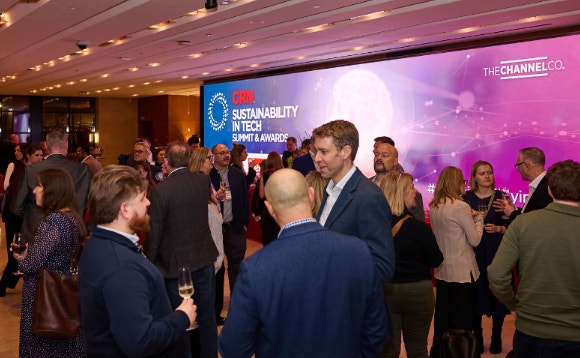
At CRN’s third Sustainability in Tech Summit in London, urgency was underscored, optimism was shared and senior leaders from across the IT channel came together to explore the sector’s growing responsibility in tackling the climate crisis and advancing social value.
Following opening remarks from contributing editor Sara Yirrell, the sessions focused on the practical realities of sustainable transformation, from the rising emissions footprint of ICT and the pressures created by AI to the increasing demand for measurable ESG action across supply chains.
Speakers addressed the shift from sustainability as a branding exercise to a commercial and procurement necessity, with discussions spanning everything from Scope 3 transparency and investment trends in renewables to the growing importance of social value metrics for partners navigating public sector tenders.
Read on for our recap of the event.
The real ROI of sustainability
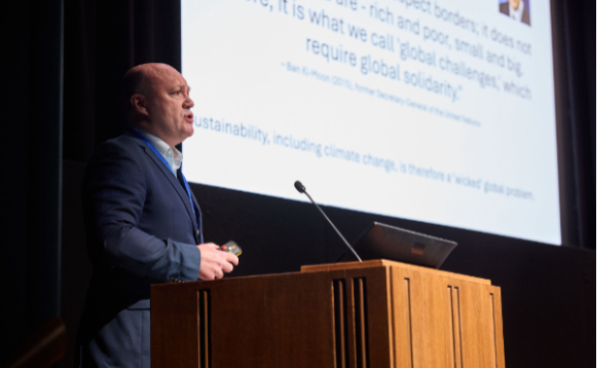
Brian Minehane, principal and head of digital Sustainability at The Sustainable Business Group, underlined a growing challenge for the tech sector: ICT’s emissions footprint is rising fast and organisations can no longer treat sustainability as a side issue.
With data volumes expanding rapidly and AI increasing energy demand, Minehane warned the industry could account for a significant share of global emissions by 2050 unless action is taken.
He highlighted the need for clearer measurement across the “data sphere”, data in transit, at rest and in compute, covering everything from end-user devices to cloud and on-prem infrastructure.
“Only with baselining and visibility can you understand where energy is being consumed and where reductions are possible,” he argued.
Minehane placed emphasis on the return on sustainability investment, moving beyond traditional financial ROI.
While cost savings and regulatory compliance remain important, he highlighted a broader set of drivers shaping board-level decision-making.
“Talent attraction is real,” he said, noting that candidates increasingly avoiding employers without credible sustainability strategies.
Procurement is another, as government and enterprise tenders award significant weight to ESG credentials.
Demand from downstream customers is also rising, as regulations such as CSRD push suppliers to provide primary sustainability data.
He also pointed to the social and reputational benefits of sustainable IT, citing examples such as waste heat reuse and circular economy programmes.
Minehane’s message was clear: sustainability in tech is now tied directly to competitiveness, customer retention and long-term business value, making measurable ESG action “a strategic necessity rather than a branding exercise.”
Using data and people power to drive sustainable tech
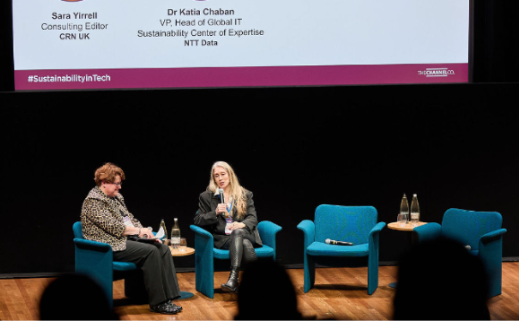
Dr Katia Chaban, VP and head of global IT sustainability centre of expertise at NTT DATA, outlined the dual responsibility facing large IT services firms: reducing the environmental impact of their own technology stack while also using digital tools to support wider sustainability goals.
A key theme was the difficulty of achieving net zero when the majority of emissions sit outside direct control.
Around 91 per cent of NTT DATA’s footprint comes from Scope 3, driven by suppliers, cloud providers and major software vendors.
“Unless somebody has the magic formula for transparency from suppliers, this is a really rough road,” Chaban told the audience.
AI was also flagged as a growing pressure point, with demand accelerating faster than organisations can manage through governance and controls.
“Everybody wants to use it,” she said, warning that the rapid proliferation of AI tools, platforms and chatbots is adding complexity to sustainability strategies already stretched by fragmented IT estates and data challenges.
Despite these barriers, the session struck a hopeful tone around collaboration.
The speaker argued that net zero will only be achievable through greater openness across the sector, stronger procurement standards and shared accountability between vendors and customers.
While the road ahead is “tough”, the growing willingness of organisations to share data, align standards and innovate collectively offers the strongest reason for optimism.
The social side of sustainability

Alongside environmental reporting, Richard Eglon, CMO at Nebula Global Services and Sheryl Moore, director of sustainability at Converge Technology Solutions, stressed that the social pillar of ESG is increasingly moving from a “nice to have” to a measurable business requirement, with metrics now playing a central role in credibility.
The discussion highlighted how the channel has historically focused on carbon and energy but social value is catching up fast, driven by reputational risk, procurement demands and greater public accountability.
Panellists warned that without measurement, organisations cannot demonstrate whether they are making real progress or simply box ticking.
By applying proxy values to initiatives like volunteering, apprenticeships and community engagement, businesses can translate activity into reportable outcomes.
Eglon noted this approach has enabled their company to evidence more than £500,000 of social value over two years.
The session also underlined that public sector tenders increasingly require detailed ESG evidence rather than broad statements.
Partners must be able to track metrics such as local spend with SMEs and charities, workforce practices, digital inclusion programmes and circular economy initiatives, then map them back to customer communities.
They also advised smaller channel firms to start by assessing what they already do, capturing it through simple tools such as spreadsheets and building from there.
Government guidance, open-access frameworks and sustainability portals were flagged as practical entry points.
The panel concluded that the firms leading on social sustainability will be those that can prove impact through continuous transparent measurement rather than one-off CSR gestures.
15 reasons to be positive about sustainability
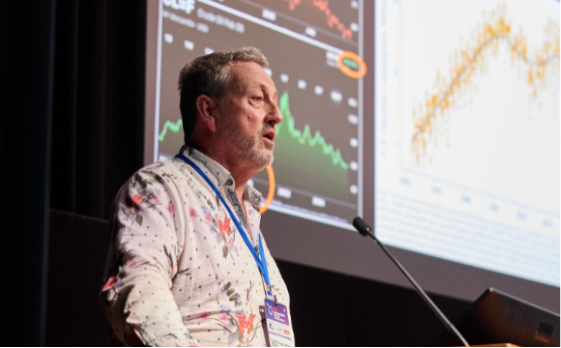
Roger Whittle, founder and CEO of Jigsaw24, argued that the decline of fossil fuels is no longer just an environmental ambition but an economic inevitability.
“Coal is going,” he told the audience, pointing to the UK’s near-total phase-out and the fact that only a small handful of countries are still developing new coal power stations.
He also highlighted falling demand for oil and gas as renewables accelerate globally.
Even major emitters such as China and India are now generating less electricity from coal year-on-year, a shift he framed as “historically significant”.
The speaker stressed that progress is not confined to one region.
Solar deployment is booming across Africa, renewables records continue to be broken in the UK and multilateral climate cooperation remains resilient despite political uncertainty in the US.
“We are not representative of the wider world,” he cautioned, describing the audience as a “green bubble of love”, but argued that momentum is still moving in the right direction.
He identified four technologies driving the transition: solar, wind, batteries and electric vehicles, all scaling faster and becoming cheaper than expected.
Falling battery prices and rapid EV adoption, he said, are transforming both energy storage and transport.
“It’s just superior technology,” he added, pointing to the simplicity and efficiency of electric drivetrains.
Ultimately, his central message was that capitalism is now pulling the transition forward.
“Follow the cash,” he said, noting that global investment is increasingly flowing away from fossil fuels and into renewables.
Net zero, he concluded, is “the greatest commercial opportunity of our time”, creating tomorrow’s jobs while building a cleaner economy.
What tech can learn from other industries

Steve Fendley, head of sustainability and Rob Smith, technology officer at East of England Co-Op showed how sustainability is shifting from a values-led ambition to an operational and commercial driver for mid-sized organisations.
The regional cooperative retailer, which operates 125 stores and employs around 3,500 people, said sustainability is now embedded at board level rather than treated as an afterthought.
“It’s now key to all feasibility,” explained Fendley.
“It’s there at the head table, part of the project inception, across the board.”
Since resetting its baseline in 2019 and 2020, the organisation has cut Scope 1 and 2 emissions by around 45 per cent while sourcing a growing share of energy through onsite solar and renewable PPAs.
Co-Op has invested in near real-time energy monitoring across its estate, giving store managers visibility over consumption and cost.
“If I can allow a store manager to see what they’re using, when and how much it’s costing them, it drives action,” Fendley continued.
The panel also highlighted AI as a practical enabler rather than a burden.
One initiative uses AI-driven forecasting and electronic shelf labels to identify products approaching expiry.
“We’ve seen our sell-through rate go through the roof,” highlighted Smith, claiming the programme has helped prevent around 1,800 tonnes of food waste while boosting reductions performance by 25 to 30 per cent year-on-year.
For technology suppliers, the message was clear: transparency matters.
“It’s less easy to get the detail we need from smaller vendors,” added the technology officer.
Co-Op said larger vendors are improving on sustainability reporting but smaller suppliers often lack the data customers need to assess genuine environmental impact, a growing issue as ESG becomes central to procurement decisions.
Panellists also addressed SME cost pressures, arguing sustainability should not be seen purely as an expense.
“It shouldn’t be seen as a cost,” explained the head of sustainability.
“If you look at lifecycle costs, it will save you money.”