TD SYNNEX VP: Our people and industry collaboration are the keys to sustainability success
The distribution giant recently filed its fourth annual corporate citizenship report and Adam Rutstein, VP corporate citizenship and sustainability, speaks to CRN about how it is working hard to bring its customers and partners along on the journey
With climate change escalating, the onus is very much on every company and person on the planet to do their bit.
Global distribution giant TD SYNNEX is definitely leading by example, with its fourth annual Corporate Citizenship Report revealing a 52 per cent reduction in Scope 1 and 2 emissions, and a significant 53 per cent of its energy being acquired from renewable sources.
It raised $3.7m for 15 chosen charities, and clocked up an impressive 12,186 volunteer hours from more than 1,553 employees. The firm also joined the United National Global Compact (UNGC), aligning with its principles and committing to operating responsibly, transparently and sustainably as a global company.
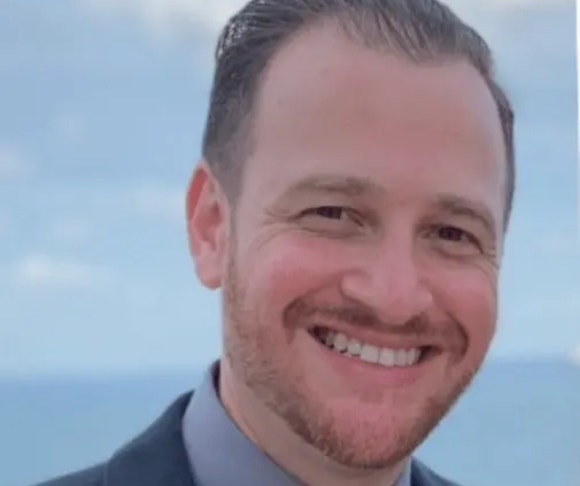
Adam Rutstein (pictured), vice president, corporate citizenship and sustainability at TD SYNNEX, told CRN the results spoke volumes about the passion and drive of TD SYNNEX’ people.
“These reports are only as good as the work that goes into them day in and day out. I’m so proud of our coworkers around the world and all the work that they do to really support our sustainability commitment and our overarching corporate citizenship work,” he said.
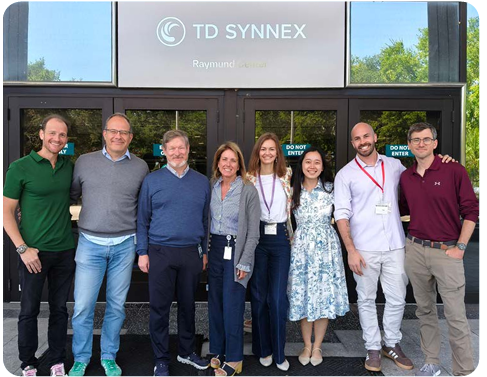
Picture: Part of TD SYNNEX’ Corporate Citizenship and Sustainability team
TD SYNNEX’ sustainability strategy is based on six pillars Rutstein explained: Education and Thought Leadership, Sustainability Metrics and Reporting, Climate Mitigation and Greenhouse Gases, Circular Economy, Culture, and Commercial Sustainability.
Working together to tackle emissions
One of the firm’s key goals is to encourage its partners and customers to adhere to science-based targets to help bring down Scope 3 emissions.
“As we look at our own decarbonisation commitments, we look at everything from how do we drive operational efficiencies at our sites, reduce energy consumption – but there is not a one size fits all,” Rutstein said. “Really, it is a collaborative approach that looks at a lot of different things from low hanging fruit like LED lighting, to evaluating solar and energy attribute certifications.
“When you think about moving beyond Scope 1 and 2, and get into Scope 3, which is the majority of our footprint, we have our own science-based targets, and we are engaging our vendors on that journey with us. We hope to have 90 per cent of our vendors and suppliers by spend to have science-based targets by 2028. We have already made solid progress there.”
He said that around 81 per cent of TD SYNNEX’ vendors and supplier partners have science-based targets already along with 30 per cent of customers.
“That speaks about how we approach this - through collaboration,” he said. “We work really closely with our partners across the channel to see how we can stand shoulder to shoulder when it comes to sustainability. We need to share best practice across the channel.”
Innovation and Sustainability go hand-in-hand
Rutstein said tech really is intertwined with innovation, and sustainability is right up there with it.
“It is all about innovating and thinking about ways to really drive collective impact together,” he said.
“You can’t do this in a bubble by any means. And when we look at some of the larger challenges before us – when we think about the opportunities that exist through AI and datacentres, but also the environmental impacts of those. We need to face those [challenges] head on.”
No longer a ‘nice-to-have’
Sustainability has really evolved from a nice-to-have to a business imperative, Rutstein said, and technology is the way to solve it.
“There is a lot of noise out there with the evolving regulatory landscape, but the biggest opportunity is for companies to take a holistic approach, understand what sustainability means to them, conduct their own materiality assessments and really develop their own programmes along with their own ethos as a company,” Rutstein said.
“I have no doubt as a channel and as the technology sector that we will solve this. Technology solves some of the most complicated things that are out there. I think we sit at an intersection between innovation and sustainability, and you don’t have to sacrifice one or the other, they are intertwined with one another.”
Ultimately doing the right thing is a business benefit for all, he added.
“People want to work for companies that are doing the right thing and who have groups that are really walking the talk. That becomes a very powerful mechanism for your own value proposition as a company.”