Trustmarque Ultima merger: one year on
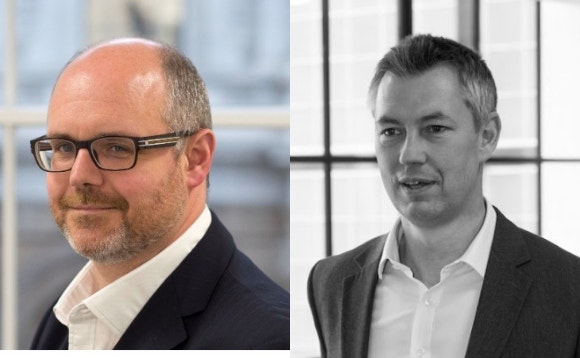
CEO Simon Williams and CCO Stuart Daley talk to CRN about the merger, lessons learnt and the future of TMU
Merging two established businesses brings scale, but it also brings the challenge of combining different people, systems and ways of working.
A year after the Trustmarque Ultima (TMU) merger, the combined business is turning its attention from bringing the two organisations together to extracting more from its expanded capabilities and scale.
CRN spoke with CEO Simon Williams and CCO Stuart Daley about the integration so far and where TMU will go next.
What has changed since last November?
The Trustmarque Ultima acquisition took place last November, and since, the organisations have been working to merge the two businesses.
“The first step of the journey in a merger is the people,” explained Simon Williams, CEO, TMU.
He explained how the biggest concern in a merger is losing good people as they worry about job security, changes to job roles and who they now report to.
According to leadership, the merger has been positive in this regard.
Daley explained, “I've not known a business that's been able to retain people, drive them, keep them motivated, etc. in such a way, that for me has been really impressive.”
After the people, it was time for the organisational processes, Williams explained.
“Very quickly, within eight weeks, we had the organisation laid out, planned and merged.
“By first of January we were all in place.”
Next came the systems and technology.
“We've got a really good, detailed plan around the systems and the processes,” Williams said.
“Whilst we have merged where we can merge, sometimes we've got two teams working differently because they're on different systems and different legal entities and all different backgrounds.
“By June next year, that journey of the technical technology integration will have been completed, and we've also gone both feet into AI internally as a part of that technology journey.”
But mainly what has changed is the opportunity for customers and employees.
Williams explained, “What's changed is that clients now have access to a whole bunch of new capabilities that they didn't have access to before.
“Our teams have got a whole bunch of new opportunities in terms of their career and progression which they didn't have access to before.
“So, at the basic level, nothing's changed. At other levels, everything's changed.”
Daley said the merging of businesses and teams early was key to the success.
“One of the things we've particularly done this year is to make sure that we brought the leadership team and the sales team together on day one.
“The organisational setup was very much that we want to be one identity as a business into the market, common experience with customers and common experience with suppliers.
“That has been the focus: to make sure that we service customers and we service partners in the right way, rather than being too internally focused.”
Daley explained there are still internal processes to consolidate, as the businesses remain two separate legal entities.
Although there is still work to be done, the merged company has still seen growth.
“I think it's quite impressive that a company that's in its first year as a merged organisation has still grown double-digit, as opposed to businesses where they've become too internally focused and taken their eye off the ball and have either stayed static or flat,” Daley said.
Key lessons from the Trustmarque Ultima merger
One lesson learned was not to underestimate the operational differences between the two businesses.
To smooth the initial integration, the company created a temporary “concierge team”, made up of employees from both legacy businesses, which helped salespeople navigate unfamiliar capabilities and processes on the other side of the organisation.
Williams described the concierge team as a “really good positive learning” from the merger, but said the company initially underestimated the differences beneath apparently identical processes.
“What we didn’t realise is when things were called the same thing, actually they were quite different.”
That became apparent in areas such as statements of work and proposals, where the two businesses had different expectations around format and levels of detail.
TMU subsequently had to establish common templates and processes to ensure synergies were met.
While both the COO and CEO have emphasised the importance of the people, this was a key lesson learnt during the merger.
“It has to be people first,” Daley said.
“So, people first in the sense of staff, people first in the sense of customers, people first in the sense of partners, etc. If you have that as your core philosophy, then you can't go wrong.”
New capabilities since the merger
Merging two large organisations enables a whole host of new capabilities.
Daley explained, “Trustmarque was a very established business as a VAR, with a strong public sector orientated client base. Ultima was a similar-sized business, pivoted many years ago to be much more of a MSP, with a strong focus on the commercial markets.
“The whole rationale with the merger was we only had three per cent overlapping customers, so you've got two powerful businesses with a different sectorial focus. Bring that together, you've then got a much bigger, broader client base to go after.”
This merger has created “pretty much to the pound in terms of the gross profit that we make, 50 per cent an MSP and 50 per cent a VAR,” Williams said.
“We love that, and we weren't that previously.”
From TMU’s perspective, they don’t believe there is another major player with these capabilities, and looking ahead, the combined business is looking to grow both of these areas.
“We've got a strategy how to grow our MSP business and a strategy of how to grow our VAR business. We recognise that if you’re an MSP, your clients buy different things, but the way we go to market, and the way we run them, they’re different,” Williams said.
The opportunity is also being reflected in cross-selling across the combined customer base.
Daley said TMU now has more than 3,000 customers, with the merger creating an opportunity to take capabilities traditionally associated with one side of the business into the other's client base.
“Historically, 3,000 customers have maybe bought one or two things from us,” he said.
“What we’ve seen this year is that one or two things has become three or four. What we want to get to is to be able to offer the full portfolio to that wider customer base.”
Where TMU is growing
Beyond cross-selling, TMU is seeing some of its strongest momentum in cybersecurity, software and AI-related services.
It has also seen stronger growth in software than hardware amid shortages and price rises in the market.
Despite working with over 1,500 partners, TMU is increasingly concentrating on how it can deepen relationships with its top 25 to 50, he said.
AI is also becoming an increasingly important part of TMU’s services strategy as customer demand has provided strong growth in the area.
Where discussions previously centred on education, governance and getting data ready for AI, Williams said customers are increasingly asking TMU to build AI capabilities.
“The clients have bought the licences, but they're not using it, or they're not using it enough,” Williams said.
He said TMU can use its own IP to analyse adoption, including identifying how frequently Copilot licences or internally created AI agents are actually being used.
What’s next for TMU?
With the initial merger now completed, the organisation is setting its sights on further growth.
Daley said the combined business has moved into the top six of the market with breaking into the top five and surpassing £1bn in GII among its long-term ambitions.
With the merger looking successful, there is potential for further M&A in TMU’s next stage of growth.
Williams confirmed the business has looked at potential acquisitions, although the focus would be on adding specialist technology capabilities, rather than acquiring for a client book.
“There are ones we are looking at at the moment that are interesting,” he said.
“It will be for kind of niche technology skills.”
Daley similarly expects consolidation across the UK channel to continue, but believes future deals will increasingly be driven by specialisation rather than scale alone.
“I don't think it's necessarily going to be economies of scale. I think it's that differentiation.”