Why data resilience is now the channel’s BCDR battleground
Three takeaways for UK MSPs from Slide’s next-gen resilience playbook
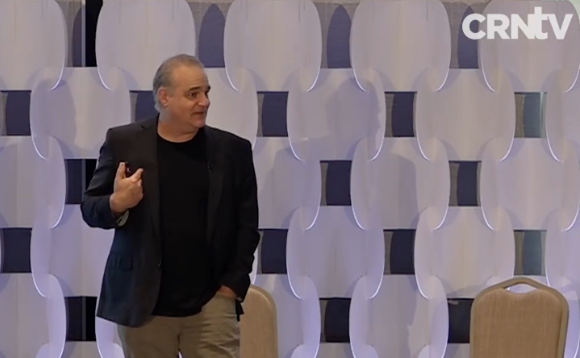
As cyber incidents accelerate and customer tolerance for downtime shrinks, backup and disaster recovery is being re-evaluated across the channel, not as insurance, but as a core pillar of data resilience.
Speaking in a sponsored session from the main stage at XChange UK, Michael Fass, co-founder and CEO of Slide, argued that the traditional BCDR model is no longer fit for purpose.
Founded by Fass alongside former Datto CEO Austin McChord, Slide is aiming to modernise what he described as one of the industry’s most neglected technology stacks.
It’s a market move that CRN has reported on recently.
Here are three key takeaways from Fass’s message for UK partners.
1. Why the legacy BCDR model is broken and holding MSPs back
Fass did not mince his words when describing the state of the BCDR market.
“Our vision is that BCDR is broken,” he said. “It’s become a legacy monolith. Private equity companies roll up all the good vendors in the space, stitch them together, outsource the best engineers and the best talent and the technology stagnates. The support changes.”
In Fass’s view, backup and recovery has seen little meaningful innovation for close to two decades, despite becoming more mission-critical with every passing year.
“The BCDR stack hasn’t really changed in 20 years, it’s been the most neglected stack. That’s exactly why we believe this is where we can make the biggest impact.”
For partners, the implication is significant. As ransomware, outages and cloud sprawl grow more complex, legacy approaches to BCDR are increasingly misaligned with the environments MSPs are expected to protect and the commercial risk they carry when recovery fails.
2. A resilience-first BCDR playbook, built explicitly for partners
Rather than expanding sideways into adjacent tools, Fass was clear that Slide’s focus is narrow and deliberate.
“We made a very clear decision,” he said. “Slide is a backup company. We’re not going to build a PSA or an RMM or an EDR.”
Instead, the company is positioning itself as a single destination for protecting customers’ digital assets, wherever they live.
“You as partners have clients with digital assets you’re charged with protecting and those assets live in lots of different places. Our goal is to be your destination for protecting the data you’re responsible for.”
That clarity of mission extends to Slide’s go-to-market approach. Fass was emphatic that Slide will only ever sell through partners.
“We only sell through MSPs. How many of your other vendors have tried to sell around you? I don’t know how they get away with that, but we will never do that. We want to help you grow your business. We will never circumvent you.”
For UK partners increasingly wary of vendor channel conflict, that message landed loudly.
3. Why backup is becoming the last line of cyber defence
A key theme running through Fass’s session was that customers now expect partners to act as their cybersecurity authority, even when the issue is ultimately about recovery.
“We know many clients are looking to MSPs to be their cybersecurity expert,” Fass said. “And we believe backup is the best - and the last - line of defence.”
Slide’s response has been to design security directly into its backup architecture, rather than treating it as an add-on.
“Every single backup when you work with Slide is encrypted on-prem. Every surface area of the product is designed with security in mind. We built Slide because we saw a huge gap in secure backup.”
For partners, that focus on secure, resilient recovery aligns closely with how customer conversations are changing, from if something will go wrong, to how confidently and quickly systems can be restored when it does.
What Slide’s approach means for UK partners
Fass’s message at XChange UK was blunt but pragmatic: the future of BCDR is not about bolting together more tools, it is about restoring confidence in recovery.
As resilience becomes a frontline differentiator, partners that can modernise their BCDR approach - and stand behind it - will be better placed to:
· Protect customer operations
· Defend long-term trust
· Differentiate on outcomes, not just price
Slide’s view is that BCDR is overdue a reset, and that next-generation data resilience will be a defining battleground for the channel in the years ahead.
Find out more about XChange
For more partner-led insight, practical takeaways and peer discussion shaping the channel, explore CRN’s next XChange programme, where senior MSP and reseller leaders meet to share what really works.