Why the sustainable side of AI and cloud computing matters more than ever
With the AI market predicted by analysts to reach up to $3.5tn by 2033, a lot more infrastructure will be built to cope with demand. But what about the human cost of AI and cloud computing, and more importantly what about the significant impact it is having on the planet?
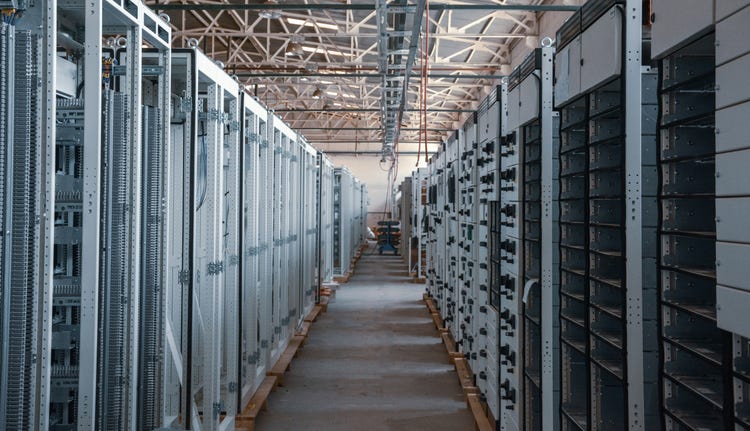
Photo credit: Ismail Enes Ayhan on Unsplash
The world is on fire. Even Camels are dying because of the unbearable heat in the deserts of Africa. Whole ecosystems are being destroyed in the name of ‘progress’. And the temperatures keep rising. We are beyond the threat of a climate emergency. We are living in one.
Yet datacentres are still going up at an alarming rate to try and keep pace for the seemingly insatiable demand for AI and cloud-based IT. In turn that means a significant increase in both power and water usage, as well as the destruction of habitats for wildlife and local ecosystems.
Human beings seem to forget that we all live on this one planet in their relentless desire to create something bigger, better and more advanced than ever before. In the meantime, every other living being on this earth is just trying to survive the unbelievable damage humans are wreaking on their environments. It has to stop. It needs to slow down. We as an industry, need to take more responsibility.
Take the hyperscalers as one example. Despite their Net Zero pledges, three of the biggest tech players have pumped 42 per cent more C02 into the atmosphere since 2020.
According to their own sustainability reports, Microsoft’s emissions have increased 25 per cent year on year, Google’s has gone up 18 per cent, and Amazon (AWS) has seen a 16 per cent increase. Neither Anthropic or SpaceX/xAI have released any environmental or emissions data to date.
According to the OECD, by 2027, global AI’s Scope 1 & 2 water withdrawal will be between 4.2 and 6.6 BILLION cubic metres – four to six times the annual water withdrawal of Denmark.
CRN spoke to some sustainability experts to get their take on what action we need to be collectively taking to stop this environmental crisis getting worse.
James Martin, founder of BetterTech, is publishing regular posts on LinkedIn and is pushing for the adoption of more responsible reporting laws.
“Back in 2021 it became obvious that AI was picking up and the digital sector represented four percent of global emissions – twice that of the aviation industry. If datacentres could fly or had smoke coming out of computers, it would be more tangible,” he said.
“But the hyperscalers seemed to clam up when Gen AI kicked off in 2022, and a 2024 report by the Department of Energy revealed electricity consumption would triple by 2028, with water consumption set to quadruple in the same timeframe. Their emissions are also going up. How come they are allowed to do this? If you look at other sectors in the world, their emissions are flat or going down, why is the tech sector different?”
Martin said some features of AI are not actually asked for by consumers such as Google AI Overviews which cannot be turned off, Microsoft’s AI-generated PowerPoint slide design suggestions, or CoPilot’s rewrite recommendations.
“My big question is how much of those clearly AI-related emissions increases were actually necessary? I know from conversations I’m having with clients of big tech that they are getting sick of this lack of transparency.”
Sustainability in the channel: looking at the bigger picture
Mark Butcher, director at Posetiv Cloud, said all organisations need to think about the bigger picture which is the effect on current and future generations, along with the devastating impact on local ecosystems and environments.
He said hyperscalers are deploying giant facilities that are having a detrimental effect on local communities.
“They are creating these ugly, horrible beasts that will be poisoning local communities,” Butcher said. “We need to focus on bringing people’s kids into the conversation – how they are going to grow up with poisoned water and unable to sleep because of the noise generated by these creations. If we defocus people away from carbon and more onto pollution in their local area – such as water pollution, noise pollution, lack of investment in local jobs – they are some of the big things around AI.”
He agreed that better regulation is needed at a top level.
“Tech companies are getting away with it because nobody is really challenging them,” he said. “Part of the responsibility is poking the hell out of the government as well – stop letting the government weasel out of things and hold them massively accountable. Why are they not putting in place a standard for reporting all this stuff?”
The public is starting to rebel against datacentres
Colin Curtis, managing director at TBL, said he was seeing evidence of more opposition to these giant datacentres.
“I’m from Blackpool originally and they have come up with this idea for ‘Silicon Sands’. But there is a huge amount of opposition there on the basis of the energy impacts and the water impacts that it will have on the town,” he said.
Curtis also argued that better and more detailed reporting is needed.
“We have the GHG Protocol and Scope 1,2 and 3, but none of them really account for the cloud impact. If they made some adjustments to their categories in the GHG Protocol that means companies have to include the impacts of anything they are using that comes within the cloud, there would be a lot more transparency and probably a lot more action as a result,” he said.
“We also need to keep putting pressures on the vendors themselves to be a little bit more open,” he added.
All technology needs to be more responsible
Dr Katia Chaban, head of global IT sustainability at NTT Data, said although AI is a big focus, it is technology in general that is contributing to this issue.
“AI just happens to be the technology that is moving faster than any other technology ever has," she said. "But look at the trajectory of streaming for example – we are consuming more of that too. AI is growing, but we can’t lose track of all the other tech too.
“Also it is not just about emissions – yes they are driving climate change, but the water dimension is also a bigger issue because there isn’t standardisation and reporting. We need to continue to drive standardisation that enables that transparency in the ‘e’ part of ESG reporting. That is both energy and water.”
A new way of thinking on construction is also needed, Chaban said.
“How are these things being built? What innovation are they using both from an energy consumption and water consumption perspective?” she said. “We have to drive that type of innovation as an industry and force standardisation to get to the required level of reporting. We are the ones using AI to build profit and drive profit and revenues, so it is our responsibility in big business to be responsible about how we are making those profits so they don’t negatively impact our planet and our people.”
Hearing from the Hyperscalers
In the interest of balance, CRN also contacted the three main hyperscalers to gauge their opinions. All three pointed us back to their Environmental Reports.
In Microsoft’s Environmental Sustainability Report, Melanie Nakagawa, corporate VP, chief sustainability officer at Microsoft said: “Innovation at this scale must be matched by responsibility at the same scale. For Microsoft, this means designing, building and operating infrastructure that is more efficient, more resilient, and more grounded in the realities of the communities where we operate.”
The report also stated that Microsoft had replenished more water that it withdrew in FY2025 and had matched 100 per cent of its annual electricity consumption with renewable energy.
Google’s Environmental Report revealed it had reduced its datacentre energy emissions by 12 per cent and it also said it had replenished approximately 4.5bn gallons of water in 2024, around 64 per cent of its total freshwater consumption for the year.
Amazon explained that it always conducts detailed assessments of the local climate and water availability before it builds any datacentre, with different cooling approaches – including ‘free air cooling’ used depending on climate, facility design and water availability.
In its latest Sustainability Report, Amazon’s chief sustainability officer Kara Hurst, said: “For Amazon’s work in sustainability we laid out our long-term vision, starting back in 2015 when we first suggested net-zero goals in a planning meeting, which culminated in setting the climate pledge in 2019.
“While the speed and scale of AI adoption is unique – and the change is happening faster and more broadly than anything else we’ve encountered in our lifetimes – the need to stay stubborn on our vision, and flexible on the details is familiar territory. I remain confident and optimistic in the overarching visions and the long-term progress we continue to make toward it.”