Women of the Channel Leadership Summit: how women can shape the future of the industry
The need for sponsorship, greater AI adoption, leading with resilience and the importance of more women in leadership emerged as key themes at the event
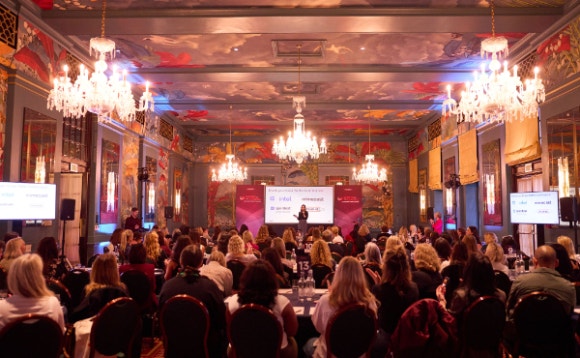
On a drizzly day in London on 7 October, at The Bloomsbury Hotel, the mood was vibrant and energised.
The Women of The Channel Europe Leadership Summit brought together a whole host of women from across the channel for a day of inspirational talks and educational takeaways, to enable women in attendance to take back actionable guidance to advance their careers and skills.
It was the first time the event was back in Europe since before the pandemic.
Here are the top takeaways from the day's speakers.
The importance of your personal brand
To kick off the day, Jojo Thomas, courage & impact specialist at Ginger Leadership Communications, brought a shining interactive session all about building a personal brand.
“Information about your brand is leaking out of you all the time,” Thomas explained.
Whether cultivated or not, a personal brand is how others will perceive you.
Building a personal brand, especially as a woman, helps you show up authentically by knowing who you are, what you care about, and who you want to be known as.
Building a personal brand can feel “false” and make women feel imposter syndrome, according to the delegates in the room, but at its core it defines who you are; what you want to be known for; the contribution you strive to make; the impact you hope to have on others; as well as what you choose not to be associated with.
“For you as a woman in a potentially male-dominated industry, stand out and get linked to the things that you really want to do and the changes that you really want to make,” she said.
The women in the room shared their vulnerabilities with each other, while uplifting those around them.
The session proved to provide truly insightful, providing and inspiring women with actionable insight into the why and the how of building a personal brand.
Open the door, and don’t let it close behind you
“I think no one is actually ready for the most important decisions in life.
“When an uncomfortable opportunity comes, a dream job, a speaking session, a promotion, something new. We always have the same instinctive question: am I ready for this?
“If the answer is no, people usually wait.
“But let me ask you something: what if you never get ready?”
In this session, Laura Garrido, VP integrated marketing – field & partner, Mimecast, challenged the perception that people need to feel fully prepared before pursuing new opportunities.
The most transformative opportunities often arrive before people feel equipped to take them.
However, she argued that confidence is not a prerequisite for success, but something that develops after proving your capabilities to yourself.
“The most important decisions of your career will be made in a room you're probably not in,” she declared.
The second half of Garrido’s talk focused on the importance of sponsors in the progression of her, and others’, careers.
While mentors offer advice, advocates speak positively about someone’s work, sponsors actively put themselves on the line and use their influence to create opportunities and champion people in rooms where key decisions are made.
She argued that career advancement can be largely driven by having influential people willing to put their credibility behind you, and urged attendees to seek out sponsors, or become sponsors, to open doors for others and encourage more women to progress into leadership roles.
Women, leadership and competitive advantage in the European IT channel
Next to the stage was CRN’s own Nima Sherpa Green, EMEA editorial director, who argued that advancing women in the channel is not simply a diversity initiative, but a commercial imperative.
“It's not just about this being the right thing to do; it's about it being connected to something I know the channel cares a lot about, which is being competitive,” she said.
Drawing on CRN’s global State of Work Life in the Channel survey, Green identified persistent challenges around workload, burnout, career progression and leadership opportunities for women.
“The ambition is there.
“When I do interviews, and I've been a journalist working in personal finance and large asset management businesses and banks, sometimes the male leaders chalk the lack of female leadership up to be an ambition problem.
“I've never believed this. And our data shows this.”
CRN’s State of Work, Life in the Channel Report highlights that 53 per cent of women in the channel want to pursue a C-level position, yet only 7 per cent are currently at C-level.
Women want to progress in their careers and become part of senior leadership, but the numbers are still lacking due to structural barriers put in the way of women.
From unclear promotion pathways, corporate politics, lack of support and insufficient investment in development, the odds are still being stacked against women in the workplace.
As levels of burnout increase in the industry, and more people report feeling exhausted from their jobs, there is an urgency to improve workplace retention.
“When experienced talent departs, it’s not just the person that leaves. It’s the institutional knowledge they’ve built up over the years.”
The core takeaway for leaders is that they must actively create new opportunities, champion talent, and invest in people if they want to retain expertise, strengthen succession pipelines and unlock growth.
Not just because it is the right thing to do – but because it creates a stronger business with a competitive advantage over other firms.
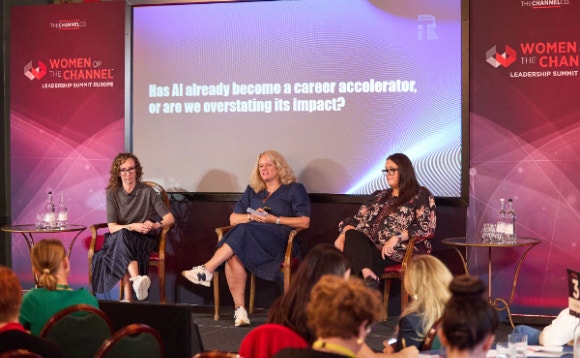
AI is rewriting leadership: who’s getting ahead and why?
As AI continues to be adopted across the channel, the technology is unlocking more opportunities than ever before.
However, the stats show that women, especially older women, are less likely to adopt AI in the workplace when compared to their male counterparts.
“We've got to embrace it, whether we like it or not,” explained Julie Simpson, CEO at ResourceiT Consulting, who chaired the panel.
“Some people use it a lot. Some people use it not at all.
“There is a gulf at the minute as we are so early in the process. But it is absolutely becoming a distinguishing factor,” explained Rebecca Robinson, Senior Director EMEA go-to-market, HP.
As the technology is still in its early phase, workplaces are seeing adoption rise at different speeds, and at varying degrees of success.
Nichola Hall, RVP customer success EMEA at Arctic Wolf, explained, “I think we're seeing success at task level, but I think business-wide has probably got a way to go.
“I think where people are seeing the most success is when they're not trying to fold AI onto existing workflows.
“They're actually picking a process, but redesigning that with AI and being curious about it.”
The potential risks of women not adopting the technology and being the ones to help drive it forward is immense.
One panellist said, “The biggest risk for me actually is how the tools are shaped going forward.
“So, AI needs data, and data is historical, and history is sometimes bias, and AI will quietly, in the background, recreate what the data tells us, and the data is telling us that the workplace is dominated by men.
“And if, as women, we don't really lean into this and start using and shaping the tools, then what the tools will do is they'll be recreated in the same form that we have historically.”
To conclude the session, the panel gave the audience a task for the coming month, which was to find out what they could outsource to AI.
Giving the audience ideas to use AI to help make important decisions, challenge assumptions, save an hour of weekly admin, or even learn a new skill.
The adaptive mindset
The day came to a close with a keynote session from Stef Reid MBE PLY, Paralympian, inspirational speaker, high-performance expert.
Reid shared how losing part of her leg in a boating accident at the age of 17 forced her to develop what she calls an ‘adaptive mindset’.
After initially falling into despair, a simple challenge from a nurse helped her come to the realisation that while the accident wasn’t her fault, her future was still her responsibility.
“She was the first person who walked into my hospital room and actually expected something better from me, and that felt really good.
“I knew in that moment something changed.
“I still had absolutely no idea what my life was going to look like. I had absolutely no idea what was going to be possible. But I knew that I wanted to try.”
From that point, Dixon built a career as a Paralympic athlete, world champion and speaker, using resilience, adaptability and a willingness to embrace failure as the foundations for success.
Her second lesson for an adaptive mindset is, “resilience is a choice; it's not a feeling.”
She argued that no one believes they are resilient, and people consistently tell her they “aren’t a resilient person”.
But resilience does not come from a personality trait or a one time feeling, it is the act of continuing to decide to be so, and in this resilience and the decision to not give up is where real growth happens.
Drawing on lessons learnt through her paralympic career, marriage and television appearances on reality shows such as Dancing on Ice, Reid emphasised the importance for everyone to continue showing up and doing their best, no matter what.
While the sessions covered a wide range of topics, the message running through the summit was consistent.
Progress rarely comes from waiting until you feel ready, so it is time to embrace discomfort, support others and take an active role in shaping the future of the channel.