XChange EMEA Day 1: RAMageddon, AI demand and sovereignty
Channel leaders gathered with CRN in The Hague to discuss changing customer needs, growth opportunities and resilience
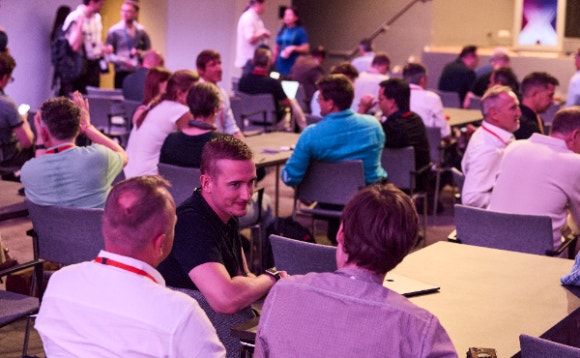
Feeling the FOMO from missing out on the first day of XChange EMEA? Here’s what you missed from CRN’s European channel conference in The Hague.
Day one opened with a clear message for EMEA partners: AI is no longer about experimentation.
From the opening keynote through to the afternoon panels, discussions focused on a market trying to balance strong demand for AI with growing pressure around infrastructure, skills, compliance and profitability.
While optimism remains high, attendees repeatedly returned to the same question: how do partners turn AI hype into sustainable growth?
CRN research: AI and RAMageddon - EMEA channel trends
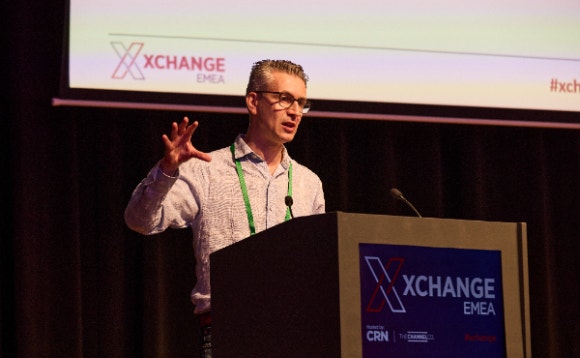
The opening research session, led by The Channel Company’s chief content officer Stuart Sumner, painted a picture of a channel market being pulled in two directions.
Customer demand remains strong across AI, cloud and managed services, but partners are experiencing rising pressure from supply chain constraints, margin protection and increasingly complex customer requirements.
As customers explore adoption, many are discovering they first need to modernise infrastructure, improve data quality and strengthen governance frameworks.
For channel firms, that is creating opportunities well beyond AI itself.
The research also reinforced the growing importance of recurring revenue models, with managed and recurring services continuing to outperform transactional approaches.
Alongside AI, sovereignty emerged as another recurring theme, with speakers warning that customers are becoming increasingly focused on not just where data sits, but also who can access it and how providers can prove their security claims.
Attendees also heard warnings about the return of supply chain pressures.
Sumner pointed to growing demand for memory, storage and compute resources driven by AI workloads, contributing to what some in the industry have dubbed “RAMageddon”.
While not as severe as the shortages experienced during the pandemic, the resulting volatility is creating fresh challenges around pricing, planning and margin management.
Inside the room: Priorities, pressures and opportunities across the EMEA channel

Live audience polling suggested partners remain bullish on AI despite increasing uncertainty on other aspects.
When asked about their top business priority over the next 12 months, attendees ranked AI and automation first, ahead of revenue growth.
New services and solutions emerged as the leading area of investment, while internal automation also featured prominently as partners look to improve efficiency and scale operations.
The results suggest many firms are pursuing a dual strategy: developing new customer offerings while using AI to streamline their own businesses.
Yet confidence was accompanied by caution.
More than a third of respondents identified customer demand uncertainty as the biggest barrier to growth, ahead of skills shortages and competing priorities.
That sentiment was reflected in a word cloud exercise, where delegates repeatedly highlighted “change”, “uncertainty”, “volatility”, “complexity” and “pace” as factors making business harder.
Despite those concerns, confidence levels remain strong.
More than 80 per cent of respondents said they were confident or very confident in their current growth strategy, giving the audience an average confidence score of 4.1 out of 5.
Taken together, the session painted a picture of a market that remains ambitious but is becoming increasingly aware of the challenges involved in turning that ambition into results.
Cybersecurity, sovereignty and trust in an uncertain world
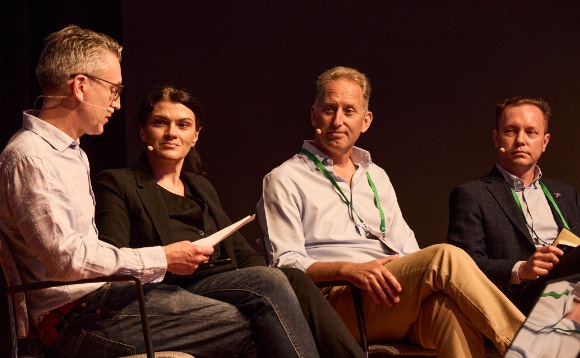
During the afternoon’s session, panellists argued that geopolitical tensions, evolving regulation and concerns around data control are changing the questions customers ask their technology providers.
Dr Viktoria Schmittmann, VP of IAMCP, said customers are increasingly raising concerns around regional datacentres, local support teams and foreign access to sensitive information.
“People have a lot tf distrust in politics.
“German partners from our Microsoft environment are facing customer claims they’ve never seen before.”
According to Schmittmann, many partners are struggling because these concerns are not purely technical or financial but are often driven by broader fears around sovereignty, compliance and geopolitical uncertainty.
Her advice was for channel organisations to have “more transparent and honest conversations” with customers and understand where those concerns are coming from before recommending solutions.
The discussion also highlighted how the sovereignty debate is evolving.
“This is a change from a where question to a who question,” one panellist argued, as organisations increasingly focus on who can ultimately access their data rather than simply where it is stored.
The panel examined the implications of legislation such as the US CLOUD Act, the growing demand for European cloud alternatives and whether open-source technologies could play a bigger role in reducing dependence on hyperscalers.
While speakers differed on how realistic complete digital sovereignty is, there was broad agreement that customers are demanding greater transparency from providers.
Trust itself emerged as a major theme throughout the session. Panellists argued that customers are becoming less willing to accept security and trust as marketing claims and increasingly expect evidence to back them up.
“Right now the shift is from promises to verification,” said Dr Jaroslaw Wilk, CTO at Engave.
That means customers are paying closer attention to certifications, governance frameworks, recovery commitments, incident reporting processes and transparency around how services are operated and managed.
Jason Holloway, founder of QL Security, argued that mature partners must be able to demonstrate capabilities across governance, compliance and technical implementation rather than specialising in just one area.
“What people want now is not only the technical implementation, but they want to be able to make sure that doesn’t happen again.”
The panel ended on a more optimistic note, with speakers arguing that periods of uncertainty often create opportunities for partners willing to adapt.
“We live in very uncertain times,” Holloway added.
“If we can find ways to remain flexible to spot these opportunities as and when they come along, make sure that you’re in a position to embrace them.”