Partner Content: “Channel partners must become customer zero” - HP and TD SYNNEX share secrets to AI PC success
The emerging AI PC market has received considerable attention from across the IT industry, with a wave of new hardware options hitting the market.
Typically equipped with integrated neural processing units (NPUs), AI PCs enable superior AI performance and mean users can access AI hardware acceleration directly on the device.
For those in the channel, this represents an opportunity to provide value-added services and to encourage customers to upgrade their hardware. In order to do this, they must build a business case and a long-term strategy for AI PC deployment.
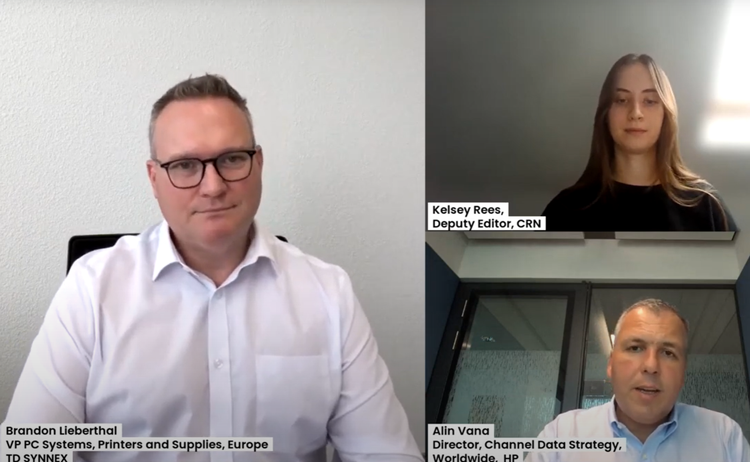
CRN spoke to Brandon Lieberthal, VP of PC Systems, Printers and Supplies for Europe at TD SYNNEX and Alin Vana, Director of Channel Data Strategy Worldwide at HP to find out more.
Preparing for the future
According to recent CRN research, one in 10 organisations are already implementing an AI PC rollout, and 18 per cent are currently reviewing AI PCs as part of their refresh plans. However, 61 per cent are interested in AI PCs but not actively considering deploying them.
For those that are currently reviewing AIPCs as part of their refresh plans, Lieberthal said that it is important to look to the future:
“I think it's all about asking the right questions. I think if you're thinking about it and trying to position it within your refresh plans, you should be asking what are the AI capabilities that you'll need. That's about the applications that will benefit the organisation the most and how AI PCs will integrate with your existing infrastructure.
“Making sure that there's compatibility and ease of integration. What is the total cost of ownership? People are concerned about the initial incremental price of the device, but it's not just about that initial investment, but also the maintenance and potential cost savings from increased efficiency. And lastly, I think it's about the security implications. Evaluate how an AI PC will impact your cybersecurity strategy.”
While the AI PC market is relatively new, IT leaders are currently making important decisions about device refreshes that will prepare them for future technological developments and business needs. Refresh cycles are typically 3-5 years so organisations must recognise that they are not just specifying devices for today’s uses and AI ecosystem, but for next year’s, and beyond.
“You need to stay alert, stay curious, stay informed, and follow the field because it's evolving so fast and there are new areas of value creation and benefits appearing every day with new solutions and enhanced solutions coming up constantly,” said Vana. “Don't ignore the field because it's one of the biggest technology revolutions ever.
“Even if you think that it's not the right time today, it might come tomorrow or very very fast. So, stay on top of the developments.”
The role of channel partners
There has been a flurry of activity from chip makers, vendors and OEMs in the AI PC space, and HP has unveiled a large portfolio of AI PCs over the last 12 months, including the new HP OmniBook Ultra 14 Flip, featuring an in-built AI assistant, and the HP EliteBook X.
HP also recently announced its new Amplify AI programme, which offers “tools, resources, training, and certification” to help partners use AI within their own organisation and to help partners.
When asked how HP is approaching this burgeoning market, Vana said the company has identified several areas for growth:
“The most immediate opportunities are in the PC market and there we approach both the AI creators and the heavy AI-based users with our workstation portfolio such as the Z by HP AI Studio for example.
“The other big area is AI consumption. This year, we've announced several computing platforms starting in March with the first gen AI PCs. Since May, we've announced several different platforms, both in the commercial and consumer spaces.”
As with AI in general, some organisations are struggling to see robust use cases for AI PCs and may need help navigating rollout strategy, costing, security, and application development. The channel has an important role to play in outlining the value of upgrading to AI PCs through relevant resources and support.
“I think we need to appreciate that in the channel space, partners will be at different levels when it comes to AI readiness and AI understanding,” said Lieberthal. “But I think we all collectively in the channel still have a lot to learn, particularly around use cases, applications, and how those two will merge together to provide solutions.
“At TD SYNNEX, we have recently launched a programme called Destination AI. This programme is designed to help channel partners unlock the full potential of this rapidly expanding AI market.
Click here to watch the full video interview.
This article is sponsored by TD SYNNEX and HP.