Industry Voice: From Procurement Decision to Planted Tree: The Transparency Challenge in Corporate Sustainability
Carbon offset programmes promised a solution but created new problems.
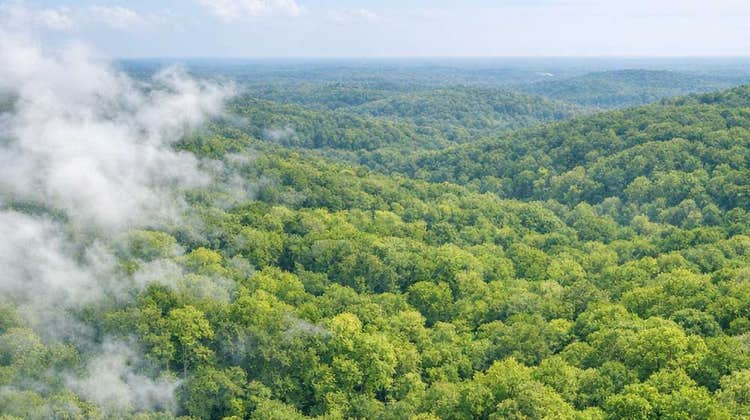
Corporate sustainability commitments have reached an inflection point. Whilst virtually every organisation now publishes environmental targets, the gap between ambition and verified action remains stubbornly wide. The fundamental challenge is demonstrating progress in ways that withstand scrutiny from investors, regulators, and increasingly sceptical stakeholders.
This credibility gap manifests most acutely in technology procurement. IT departments refresh thousands of devices annually, yet struggle to connect these routine purchasing decisions to meaningful environmental outcomes. Energy efficiency ratings provide some guidance, but they don't answer the question stakeholders increasingly ask: what tangible environmental restoration results from our technology investments?
The Transparency Problem
Traditional approaches to sustainable technology procurement rely heavily on incremental improvements and carbon accounting. A display consumes 15 per cent less power than its predecessor. Packaging contains 20 per cent recycled content. Manufacturing facilities achieve marginal emission reductions year-on-year. These metrics matter, but they're difficult to communicate compellingly and harder still to verify independently.
Carbon offset programmes promised a solution but created new problems. Credits purchased through opaque marketplaces often fund projects with questionable additionality, initiatives that would have proceeded regardless of offset funding. Verification standards vary wildly. The connection between a technology purchase and environmental benefit becomes abstract rather than concrete, raising questions about genuine impact versus greenwashing.
What's needed is a fundamentally different model: one where the link between procurement and environmental restoration is direct, transparent and independently verifiable.
The Philips Monitors Approach
The ForestNation partnership we've developed demonstrates what transparency looks like in practice. Rather than purchasing offset credits, we calculate the first-year energy consumption of each display model using certified data, convert that consumption into a specific CO2 footprint, then fund tree planting in direct proportion to emissions.
The methodology is deliberately conservative. Each tree is counted as removing 0.125 tonnes of CO2, a figure well below maximum potential to ensure claims remain credible over time. This works out to approximately 40 trees planted for every tonne of CO2 emitted during the first year of operational use.
Crucially, the trees aren't virtual credits but physical saplings grown in ForestNation nurseries in Tanzania's Usambara Mountains, one of the world's most critically deforested regions. Each tree is monitored for five years to ensure survival. Organisations receive certificates documenting exactly how many trees their purchase funded, how much CO2 those trees will absorb annually, and the broader community impact including employment hours created.
Real-World Results
The programme's first-quarter 2025 results illustrate the model's scalability. Major UK organisations including Network Rail, Birmingham NHS Trust, Accenture, AMD and Kellanova deployed 6,550 monitors, directly resulting in 8,218 trees planted. Recent client Workman LLP's deployment funded 2,562 trees that will absorb 64 tonnes of CO2 annually whilst creating over 102 work hours for local communities.
The cumulative impact now exceeds 58,699 trees, generating an estimated 6,025 tonnes of oxygen annually whilst absorbing 1,468 tonnes of CO2 each year. These aren't projected figures but verified outcomes from trees already in the ground.
Beyond Carbon Accounting
What makes this approach compelling isn't just the carbon mathematics but the human impact dimension. The Usambara region has suffered devastating deforestation that destroyed local livelihoods and degraded water sources serving over 500 village households. ForestNation's reforestation programme addresses environmental restoration and economic development simultaneously.
Eighty per cent of nursery staff are women earning reliable incomes whilst developing agricultural expertise. The programme employs agroforestry techniques, planting indigenous forest trees for land recovery alongside fruit trees that provide families with food security and income within one to three years. Students from local schools visit nurseries regularly, learning sustainable forestry practices whilst helping plant trees that beautify their campuses.
This transforms how organisations engage with sustainability commitments. Instead of procurement teams filing reports about percentage improvements in energy efficiency, they can state that their technology refresh directly funded thousands of trees, with specific data on CO2 absorption, oxygen generation and community employment created. That's the kind of tangible outcome that resonates in stakeholder presentations and annual reports.
The Scalability Question
The critical question is whether this model can scale beyond early adopters. The evidence from Q1 2025 suggests it can. When 6,550 monitors deployed across just five major organisations resulted in over 8,000 trees planted, it demonstrates how quickly impact accumulates through normal business operations.
What makes this scalable isn't hypothetical projections but the programme's integration into existing procurement processes. Organisations aren't being asked to change how they buy technology, they're simply choosing suppliers who connect those purchases to verified environmental restoration. The administrative burden is negligible; the impact is immediate.
This represents a genuine shift in how we think about technology procurement's environmental impact. Not as a liability requiring offsetting, but as an opportunity for verified environmental restoration. Not abstract commitments deferred to future reporting periods, but present-day action with measurable outcomes that accumulate naturally as organisations conduct routine technology refreshes.
The transparency this approach provides may ultimately prove its most valuable contribution. In an era of heightened scrutiny around corporate environmental claims, being able to point to specific trees, verified absorption rates and documented community impact provides exactly the kind of credible evidence that sustainability commitments require.
This article is sponsored by Philips Monitors.