Partner Content - 30 years on: How Watchguard and the channel have evolved together
This year, WatchGuard marks 30 years as a leader in the cybersecurity sector. Over that time, it has partnered with 50,000 cybersecurity providers and currently protects more than 1.5 million customers worldwide. The company has witnessed dramatic changes to the tech landscape, including the rise of MSPs, the escalation of cyber risk, and the impact of AI
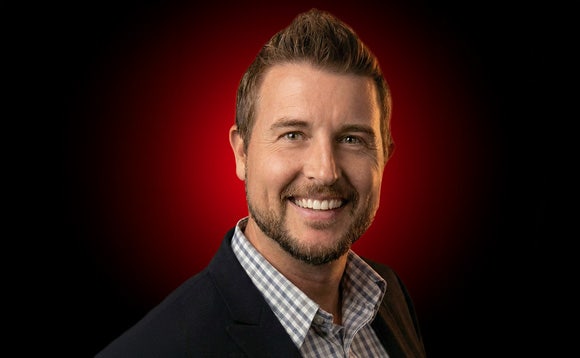
WatchGuard CISO Corey Nachreiner has been at the company for 27 of the vendor’s 30-year history.
He sits down with CRN to share how WatchGuard has evolved in line with a changing threat and technology landscape, while remaining committed to the channel and serving small and mid-size business (SMB) customers.
WatchGuard is celebrating its 30th anniversary this year. What does that milestone represent?
“A lot has changed in 30 years, but one of the things that excites me the most is WatchGuard has consistently evolved alongside both the threat landscape and the channel. If you look at businesses, you hear a lot about these sexy new startups and people get excited by them and they might have a new product. But most of them aren't going to last past 10 or 15 years.
“Both the channel and the threat landscape have changed in 30 years. We've always been a 100 percent channel company. Early on, it centered on resale and break‑fix work. As technology became mission‑critical, SMBs needed more ongoing expertise than they could staff internally. That drove the rise of VARs, then MSPs, and finally MSSPs as ransomware and cyber risk made security a top concern. Today, most SMBs rely on MSPs not just for technology, but for resilience. That evolution is exactly where WatchGuard has focused its energy.”
How has the threat landscape changed in that time as well?
“Thirty years ago, most attacks came from what I half‑jokingly call ‘prahacksters’, technically curious pranksters defacing websites, launching noisy email worms, or knocking systems offline for bragging rights. The damage was inconvenient and sometimes costly, but recovery was usually straightforward.
“Fast‑forward three decades and cybercrime has grown into an economy projected to cost more than $10 trillion annually, rivalling the GDP of the world’s largest nations. Today’s attackers are not bored teenagers. They are organised cybercriminals, hacktivists, and nation‑state actors with clear financial or geopolitical motives. At the same time, the attack surface has exploded. Technology now underpins nearly every part of society, from cloud workloads to IoT devices. Cybersecurity has gone from an IT problem to a business survival issue.”
Why has WatchGuard chosen to remain channel‑first rather than moving away from this model?
“Our mission has always been to serve that small to medium enterprise market. They're extremely underserved, but they're also an incredibly important market. It's a great market that, if you can find the right cost and service, and a way to deliver services with high margin, you can take care of a true need that they have.
“Financially, if you look at that triangle of revenue, the enterprise is at the top. If you get one enterprise deal, that takes a year or two and tonnes of work in professional services, you might get one big sale of $5 million and a big commission. But if you look at the SMB market, the bottom part is a huge triangle. There is way more money and way more business value being delivered to the world via SMBs.
“So why have we stayed in the channel? More than 90 percent of SMB cybersecurity purchases flow through the channel, primarily MSPs. Those MSPs are increasingly growing through managed security services. Our mission is to deliver enterprise‑grade security at SMB‑appropriate complexity and cost, and the only practical way to do that is through strong MSP partnerships. The channel is not an add‑on for us. It is the model.”
How is WatchGuard helping MSPs respond to the shift from traditional malware toward phishing, social engineering, and AI‑powered impersonation attacks?
“At WatchGuard we focus on three things. The first is having deep security expertise. Cybersecurity is our pedigree. It is what we focus on, and we package it in a way that SMBs can deliver as their own instead of having to create their own SOC or computer security response team, which takes a lot of capital expense and security expertise to do. We deliver that labelable service to our MSPs.
“The second way is delivering a purpose-built MSP security platform. We wanted to
scale without humans and offer high margins so they don't have to spend a lot
of time and effort to maintain it. The benefit of our platform, and the reason I'm so passionate about us not just being a network security company, is that you can see what's happening in the endpoint and in identities.
“And third is our early and serious investment in machine learning and AI. Threats are becoming agentic. AI is a multiplier, not just for the good guys, but for the bad guys. And not only have we seen them use AI to craft a phishing e-mail, or to help create a custom piece of malware. Now we're seeing them use the agentic part of AI to bring that all together and complete the entire kill chain of an attack at machine speed with very little human interaction.”
Following recent high‑profile supply chain attacks, how is WatchGuard helping MSPs protect not just their customers, but also themselves?
“We have long predicted the supply chain would become one of the most attractive attack vectors, and we practice what we preach. We encourage MSPs to secure themselves using the same controls they deploy for customers, including MFA, cloud detection and response, and identity protection. We also make our own tools available to partners at very favourable pricing because when MSPs trust our tools internally, they sell them with confidence.
“Equally important, we focus relentlessly on our own security. As a vendor, we know we are part of our partners’ attack surface. That is why we maintain ISO 27001 and PCI compliance where applicable, enforce a rigorous secure SDLC, and operate a mature internal security program. Trust is not a marketing claim. It is something you earn continuously.
“We also educate. With a lot of breaches, whether it's through a firewall, an endpoint, or a SaaS application, it wasn't that the victim didn't have a security tool that could have blocked it. It's that they didn't have something configured right. It wasn't enabled properly, or they actually had a user that created an over permissive tool share. So, we also work on education for our MSPs and package this up so that they can deliver it to their end users.”
How do you ensure AI delivers operational efficiency and protection without adding complexity for partners and their customers?
“That is the value of a true platform. AI thrives on normalised, high‑quality data. Trying to layer AI across a collection of loosely integrated tools is difficult and often ineffective. We have done the hard work of unifying telemetry across our security stack, which allows our AI to operate natively without fragile connectors. The result is stronger protection and real operational efficiency, not more operational debt.”
What are some key things partners should take away from Watchguard’s recent IMPACT partner conference?
“Two big things. First, major product innovation. We are launching Rai, the WatchGuard AI that powers our platform, along with our Security Insights Hub and additional AI‑driven features rolling out this year.
“Second, Cloud Detection and Response. SMBs typically use dozens of SaaS applications, often with little visibility or control. WatchGuard CloudDRÔ helps uncover shadow IT and AI usage, identify misconfigurations, and detect cloud‑based attacks, many of which involve stolen identities.
“We also want partners to understand that this is a new WatchGuard. We have not been just a firewall company for a long time, and our pace of innovation has accelerated dramatically.”
With increasing regulatory pressure and customer expectations around accountability, how is WatchGuard helping MSPs turn compliance into a business differentiator?
“We treat compliance as table stakes, not a checkbox. We maintain strong certifications, monitor emerging regulations such as NIS2, CRA, and EU AI, and proactively adapt our programs to meet them. Customers and MSPs are validating vendor security more closely than ever, often after being burned by supply‑chain failures. Our goal is to help partners build trust and credibility, turning strong security and compliance into a competitive advantage rather than just a cost centre.”
As WatchGuard enters its fourth decade, what remains unchanged about your approach to security and the channel, and what will change over the next few years?
“I think what remains unchanged is simple. It's our focus on MSPs and the channel. I've heard other vendors describe themselves as MSP-first or channel-first, meaning they sell directly to enterprises too. We are channel only. And we're currently focused on protecting SMB and mid-market organisations through MSPs. So that's not going to change. What is going to change is any lingering perception that WatchGuard is an older, narrowly-focused company. The one downside to being around for 30 years, even though there's a reason, is you may not have that spark or excitement because people have heard about you before and they're always looking at the next thing. We have repeatedly reinvented ourselves over the last 30 years and we are doing it again.
“There's many security startups that won't be here in a few years. We will continue to be here decades from now, and you're going to see us continue to evolve very quickly and add new things. The one thing about security is it changes and AI is the fastest changing technology we've seen. So, one thing that will change is the type of protections we offer, which will continue to evolve as IT and the threat landscape evolve.”
This article is sponsored by Watchguard.