Partner Content - Where AI risk actually lives: The browser and the endpoint
For many organisations, AI security discussions are focused on the wrong areas
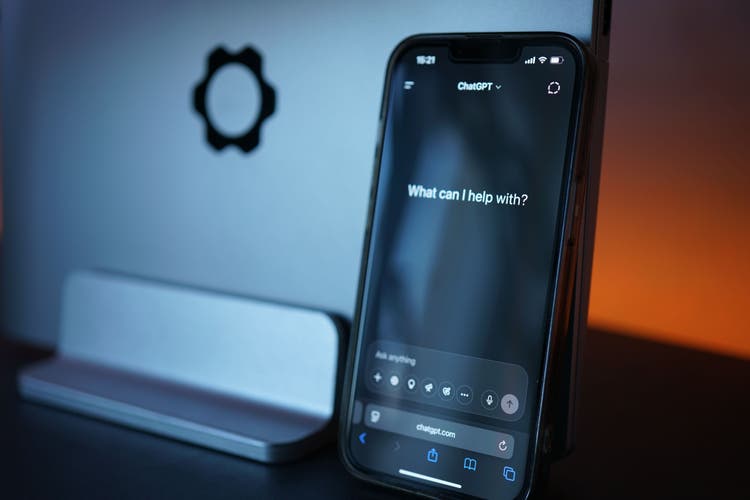
The attention is often on the AI model itself or the governance policies.
But the security risks that emerge at the moment an employee interacts with AI are equally important. In fact, recent research revealed that 79 per cent have entered some form of sensitive information into an AI tool.
When a customer record is pasted into a chatbot, code is uploaded to an AI assistant, or an AI agent is granted access to business systems, organisations run the risk of data loss, regulatory non-compliance or losing intellectual property.
That is why the browser and the endpoint have become the front line of AI security.
Shadow AI creates a visibility gap
AI does not behave like traditional software. It appears through browser-based tools, browser extensions, IDE plugins, APIs, and AI-powered applications, so for IT, keeping track may be a challenge.
As a result, conventional security and software inventory tools and data loss prevention solutions can struggle to provide full visibility into how AI is being used and what information is being shared, creating issues around shadow AI.
Gartner research found that 69 per cent of organisations either suspect or have evidence that employees are using prohibited public generative AI tools.
Why blocking AI is not the answer
However, blocking AI tools altogether is rarely an effective long-term strategy. While it may appear to reduce risk, it often achieves the opposite.
In a quest to improve productivity and save time, employees may turn to personal devices, unmanaged tools, or services that have not yet been identified by security teams, impacting security and visibility.
A more practical approach is to govern AI interactions at the point of use.
Organisations need the ability to inspect prompts, file uploads, and responses in real time, allowing AI usage to continue while reducing the risk of sensitive data exposure.
Controls such as allowing, sanitising, warning, or blocking specific actions helps balance security with productivity. Furthermore, users can be educated and guided toward approved alternatives instead of simply being denied access.
New AI threats demand protection at the point of use
The browser and endpoint are also where organisations must start thinking about a new class of threats beyond accidental data sharing.
As businesses deploy AI assistants and autonomous agents, prompt injection attacks, jailbreak attempts, manipulated outputs, and unsafe agent behaviour can compromise workflows.
Because these threats occur within AI interactions themselves, many conventional endpoint security tools struggle to detect them.
Beyond protection, organisations increasingly need proof that AI usage is being governed responsibly and a written policy alone is no longer enough.
Businesses must be able to demonstrate which AI tools were used, what data was involved, what controls were applied, and what actions were prevented. Comprehensive logging and audit records are becoming an essential part of this, transforming security from a theoretical policy into something that can be measured.
From discovery to control and compliance
N-central from N-able helps organisations secure AI use by first identifying where AI tools are being used across the environment, including on unmanaged devices.
Those insights can then be used to deploy Prompt Security by SentinelOne through existing N-central and N-sight software deployment workflows.
Together, N-central, N-sight and Prompt Security, by SentinelOne create a complete lifecycle of discovery, deployment, control and compliance.
N-central and N-sight provide visibility and automation across the estate, while Prompt Security enforces policies at the point of use, helping organisations remove prohibited tools, govern approved AI services and maintain an auditable record of AI activity.
Securing AI without slowing innovation
As AI adoption continues to accelerate, success will depend on whether organisations can manage AI use safely. Those that get ahead will not be those that simply block new technologies.
They will be the ones that gain visibility into AI usage where it actually happens, at the browser and endpoint, and implement controls that protect data without preventing innovation.
This article is sponsored by N-able and SentinelOne.