Industry voice: Navigating the CSRD: A Guide to International Sustainability Reporting and Compliance by Ellen Moncur

The Corporate Sustainability Reporting Directive (CSRD) is a pivotal piece of European Union (EU) legislation that came into force on 5 January 2023. Designed to strengthen corporate transparency and accountability, the CSRD significantly expands the scope of mandatory sustainability reporting for companies operating within the EU and beyond. It modernises and strengthens rules related to the social and environmental information that companies must report.
Who does the CSRD apply to?
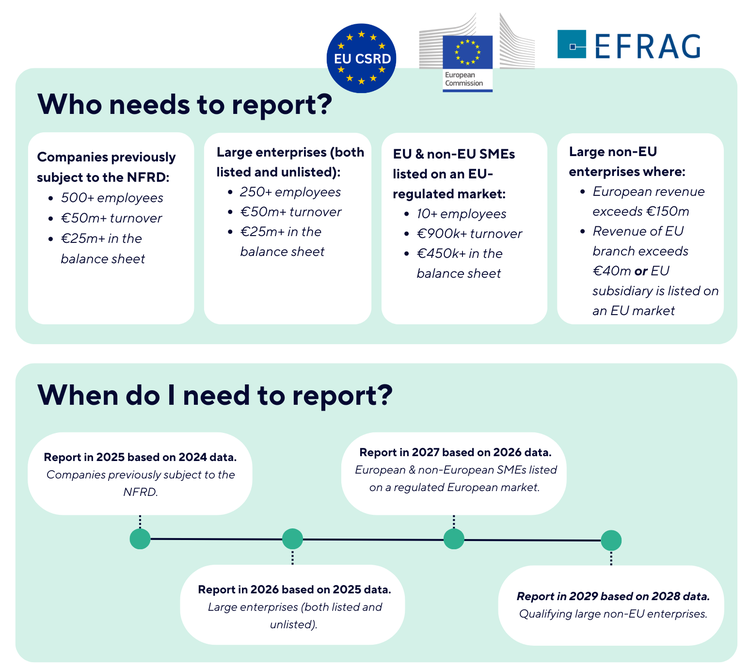
- Generally, the legislation applies to large companies and listed small and medium-sized enterprises (SMEs) within the EU.
- Some non-EU undertakings if listed on an EU-regulated market or have significant activity in the EU.
Why is enhanced transparency important?
- Ensures investors and stakeholders have access to essential information.
- Allows assessment of companies' impact on people, the environment, and financial risks.
- Sustainability reporting will become more standardised, resulting in less administrative burden and costs for organisations.
How do organisations comply with the CSRD?
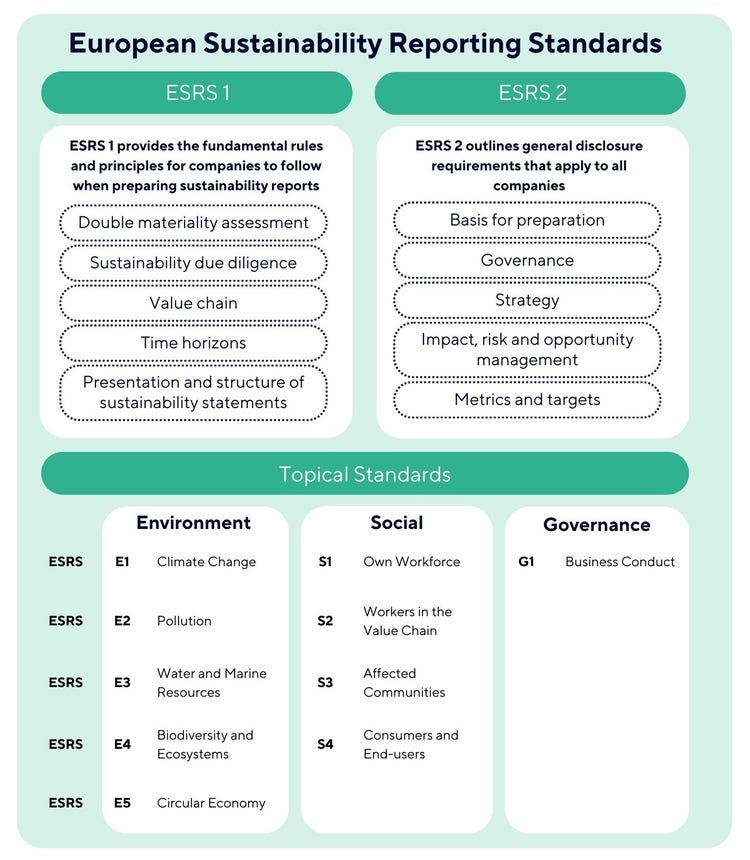
Companies subject to the CSRD must report according to the European Sustainability Reporting Standards (ESRS). These standards were developed by the European Financial Reporting Advisory Group (EFRAG). The first set of ESRS was published in the Official Journal on 22 December 2023.
Double Materiality: A Key Requirement
A key development of the CSRD was the introduction of the mandatory requirement for organisations to conduct a "double materiality" assessment, as outlined in ‘ESRS 1 – General Requirements’.
This process enables the identification of sustainability matters of the greatest significance for the organisation and stakeholders, from both an impact and financial perspective. Double materiality considers that both financial and non-financial factors, such as environmental, social, and governance (ESG) considerations, are important and interconnected when assessing an organisation's risks and opportunities. The double materiality assessment process involves assessing the organisation's ESG-related impacts (from an inside-out perspective), while also considering how sustainability issues can financially affect the organisation (outside-in perspective).
Once an organisation has identified its material ESG topics, they are required to follow the disclosure requirements within the relevant ESRS documents.
What are key reporting considerations for organisations?
- Disclosing governance practices, including how your organisation integrates sustainability matters into its decision-making processes an how the board and management oversee these.
- Explaining how sustainability matters are considered in overall business strategy.
- Outlining sustainability-related risks and opportunities that have been assessed and how the organisation intends to manage them.
- Specifying the metrics and targets used to monitor sustainability performance.
- Reporting the organisation's actual impacts on environmental and social aspects, both positive and negative.
The CSRD encourages robust foundations for sustainability reporting. This involves requiring organisations to set clear baselines and targets, and to regularly report on progress against these targets. This should compel organisations to take a long-term view of sustainability, integrating it into their core business strategy.
To ensure transparency and build trust, the CSRD mandates independent verification of an organisation's reported sustainability data.
Conclusion
The CSRD represents a significant step toward a sustainable and transparent business landscape. By harmonising reporting practices and emphasising double materiality, it encourages companies to integrate environmental, social, and governance considerations into their decision-making processes. As the CSRD takes effect, companies have a unique opportunity to demonstrate their commitment to responsible business practices and contribute to a more resilient and equitable future.
This article is sponsored by Arete Zero Carbone.