Sustainability in Tech Summit 2026: Leading with Impact: How Lenovo Is Redefining Channel Sustainability in 2026
In 2025, Lenovo made significant strides in sustainability, marking a year of robust progress and collective achievement. In this Q&A, Virginie Le Barbu at Lenovo, shares insights into the milestones reached and what lies ahead.
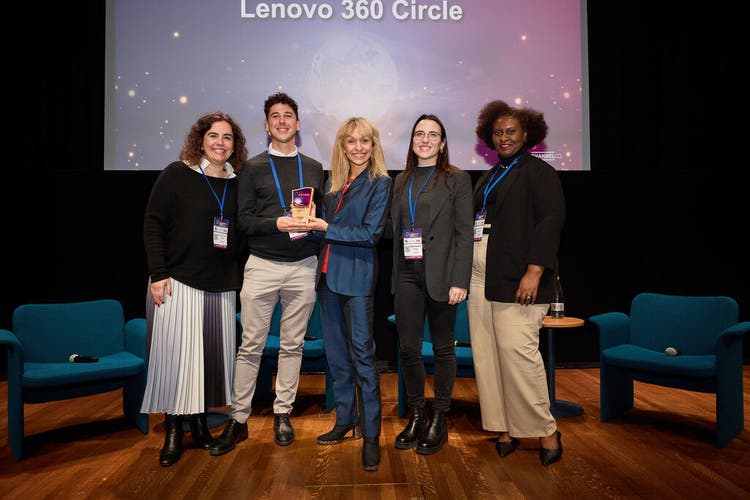
Can you share any Lenovo 360 Circle developments that we can expect to see in 2026?
As of today, the Lenovo 360 Circle includes 753 HQ members and 3,092 local partner entities across 64 countries, reflecting our continued growth and impact. 2026 is really about scaling from commitment to measurable contribution across the entire ecosystem. In 2026, the Lenovo 360 Circle will enter a new phase of maturity and scale. Our focus is on deepening engagement, accelerating impact, and strengthening the business value of sustainability for our partners.
Key developments include a strong focus on our “Connect” members. We will announce in the coming couple of weeks a new SME/SMB Sustainability Starter Kits that will help the smaller partners integrate sustainability into their overall strategy. We are also focusing on expanding partnerships with other OEMs, as well as integrating the voice of our customers into the community through the Lenovo 360 Circle Customer Council, to give partners a space to exchange procurement insights, discuss trends, and co‑shape the next evolution of sustainability strategy. Finally we are also giving a stronger focus on data and measurable outcomes – enabling our partners to track the impact of sustainable product ranges, as-a-service models, circular solutions, and carbon‑transparent procurement.
What were your proudest sustainability-related achievements in 2025?
In 2025, the Lenovo 360 Circle made significant strides in sustainability, marking a year of robust progress and collective achievement. What truly stands out from 2025 is not only the breadth of new initiatives but the clear momentum and shared sense of purpose that now define the Lenovo 360 Circle. Together, we are proving that sustainability is a catalyst for business growth and innovation, setting a strong foundation for the future. The community experienced remarkable growth which reflects our commitment to driving sustainable business practices on a truly global scale and fostering an ever-stronger ecosystem of engaged partners.
Among the year’s standout accomplishments:
- The introduction of the Lenovo 360 Circle Guided Leadership Journey, in partnership with Ashoka. This is a targeted program empowering leaders across our network to champion sustainability and innovation within their organizations.
- In parallel, the Lenovo 360 Circle Women’s Mentoring Program completed its first cohort, supporting dozens of women throughout the channel and nurturing the next generation of industry leaders through increased confidence, leadership skills, and career visibility.
- Collaboration remained a cornerstone of our impact, exemplified by our partnership with Rejoose, which brought advanced sustainability analytics and actionable insights directly to our partners.
- The establishment of the Lenovo 360 Circle Executive Advisory Board further elevated the community, providing strategic guidance and ensuring that partner and customer voices shape our ongoing sustainability strategy.
How important is it to bring your partners along on your sustainability journey?
Involving partners in the sustainability journey is absolutely vital. The technology sector faces interconnected challenges that cannot be solved by any single company; decarbonizing supply chains, enabling circular economies, and reshaping customer expectations require collective action.
Our partners contribute to more than 80% of our revenue, and their significance extends beyond financial impact. They serve as the voice of the customer, providing valuable insights into the solutions, data, and services that end-users need and expect. By embedding sustainable products and services into customer interactions, partners help multiply our reach and influence. Furthermore, they collaborate with us to develop innovative services, smarter deployment approaches, and tailored circular strategies for diverse markets. In essence, bringing partners along is not optional – it's the cornerstone of enduring, systemic change in our industry.
Is the industry doing enough to promote a ‘sustainability‑first’ way of doing business? What more needs to be done?
The industry has made notable strides forward with greater transparency, the adoption of circular solutions on the rise, and increasingly more organizations weaving sustainability KPIs directly into their primary business strategies. However, progress is still not keeping pace with what is truly necessary.
To genuinely lead with a “sustainability‑first” approach, the industry must provide customers with clearer and more comparable data, enabling them to make well-informed procurement decisions. Efforts to expand circularity should be intensified, encompassing take-back initiatives, refurbishment, reuse, and product-as-a-service offerings.
It’s also essential to integrate sustainability into partner incentives and core business models, going beyond traditional CSR reporting. Investing in education is critical, particularly for small and medium-sized enterprises, which are often eager to contribute but lack the necessary expertise or resources.
Additionally, as AI continues to grow, the industry needs to bridge the gap between expansion and efficiency, ensuring that increased compute power is managed responsibly. Ultimately, the shift required is from isolated projects to lasting transformation. Achieving this calls for industry-wide collaboration, greater transparency, and a strong, ongoing commitment to sustainability.
What are some of the key challenges facing the channel this year when it comes to sustainability?
In 2026, the channel is grappling with a range of interconnected challenges, including:
- Growing complexity in regulatory demands, particularly regarding product lifecycle transparency
- Carbon emissions reporting
- Meeting new due diligence requirements.
Many small and medium-sized partners also face significant gaps in resources and expertise—they are eager to contribute to sustainability, but require more training, guidance, and accessible tools.
At the same time, businesses must weigh the return on investment, as they navigate customer expectations for sustainable solutions while managing cost pressures in a competitive environment. Customers are also calling for more reliable, transparent, and auditable sustainability data, which raises the bar for data quality.
Efforts to expand circularity add further complexity, involving not only new logistical approaches and shifts in customer attitudes but also the development of innovative business models. While there is strong enthusiasm to advance the circular economy, many of these business models are still in the testing and piloting phase, and their long-term viability is yet to be proven.
Nevertheless, each of these challenges also presents an opportunity, provided they are addressed with foresight and initiative.
What are the main sustainability opportunities in the coming year for Lenovo and its channel partners, both in terms of products and services?
Looking ahead to 2026, the channel has a significant opportunity to add value by prioritizing sustainability.
On the product side, there are growing options for offering devices that not only save energy and use recycled materials but also include refurbished devices—an especially important solution as costs rise and supply chain challenges persist.
- Devices with certifications like EPEAT and other eco-labels will help customers meet their procurement goals.
- Alongside this, smart power management and AI-driven efficiency features are expected to become standard.
For services, partners can expand by delivering comprehensive lifecycle support, including setup, asset collection, refurbishment, repair, and recycling.
- Emphasizing refurbished devices helps customers navigate budget constraints and supply limitations.
- Transitioning to models such as Device-as-a-Service and consumption-based options allows customers to minimize waste and optimize their IT usage.
- In addition, supporting customers with sustainability reporting will become increasingly vital due to tightening regulations and audit demands. AI-powered advisory services that provide predictive insights can help reduce energy consumption, emissions, and costs across IT environments.
Importantly, partners have the opportunity to act as strategic advisors throughout the buying process, guiding customers to make informed, sustainable decisions that align with their business needs. By integrating these innovative products and services into comprehensive, customer-focused sustainability solutions, partners can differentiate themselves and thrive in a more competitive market.
This article is sponsored by Lenovo.