The AI bubble burst, a ticking time bomb for the channel? Tech experts share their take
As AI becomes a natural, if not essential path for partners, some fear a sharp market correction could impact firms across the industry

As speculation grows around a potential correction in the AI market and its possible impact on the wider economy, IT partners find themselves on the front line of both opportunity and risk.
While headlines focus on inflated valuations and investor sentiment, the channel has long been shaped by cycles of technological disruption.
From cloud to cybersecurity, partners have repeatedly adapted by refining their offerings and reshaping their vendor strategies to remain relevant and resilient.
The key question now is whether current concerns around AI are already influencing how channel firms invest, innovate and position themselves within the ecosystem, or whether pragmatism is once again prevailing over hype.
To explore this, CRN spoke with leaders from Cisilion, Advania UK, Nebula IT, Easy Service Informatique, SCC, Maintel and Itcom Services to understand how they view the risks, the reality and the road ahead for AI in the channel.
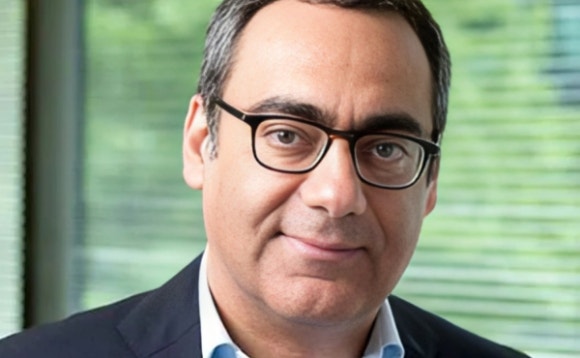
Robert Vassoyan, CEO, SCC
Would a potential AI bubble burst negatively impact your company? How?
“There is no reason for that because real demand AI solutions and use cases will accelerate and SCC is extremely well positioned to take advantage of that.”
Could current bubble concerns slow down or alter your AI investment plans, or will your strategy remain the same?
“Our strategy will remain the same and we will continue to double down on all required capabilities to lead in the AI era.
“Times of volatility and uncertainty are in fact periods from which the most solid and long-term focused companies emerge stronger.
“We believe it will be the case for SCC.”
What is the measurable impact from the investments you’ve made in AI?
“Let me give you two examples, one where AI is helping us deliver a much better service and another one where AI is helping customers becoming more efficient in their core processes.
“During Paris 2024 Olympics, we deployed enhanced AI-driven cyber intelligence to monitor 120 venues and 65,000 devices.
“Our AI capabilities successfully identified and neutralised targeted cyber operations, ensuring digital trust for a global event.
“We are also delivering tangible efficiency through our work with the NHS.
“For University Hospitals Coventry and Warwickshire (UHCW), their AI and automation platform is optimising workflows for 10,500 staff.
“This initiative is estimated to save the Trust 2,080 working days per year, proving that AI delivers ‘hard’ ROI in complex environments.”
Are you investing in other technologies or expanding your vendor portfolio to offset any potential slowdown in AI? If so, which ones?
“We do not view other technologies as an offset but as critical enablers for the AI era and all of them will embed AI to make them even more relevant.
“We have launched SCC Pulse (AI-driven automation) and SCC Vision (multi-cloud observability) to give customers clarity, speed, and control over their infrastructure.
“Thanks to a very audacious insertion of automation and virtual agents in our Helpdesk strategy, we are now recognised as a leader by ISG Provider Lens.
“We also continue to develop our Active Cyber Defence Centre and are expanding our SOC offering with sophisticated and data enabled cyber threat platforms allowing organisations to constantly monitor all kinds of risks.
“We are also working on industrialising AI driven solutions such as real time deep fake detection in our SOCs.”
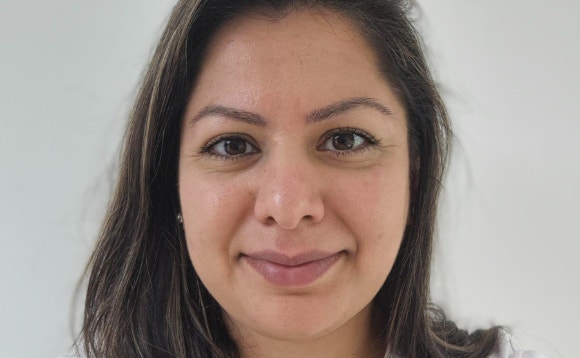
Mini Biswas, AI and security specialist, Cisilion
Would a potential AI bubble burst negatively impact your company? How?
“The impact would largely depend on how organisations have approached AI adoption.
“Companies whose strategies hinge on speculative ventures or hype-driven projects could feel pressure.
“However, for those embedding AI into core services, the exposure is minimal.
“Across the MSP space, the prevailing trend is to align AI investments with tangible customer outcomes rather than chasing headlines.
“This approach creates resilience against market volatility.
“Even if valuations cool, the demand for AI-driven solutions that deliver measurable value will remain strong.
“In short, a bubble burst would affect hype, not substance. Providers focused on real-world impact and responsible adoption will continue to thrive.”
Could current bubble concerns slow down or alter your AI investment plans, or will your strategy remain the same?
“For most MSPs, strategies remain pragmatic and customer-focused.
“Rather than reacting to market sentiment, investments continue in areas such as AI-driven productivity tools, security posture improvement, and governance frameworks.
“Even if valuations cool, the demand for secure, governed, and outcome-focused AI solutions will persist, ensuring strategic investment stays firmly on course.”
What is the measurable impact from the investments you’ve made in AI?
“The measurable impact has been significant across the MSP space.
“Many providers report productivity gains of 20 to 30 per cent through automation and AI-powered tools, freeing teams to focus on higher-value work.
“In security, AI-driven analytics have reduced incident response times by up to 40 per cent, strengthening resilience and compliance.
“My role as an AI and security specialist was newly created to accelerate this transformation.
“This investment has delivered strong returns - not only in revenue generation but also in the ability to guide organisations through their AI strategy, adoption, and deployment journeys.
“Having the opportunity to work with diverse businesses and make a measurable difference in their transformation has been a real success story.”
Are you investing in other technologies or expanding your vendor portfolio to offset any potential slowdown in AI? If so, which ones?
“While AI remains a core pillar, MSPs are actively investing in complementary technologies that strengthen the foundation for AI and ensure long-term resilience.
“Key areas include cloud optimisation, zero-trust security and data governance.
“At Cisilion, we work closely with strategic vendors such as Microsoft and Cisco, both of which have made significant investments in these domains.
“This approach not only future-proofs our capabilities but also delivers integrated solutions that enhance efficiency, security, and compliance for customers.
“Diversification isn’t just a hedge against market fluctuations; it’s a strategy for unlocking greater value and driving sustainable growth.”
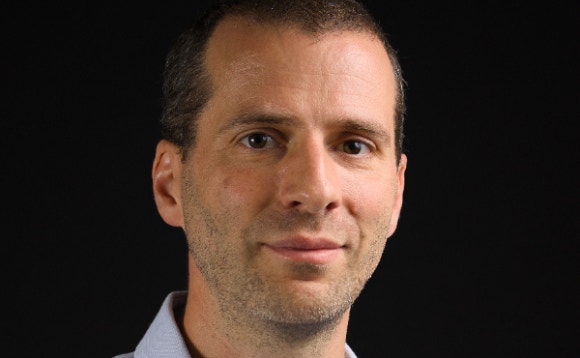
Frédéric Zouaï, founder and MD, Easy Service Informatique
Would a potential AI bubble burst impact your company, and how?
“Indirectly, through the risk it poses to the global economy and a slowdown in markets.
“Today, the global economy relies heavily on startups and tech companies that raise and burn billions.
“This is a growth engine, but if that engine stops actually moving things forward, everything eventually comes to a halt, and the suppliers or subcontractors of those companies will suffer as a result.
“Very concretely, some of these companies probably use services provided by some of our clients (for example, law firms for legal management).
“They pay our clients, who then pay us, using funds raised by selling AI ‘miracles.’
“The day some of these companies lose credibility in fundraising and lack sufficient customers to finance themselves, they will no longer be able to pay for legal services.
“Law firms will see reduced activity, and we will be indirectly affected as well.”
Could current bubble concerns slow down or alter your AI investment plans, or will your strategy remain the same?
“From the outset, we have been both very excited and very cautious about AI and what can be done with it.
“We will stay the course: constant monitoring, testing tools, building others, and investing in what appears promising and offers a genuine return on investment.
“On the other hand, we are moving forward strongly with AI training and awareness, both internally and for our clients, because it is certain that an AI revolution will take place.
“The form this revolution will take is less clear today, but missing it is not an option.”
What measurable impact have your AI investments had so far?
“At this stage, we do not yet have a positive ROI, but that is normal since we are still at the beginning of the investment cycle.
“An investment that is profitable from day one would not be an investment - it would be a miracle.”
Are you investing in other technologies or expanding your vendor portfolio to offset any potential slowdown in AI? If so, which ones?
“More generally, we are looking at everything related to automation (which can sometimes overlap with AI, although they are two distinct topics).
“Anything that can automate tasks has real value in our view.
“Naturally, we are also continuing our strong investments in cybersecurity and compliance.”

Chris O’Brien, products and services director, 18x Microsoft MVP, Advania UK
Would a potential AI bubble burst impact your company, and how?
“A bubble burst among big tech AI players could have a trickle-down effect if it sours confidence in AI, but already our projects generally only go ahead today if there’s a clear path to returns - both for us internally and for our clients.
“In that respect, you’d say that the increased diligence on AI investment actually started 12 months ago at the point where the initial hype and FOMO settled.
“As such, a burst may have a temporary effect but we’re optimistic it wouldn’t last given organisations are increasingly seeing real business outcomes being achieved.”
What measurable impact have your AI investments had so far?
“We’ve seen significant cost savings through process automation and productivity improvements that simply weren’t possible before, as well as new ways of serving clients with higher quality – we strongly adopted the ‘customer zero’ approach two years ago and we’re proud of our internal metrics and ROI.
“We’re equally proud of the transformational outcomes we’ve achieved with our clients.
“As one example, we’ve developed an RFP agent with advanced reasoning and document creation capabilities which has been in production for while internally and with several clients.
“Our internal team cite between 13 and 45 minutes saved for each bid question they respond to, and a legal client reports the agent is saving them 400 person days per year in total.
“Do any of these organisations wish they’d held back because of a potential bubble bursting in Silicon Valley? That seems unlikely.
“These aren’t theoretical gains – certainly, the right expertise is needed to get to the outcomes, but these solutions in production today provide confidence for our continued AI focus and that of many of the organisations we’re working with.”
Are you investing in other technologies or expanding your vendor portfolio to offset any potential slowdown?
“It’s not just about AI for us, we already have a broad offering across cybersecurity, cloud, networks, devices, application development and low-code, employee experience, business applications, technology sourcing, and extensive support services.
“Our clients look for breadth and depth at the same time, and it’s certainly true that having some scale and diversity in this industry provides resilience and sustainable value over the long term.”

Sarah Roberts, COO, Maintel
Would a potential AI bubble burst negatively impact your company? How?
“The impact on us would be limited.
“We deliberately mainly work with large and stable organisations like Microsoft, AWS, Zoom, Cisco, rather than smaller AI start-ups whose business models are still evolving.”
Could current bubble concerns slow down or alter your AI investment plans, or will your strategy remain the same?
“No, our strategy will remain the same.”
What is the measurable impact from the investments you’ve made in AI?
“The benefits to Maintel are numerous and includes improvements in efficiency, customer experience, cybersecurity and resource optimisation.
“Several of our systems have AI capabilities which are leveraged to deliver value, whilst supporting metrics help to measure quantifiable value or capability enhancements”.
Are you investing in other technologies or expanding your vendor portfolio to offset any potential slowdown in AI? If so, which ones?
“Our strategy has been predicated on a measured approach ergo we have not overcommitted to any area when it comes to AI adoption.”

Chris Pottrell, MD, Nebula IT
Would a potential AI bubble burst negatively impact your company? How?
“Not significantly.
“Our approach has been deliberately pragmatic.
“We focus on applied AI automation, agents, and decision support tied directly to operational outcomes.
“If anything, a market correction would help customers move away from hype-driven experimentation toward value-driven adoption.”
Could current bubble concerns slow down or alter your AI investment plans, or will your strategy remain the same?
“Our strategy remains the same.
“We invest where AI solves real problems reducing friction, increasing efficiency, or improving decision-making.
“We’re not chasing AI for its own sake; we’re embedding it where it meaningfully improves service delivery and client outcomes.”
What is the measurable impact from the investments you’ve made in AI?
“We’re already seeing measurable gains in internal efficiency, faster insight generation, and reduced manual overhead across service delivery, reporting, and operational workflows.
“Importantly, AI is enabling our teams to spend more time on higher-value work rather than replacing people or processes outright.”
Are you investing in other technologies or expanding your vendor portfolio to offset any potential slowdown in AI? If so, which ones?
“AI isn’t a standalone investment for us it sits alongside cybersecurity, data platforms, automation tooling, and cloud optimisation.
“In many cases, AI amplifies the value of these technologies rather than replacing them.
Strong security, clean data, and well-designed processes remain non-negotiable.”

Jean-Benoît Carsin, founder and CEO, Itcom Services
Would a potential AI bubble burst negatively impact your company? How?
“A market correction would not call our work into question.
“We do not invest because of hype: we develop our own tools, at our own pace, for ourselves and for our clients.
“The only real risks concern dependence on cloud hyperscalers, cost volatility and changes in economic models.
“That is precisely why we develop in-house, with full control over the code, data and architecture.”
Could current bubble concerns slow down or alter your AI investment plans, or will your strategy remain the same?
“We have not slowed down; we have refined our choices.
“Every investment must deliver smoother operations, higher service quality and a reduction in the mental load on our teams.
“That is our compass.”
What is the measurable impact from the investments you’ve made in AI?
“We have created our own AI development service.
“It delivers solutions for us, but also for our clients, with a very hands-on, operational approach.
“Our ITCOM bot is deployed in Teams and connected to our documentation and Autotask.
“It qualifies tickets with full context, suggests immediate alternatives, reads our technical documentation, automates support tasks and detects critical incidents.
“Our new conversational intelligence service, Transcriptia, secures recording and archiving, automates call transcription and creates intelligent summaries tailored to clients’ business.
“This creates new visibility into telephone interactions and opens up use cases that our clients had never previously considered.
“This is exactly the kind of innovation that comes not from hype, but from a genuine client need.”
Are you investing in other technologies or expanding your vendor portfolio to offset any potential slowdown in AI? If so, which ones?
“Yes, because AI does not stand alone.
“We are strengthening our core pillars: managed cybersecurity, end-user device management, network and telecom optimisation, standardisation and digital sovereignty where required.
“AI is a lever. Our business is service continuity.
“We do not oppose the two - we combine them.”