‘The UK is a massive and strategic market’: Dynatrace VP worldwide partners
Michael Allen talks MSPs, and strategic acquisitions and a future in which software works perfectly
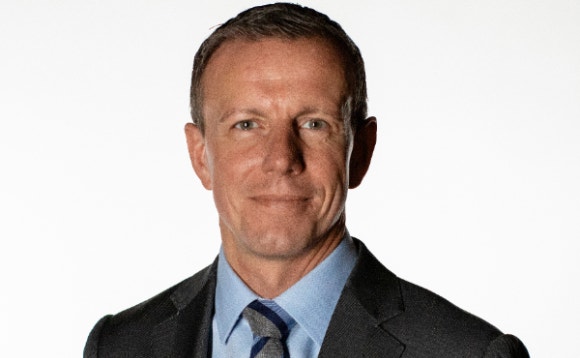
“Partnerships are like dancing; it takes two,” Jean-Philippe Barleaza, EMEA software GM at Rigby Group – SCC, told CRN during Dynatrace’s Innovate Roadshow in London last week.
The vendor counts 600 partners among its network, 50 of which are in the UK, according to Michael Allen, VP of worldwide partners.
CRN sat down with the channel leader to discuss Dynatrace’s partner ecosystem, European ambitions, and the company’s progress on delivering a solution that works perfectly.
What are you expecting from this event, and what is the purpose of today?
“We’ve got a mixture of partners in the room today; We’ve got customers, and we’ve got potential customers who are going to join the Dynatrace family.
“It’s a great opportunity for our customers to learn more about the capabilities of the products that will drive greater value and adoption.
“For potential customers, it will give them the confidence to make similar decisions to those made by existing customers, and they get to hear from those customers directly about the value they’ve achieved through Dynatrace.
“For partners, it’s an opportunity to meet our customers.
“Partners don’t just partner with Dynatrace, they also work across other parts of the ecosystem, and that enables them to create unique offerings that are greater than the sum of their parts.
“This gives them a chance to showcase those offerings to our customers.”
Can you tell me about those offerings?
“One of the buzzwords in the industry at the moment is AIOps.
“AIOps involves three key elements: observability, engagement, and action.
- Observability is about understanding what’s happening.
- Engagement refers to the workflows and processes, things like release management, incident management, and change management, which are crucial to running IT.
- Action is about automation.
“When you bring those together, you get something like Dynatrace.
“The platform can automatically detect a problem, find the precise root cause, and then trigger a ticket in an ITSM tool like ServiceNow, which uses workflows to handle the incident.
“From there, AI can automate the remediation.
“If you combine end-to-end observability, security, IT service management, and CI/CD release automation, that’s AIOps, and that’s what Dynatrace delivers.
“Our partners bring skills across all these domains to help deliver these solutions.
“There’s also the angle of building the AI platforms themselves.
“You’re bringing together different LLMs, hybrid cloud environments that support these AI engines, and the compute layer, whether that’s NVIDIA, Intel, or AMD.
“These platforms need to be monitored for cost, performance, and productivity, and that’s where Dynatrace adds value.”
Keep reading to find out more about Dynatrace’s partners ecosystem, and how the UK ranks compared to other countries...

How many channel partners do you have in the UK?
“Globally, we have over 600 partners.
“That ranges from the largest GSIs and MSPs to boutique firms with specific expertise, either in particular industries or technology stacks.
“In the UK, we work with over 50 partners across those categories.”
What percentage of your revenue comes through the channel? Are you 100 per cent channel-based, or do you also have direct sources of income?
“We’ve evolved over time.
“Today, more than 75 per cent of our global business involves a channel partner.
“In Europe, it’s even higher.
“You could argue that we’re partner-first in nearly every transaction we do here.”
Are you aiming to increase that percentage from 75 per cent to 100 per cent?
“I don’t think we’ll ever be at 100 per cent.
“Over time, especially as hyperscaler marketplaces continue to evolve and consolidate more IT spend, we do expect partner involvement to grow.
“We love ‘power of three’ partnerships - perhaps a system integrator, a hyperscaler, and another technology partner.
“Eventually, nearly all transactions could go through some form of marketplace, which by definition would make us nearly 100 per cent partner based.
“In many of our European markets, we’re already close to or at that level.”
And how important is the UK market in Europe?
“It’s absolutely critical.
“Some of the large system integrators we work with - companies with over 500,000 employees - derive 50 per cent of their European business from the UK.
“For them, the UK can represent 25 per cent of their global business.
“So yes, it’s a massive and strategic market.”
How does it compare to markets like the US?
“The US is larger, but there are strong similarities.
“Many of the partners who are significant in the US are also big in the UK.
“Indian-headquartered GSIs, for instance, often report that 40 to 50 per cent of their revenue comes from the US, and 20 to 30 per cent from the UK.
“There’s also a natural alignment between the UK and the US, as well as the UK and Europe, which makes it easier for us to scale our partnerships across all three regions.”
What does your partner ecosystem look like? Is it mostly hyperscalers, GSIs, resellers, distributors?
“All of the above.
“We work very closely with the major hyperscalers.
“Dynatrace runs on all of them.
“As more IT spend moves through these marketplaces, that will only grow in importance.
“The large GSIs are also crucial; I manage our top 20 partnerships myself.
“But we also work with regional SIs and boutique partners that bring deep domain or platform-specific expertise.
“Partners make money through services, and our customers want to maximise their value from Dynatrace.
“Partners help them skill up, adopt, and scale.
“They also extend our capabilities beyond the 4,000 ‘Dynatracers’ by reaching tens of thousands more through their own staff.”
Do you include MSPs in your partner ecosystem?
“Yes, absolutely; MSPs vary from infrastructure providers to platform providers.
“For example, SAP runs Commerce Cloud, which many global B2B and B2C organisations use.
“Others provide applications as a service, and they use Dynatrace to monitor performance for their customers.”
And what about distributors?
“Yes, we work with distributors, especially in regions where Dynatrace doesn’t yet have a local office.
“They manage all aspects of our business in those areas. South Africa is a good example.”
Outside of the channel, who are your end customers?
“We serve organisations across all industries, but we proactively target enterprises and public sector bodies with large, complex IT environments.
“The more complexity they have, the more likely they are to face problems, and that’s where AI thrives.
“While SMEs can and do benefit from Dynatrace, about 70 per cent of global IT spend comes from the top 10,000 to 15,000 enterprises, so we and our partners focus there.
“In those large environments, traditional dashboards don’t scale.
“You simply don’t have enough people or wall space to monitor everything.
“With the scale and velocity of cloud-native systems, AI becomes essential.”
Flip the page to learn more about Dynatrace’s territorial ambitions, leadership changes, and acquisitions...

Which European regions are you looking to grow in?
“All of them.
“One region we began investing in heavily five or six years ago is the Middle East.
“We saw the opportunity for rapid tech adoption, and that’s played out.
“In many cases, government-led digitisation has been faster than in the private sector.
“That region continues to grow rapidly for us, and we’re still investing.
“More broadly, Dynatrace is present in all key markets in Europe, the Middle East, and Africa.”
Have you made any recent changes to your leadership or workforce?
“Yes, and that constant change is part of why we’ve stayed ahead.
“I’ve seen other leading platforms disappear because they stopped innovating.
“Dynatrace has over 2,000 people in R&D.
“90 per cent of our 4,000 plus customers are using a version of our platform that’s less than 45 days old.
“That means our developers spend almost no time supporting legacy versions, they focus on innovation.
“Partners invest heavily in training, marketing, and solution development; they want a vendor that stays at the forefront, so we owe it to them to remain best-in-class.”
“Personally, I’ve stayed for 27 years because of three things:
- The people and culture, driven from the top by leaders like Rick McConnell.
- The innovation; it’s exciting to work on a product that can’t be beaten.
- The constant evolution; Dynatrace is always adapting.
“When we IPO’d in 2019, we had just under 2,000 employees, now we’re approaching 5,000.
“Most of our R&D is in Europe, and we benefit from long tenure and low attrition. That continuity is a real competitive advantage.”
Have you made any acquisitions to support that evolution? Are there any on the horizon?
“We’re proud of having built our platform in-house.
“Dynatrace is one platform with one unified data lake house (Grail), one AI engine (Davis), and one topology model (Smartscape). Everything integrates tightly.
“Other companies have bolted on AI via acquisitions, creating fragmented platforms. That slows innovation.
“We’ve made two recent ‘tuck-in’ acquisitions.
In 2023, we acquired Rookout in Israel to debug cloud-native Kubernetes workloads.
We’ve already integrated those capabilities into our platform.
In 2024, we bought out Runecast in Czech Republic to improve security posture and compliance for Kubernetes.
It also helps with standards like DORA, GDPR, and TCC.
“These help customers extend beyond observability and security to compliance.
“We’re always on the lookout for smart, strategic acquisitions.”
But what about Dynatrace’s partner programme and go to market strategy? Find this information on page four...

What does your partner programme look like? Is it a global programme, and have you made any changes recently?
“Yes, it’s a single global programme, and it’s been that way for over a decade.
“We continuously listen to feedback from our regional partner advisory councils and our executive partner advisory board.
“We look at a few areas:
- Technology integration: how our platform works with the rest of a partner’s tech stack.
- The financial model: we tweak it from time to time to ensure it continues to work well for our partners.
- Services enablement: We’re a software company at heart, and our partners bring the services expertise that helps customers get full value from Dynatrace.
As part of the partner programme, what does the training look like? How much do you invest in training partners?
“We’ve always been firm believers in removing barriers to training.
“We offer persona-based training for sales and sales specialists, solutions engineers, and delivery consultants.
“We deliver this through our Partner Portal and Dynatrace University, which allow partners to access role-based learning paths on demand.
“We also offer instructor-led training, both in person and virtually.
“We complement that with events, such as our annual Perform conference in Las Vegas, which includes a major partner summit, our Innovate series, which partners attend, and our virtual partner conferences, held twice a year.
“These events are opportunities to learn about programme updates, product changes, and new ways to win business and deliver services.”
In addition to the partner programme, what does your go-to-market model look like? Have there been any recent changes?
“No major changes recently. We have three main partner sales motions:
- MSP: Partners buy Dynatrace software to power their managed services.
- Resale: Partners purchase licenses from us and resell them, earning a margin.
- Referral: Sometimes, customers choose to purchase via a government framework or marketplace, like a hyperscaler. Even if the partner doesn’t transact the deal, if they’ve been involved throughout the process, helping shortlist, run POCs, and guide selection; we still provide them a rebate for their influence.”
Creating the perfect software is an ambitious challenge: more on this and Allen’s idea of success on the next page...

Rick [McConnell, Dynatrace CEO], said he envisions a world where software works perfectly. How do you aim to achieve that?
“Today’s cloud-native platforms scale automatically, and software is deployed rapidly. You need observability that keeps pace.
“Dynatrace auto-discovers, auto-instruments, and auto-baselines behaviour.
“That lets us detect anomalies often before users are impacted.
“Our causal AI identifies the root cause and compresses time-to-resolution.
“Our predictive AI uses machine learning to forecast future issues, so we can, for instance, auto-scale or roll back a change before users notice a problem.
“On top of that, we’re integrating agentic AI into how software is developed; coding, testing, releasing.
“All of this brings us closer to a world where software works perfectly.”
What would success look like for you a year from now?
“Success would mean a few things.
“First of all, customer growth: we’re north of 4,000 customers today. I’d love to see that number rise above 5,000.
“That’s a key health indicator for the business.
“Then comes team and partner expansion; to support that growth, we’ll need to expand both our internal teams and our partner base.
“Finally, we aim to go deeper into our partnerships.
“It’s not just about adding more partners.
“Success would also mean helping our existing partners grow their Dynatrace practices.
“I’m already seeing some partners create strategic business units dedicated to Dynatrace, with their own sales teams and go-to-market plans. Seeing more of that would be a huge win.”