AI won’t kill SaaS: but MSPs need to adapt
Fears that AI will allow enterprises to build their own software have fuelled talk of a ‘SaaSpocalypse’. But at Infobip Shift in Croatia, the vendor argues that creating an application is very different from running one, and partners still have plenty of opportunity if they adapt. Christine Horton reports
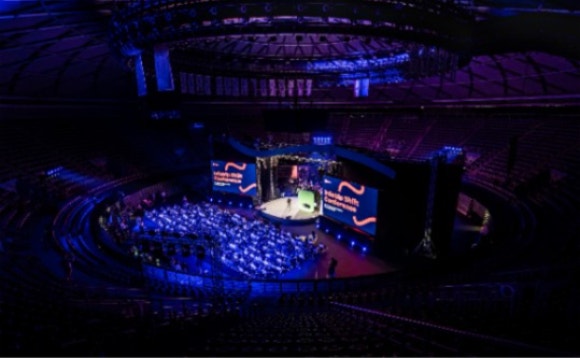
MSPs shouldn’t panic about predictions of a “SaaSpocalypse”, despite AI making it dramatically easier for businesses to build their own software, according to Infobip chief innovation officer Krešo Žmak.
Instead, partners need to adapt their business models, he said. That includes focusing on the services and expertise that are difficult to replicate with AI.
Infobip is a cloud communications platform provider, delivering messaging, customer engagement and contact centre services globally. The company is also embedding AI across its products and internal operations as part of what it describes as an “AI-first” transformation.
Žmak’s warning comes after a turbulent year for the software industry. A sharp sell-off in February wiped more than $1 trillion from software stocks in seven days, according to Forrester, amid fears that AI agents and increasingly sophisticated coding tools could undermine established SaaS providers.
Concerns have centred on whether enterprises will continue paying for large numbers of software subscriptions when AI can enable them to build applications themselves, as well as what happens to traditional per-seat pricing as agents perform more work previously carried out by employees.
Speaking to CRN UK at Infobip Shift in Zadar, Croatia, Žmak said the ability to build software quickly with AI has changed the market.
He said enterprises are now experimenting with building their own applications, while investors are looking at how easily existing software businesses can be replicated. However, Žmak argued that much of the concern confuses the ability to create an application with the more difficult task of operating production software at scale.
“The software is not the key in that phrase [SaaS]. ‘As a service’ is the key. Maintenance, upgrades, security, governance, scaling [and the] multi-concurrent ecosystem – those things are complex,” said Žmak.
He pointed to a gap between demonstrating that an application can be built and replacing the infrastructure, maintenance and services surrounding an established SaaS product.
SaaS fears begin to ease
Some of the panic surrounding the SaaS sector has already started to recede. The S&P 500 software sub-index has recovered much of the ground lost earlier this year, while major software vendors have increasingly sought to demonstrate that they can benefit from AI rather than be displaced by it.
Nevertheless, analysts expect AI to force changes to the established SaaS model. Gartner has warned vendors about what it calls “SaaS arbitrage”, arguing that software providers will need to rethink areas including pricing, packaging and policies as AI increases commoditisation and competition.
For channel partners, Žmak agreed that the appropriate response is adaptation rather than panic.
“I don’t think so,” he said when asked whether MSPs should be worried. “You should be adapting. You should be opening up your platform. You should be much more a platform than a software. You should be agile in the pricing models.”
He also warned against putting an AI layer on top of existing services in an attempt to demonstrate value. Partners that depend too heavily on functionality that can easily be recreated by frontier AI models risk making themselves more replaceable, he suggested.
Instead, he said they should continue to “push [their] core value proposition and double down on that”.
Channel impact: customers face rising software bills
The pressure to demonstrate that value comes as customers face rising SaaS costs. Data from SaaS procurement platform Vertice put its SaaS inflation rate at 16.4% in June, its highest level on record.
Meanwhile, SaaS management provider Zylo found that average annual SaaS expenditure among organisations in its dataset increased 8% year on year to $55.7 million, even as the average number of applications remained broadly flat at 305.
Zylo said AI features, consumption pricing and changes to software packaging are contributing to higher bills. Its research found 78% of IT leaders had experienced unexpected charges associated with AI features or consumption-based pricing over the previous year.
Rather than replacing established platforms wholesale, Žmak said Infobip is seeing enterprises combine components from different software platforms with applications they build themselves.
“At the end, you will still be buying software in a different manner,” he said.
Infobip, which works with 554 active partners globally, said partners can build horizontal or industry-specific agentic solutions around its AgentOS platform, combine their own technology with Infobip’s, or create services on top of the platform.
Žmak maintained that generating an application isn’t the same as being able to deliver software as a reliable, secure and scalable service.
“It’s hard to build software,” he said. “It’s not that easy.”