‘Tomorrow, MSPs won’t be able to operate without AI’: BeMSP founders
CRN sits down with the VAD’s leaders Thomas Bresse and Frédéric Navarro to talk about the firm’s MSPCON event, the MIP transition and the evolving French MSP ecosystem
On Wednesday, CRN attended MSPCON, France’s largest MSP-focused event, held in the heart of Paris.
Held in Bercy, home to the headquarters of the French Ministry of the Economy and Finance, it was MSPCON that served as the financial heart of the French IT channel for a day.
Organised by French VAD BeMSP, the conference gathered over 200 MSP partners from across the country and offered an exclusive look at where the industry is headed.
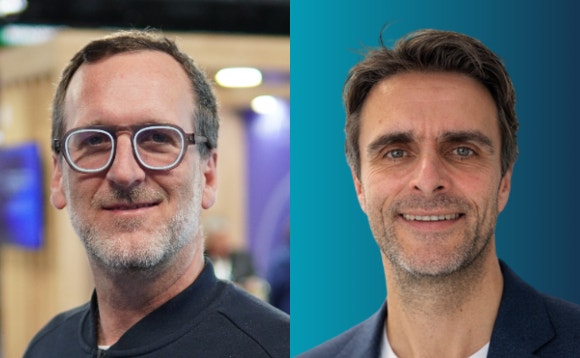
MIP, agentic AI, tech sovereignty and ecosystem expansion: CRN sat down with BeMSP’s co-founders Thomas Bresse and Frédéric Navarro to discuss MSPCON’s mission and get their take on the future of the IT channel.
Can you tell me more about MSPCON? What is the purpose of the event?
Bresse: “In the past, we attended many conferences in the US, and that’s where we learned everything.
“The original idea was to bring that type of event to the French-speaking market and provide content with real added value specifically for MSPs.
“The objective was to give direction to the market, share best practices and create an environment where people could exchange ideas and experiences with one another.”
Navarro: “We launched MSPCON in 2017 because we wanted to help mature the MSP model in the French market.
“We wanted to create an event entirely focused on MSPs while remaining vendor-agnostic.
“The ambition was to become a central meeting point for the MSP community in France.
“We wanted people to come here to learn, improve and help build a real community.”
Bresse: “It’s also important to understand that many industry events are heavily vendor-focused.
“You often spend an entire day listening to one vendor presentation after another and we wanted to move away from that model.
“Of course, we have sponsors because events like this have costs, but we deliberately limit their role.
“The content must primarily serve MSPs and deliver value to them.”
The event has clearly grown since 2017. What do you think has changed the most, both within MSPCON itself and within the wider ecosystem?
Bresse: “At the beginning, there was only a small group of people who truly understood the MSP model.
“Back then, we constantly had to explain what MSP actually meant.
“Then software vendors started promoting the model because they themselves had commercial interests linked to recurring services.
“As a result, we began to see new profiles joining the ecosystem.
“We also started seeing investment funds attending our events and wondering whether there were investment opportunities in the MSP space.
“We also saw analysts, consultants and many other stakeholders becoming interested in the MSP ecosystem.
“Today, the ecosystem extends far beyond MSPs themselves.”
What message were you hoping would resonate most strongly with attendees at this year’s edition?
Bresse: “We’re currently in the middle of the AI transition.
“When we were recently in the US, the term MIP was already being used extensively.
“We can feel that a new wave is coming and we wanted to share that vision with the French market.
“The objective is to help MSPs step back and understand where the market is heading.
“For us, the MIP model has two dimensions.
“The first is understanding how AI can help MSPs improve their own operations and become more efficient.
“The second is monetisation: how MSPs can develop new services and generate new revenue streams around AI.
“We wanted to broaden people’s perspective and continue playing our role as an early mover in the French market.”
Navarro: “I was really pleased with this year’s edition.
“One of the pieces of feedback we’ve received is that people felt we took a step back and looked at the bigger picture more than before.
“Very often, people come with a strong focus on technical or commercial topics.
“This year, we also covered legal issues, leadership, management, what motivates business owners and how to communicate value to customers who don’t always see it.
“I get the feeling that these topics resonated with everyone, which hasn’t always been the case in the past.
“You can feel that a genuine community spirit has developed and that the core group has grown significantly.”
Have you seen the number of MSPs growing in France recently?
Bresse: “It depends on how you define an MSP.
“Today, the vast majority of IT service providers sell subscriptions in one form or another.
“That said, many of them are still heavily reliant on time-based services.
“I think the majority of the market today sits somewhere in the middle.
“It’s more of a hybrid approach.
“Apart from pure-play MSPs, which are generally companies that started from scratch with an MSP model, most organisations that are transforming from traditional models remain hybrid for quite a long time.”
Navarro: “We spend much less time explaining the fundamentals today.
“We’re seeing more and more partners launching packaged subscription-based offerings.
“We’re also seeing some of our competitors begin positioning themselves around MSP enablement and MSP support.
“That wasn’t the case three or four years ago when we were really the only ones doing it.
“Now you can feel that the market has matured significantly.”
Does that mean you’ll have to start all over again with the MIP model that’s now emerging?
Navarro: “The MSP model is still relatively new, but some organisations have already gone quite far.
“They’ve built frameworks around AI, carried out testing and started experimenting with different approaches.
“But fundamentally, it still comes back to the same philosophy: packaging services and building recurring revenue.
“For now, we’re still focused on MSP. What comes next, we’ll see.”
Bresse: “What may happen is something similar to what happened with MSSPs.
“At one point, it felt like MSSPs were becoming an entirely new category of service provider.
“But what we see today is that almost every MSP delivers security services.
“Apart from a few pure-play organisations running SOCs and similar specialist services, security has simply become part of the MSP model.
“Today, you can’t be an MSP without security.
“Tomorrow, MSPs won’t be able to operate without AI.”
How do you intend to support partners as they transition towards AI-driven managed services and, eventually, the MIP model?
Bresse: “The first aspect is helping them internally.
“It’s about giving them access to new tools. For example, we now have tools like Rewst that combine RPA capabilities with AI features.
“Beyond that, all the vendors we distribute are integrating AI into their products.
“The first challenge is showing MSPs how they themselves can become more efficient through AI.
“Building an AI service offering is not fundamentally different from building an MSP offering; the core principles are identical.
“But here is one fundamental difference compared with previous technology waves.
“For the first time, customers are the ones driving demand.
“With cloud, cybersecurity and managed services, providers had to push the market forward.
“Now customers are asking for AI, while many MSPs still don’t know how to deliver it.
“That’s a tremendous opportunity for the channel.”
Last time we spoke, you told me that you help many foreign vendors enter the French market. How did you build those partnerships and bring those vendors into France?
Bresse: “When a new vendor wants to enter the French market, they’ll often ask one of their peers for recommendations.
“And very often the answer is: BeMSP.
“That being said, we’re quite selective when it comes to choosing vendors.
“We look for vendors that are MSP-focused first and foremost.
“We don’t want solutions that directly overlap with things we’re already doing.
“And we pay a lot of attention to ecosystem integration.
“We’re always looking for tools that work well together and complement one another.”
Is sovereign technology becoming a bigger topic in terms of demand from your partners and their customers?
Bresse: “Yes, it’s definitely something we’re hearing more and more about.
“It’s particularly visible in certain verticals such as healthcare and the public sector.
“The current geopolitical context means we’re receiving more questions on the subject.
“All the vendors we work with provide European hosting today; that’s essentially become a prerequisite.”
Last year, you mentioned that you worked with around 500 MSPs and that your objective over the coming years was to reach 1,000. Has that evolved since then and when do you expect to reach that milestone?
Bresse: “We’re still roughly around that level today.
“As for reaching 1,000, I’d say probably in around three years.”
Navarro: “The potential is definitely there.
“AI could accelerate the acquisition of new partners.
“If we can provide the right answer around AI, everybody is going to need to position themselves.
“For example, we’ve launched a partnership with Goodweek, a French sovereign AI-as-a-Service company.
“It’s the kind of offer that can be sold much more quickly and potentially reach a much broader audience.
“Almost any IT provider could position themselves around AI services.
“Even a company that isn’t an MSP today and still operates in a traditional break-fix model could potentially sell AI-as-a-Service by packaging and reselling a simple, easy-to-understand offering.”