Euro Options: ‘We don’t ever want to move away from what got us here’
After experiencing rapid revenue growth, the distributor is looking to scale while retaining its focused, specialist approach
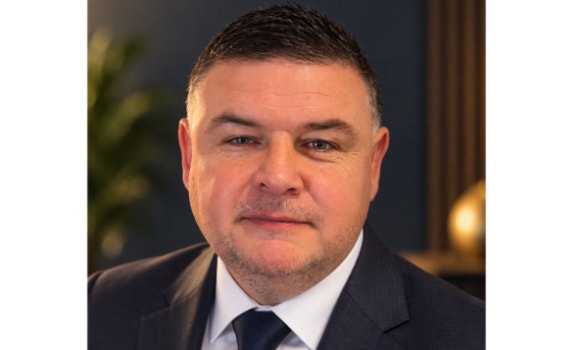
“The growth that we've seen over 15 months came as no surprise to me, really, because I've seen it before,” John Lester, commercial director at Euro Options (EO) tells CRN.
By now, most people know about the revenue growth bombshell Lester dropped in his latest interview with CRN.
Ahead of the distie's rebrand, CRN had the chance to speak with Lester all about the growth the business has experiences and why now was the right time to rebrand.
In part two of the interview, Lester dives into what differentiates EO from its rivals, what will drive the next stage of growth and where market demand currently is.
What differentiates Euro Options from rivals?
Distributors have plenty of rivals in the industry, but what each one can provide for partners can drastically change from one to the other.
“We compete at one end with TD Synnex and Ingram Micro, who are clustered broadliners.
“A real differentiator against them is that they've probably got 2,000 products that they support.
“We've got 20 vendors, so we can really give each one of our vendors that focus and that account management,” Lester says.
And the impact of this specialism is highlighted through EO’s people approach.
“Every single customer has got an account manager, and there'll be a minimum of two contacts within our business that you can always get hold of.”
Lester explained that dealing with broadline distributors can become cycle of delayed email answers and faceless account management.
“If you do have an account manager, they often change every three to six months.
“Whereas we've got customers and account managers that have worked together for ten plus years here.
“There is a real sense of ownership, and account management is something we take extremely seriously. We don't ever want that to go anywhere.”
At EO, Lester explains, account managers will have no more than 40 trading accounts at one time, and they know, understand and work very closely with these accounts.
“Whilst we’ve only got 15 to 20 vendors to push, we really can give those vendors the focus that they deserve,” he adds.
“I’d like to think, when you talk to some of the smaller resellers and MSPs out there, they get to see firsthand what some of these tier-two vendors can do, and you’re probably not going to get that exposure if you're working with some of the broadliners because the tier-two vendors fall further down the pecking order.”
He says he feels EO has to “fight a little bit harder to be successful … we have to really focus and drive these vendors. We have to fight harder for that business, and I think it makes you hungry, and it's key that every time we bring a vendor on, we make a success of it.”
The experience of the EO team is also a key differentiator, as the distributor’s staff are true channel experts.
“We wanted to bring that experience in. We get the channel. We understand it. We know the customers. We’re not wasting time,” Lester says.
“I think it's a mixture of belief, experience, knowledge.
“Not to say that none of that exists in any of the competition, but if you're willing to back your ideas, you're willing to put stock on the shelves, and you're buying savvy, as stock is king, people will come and buy, but then it's about activity, and you've got to really drive that.”
Will EO stay focused, or is expansion on the horizon?
“We don't ever want to move away from what got us here in the first place, and we still want to remain focused and to be able to offer that focus to some of the tier-two vendors.
“We don't want to lose that tagline, but yes, of course we do want to get bigger,” Lester explains.
While bigger doesn’t always mean better, Lester said the desire to grow isn’t rooted in vanity, but a sign of external validation that the business is succeeding.
“You get to a certain size, and you only get there if the channel has really responded well to what you're doing. You can’t get there by luck,” Lester says.
Although, while growth is on the mind, EO doesn’t want scale to completely change the business, and wants to continue providing the same service it is known for to its vendors and resellers.
“We want to grow, as long as it doesn’t come with a change in mindset in terms of supporting the vendors that we work with, and really focusing on account management.
“As long as we can retain that, then I think growth's fine.”
What are customers and partners asking distribution for most right now?
The 2026 IT market has been “very strange”, Lester says.
Price challenges have plagued the industry all year, and “within days, if not weeks, the pricing's changed again. There are a lot of people that are doing a lot of shopping around this year because nothing seems fixed. There's no such thing as a standard price anymore for anything,” Lester explains.
This year, requests that EO has received have been mixed, but AI and AI capabilities within client devices is an area that has been taken very seriously in the channel as there has been a lot of noise around the technology and ensuring end-users have the capability to support an AI-enabled future.
While the industry is busy heralding AI, the transformation being made in business is also impacting pricing.
“A piece of memory that might have cost you £150 12 months ago, you're probably looking in excess of £1,000 now, and that's been driven by AI.
“We speak of it positively, but on the flip side, that is what's driving all these prices. It’s the datacentres that are soaking up all the product.
“You just can't get to mine the minerals quick enough, and it’s come at a time when there's wars going on around the world in areas where those minerals would likely have been mined.
“You would have had more chance of getting more product, but you can't produce it quick enough at the moment,” Lester adds.
This has had a knock-on effect for what the distie is seeing in regards to requests, although not always translating to real spend.
“Product shortages and price increases are driving the volume of requests that you get, even if you're not necessarily seeing a volume return in terms of orders.
“You're having to work a bit harder for the opportunities that you win.”
Outside of AI, Lester explained, “There's a lot of requests coming through for networking and security as well. Especially in security features within vendors.
“You've only got to look at the news. Every couple of days, they're talking about somebody's been hacked, global businesses are being hacked.
“It can happen with your private data, your personal data, your business' data. So, security is a big topic.”
Another factor of customer and partner demand is the education space.
“There’s always going to be advances in what education needs are and how they’re met,” Lester explained.
What markets and technologies will drive EO’s next stage of growth?
For Lester, he believes that there will be continued growth in everything the distie has started on its transformation journey.
After all, soaring from £30m to £73m in revenue in 15 months isn’t an accident.
However, there are new industries EO is dipping its toes into.
“We are only just really getting going with the networking side of things, and I think networks for the SMB market is a big space for us to go and work in, as there is with clients,” he says.
Looking to where he believes future growth could lie, Lester pointed forwards the refurbished market.
“I do think the refurbished market is going to grow in time.
“Pricing currently on product and there's been RAMageddon and SSD shortage.
“AI, as good as it can be for everybody that uses it, has also been a real pain for everybody in the channel, and it probably is going to continue being that for the next couple of years.
“But I think adopting refurbished products and trying to generate a lifecycle of product sustainability is a big topic at the moment. So, if we can help support that into businesses, it's definitely an area that we want to work on.”
Lester, though, doesn’t see the need to enter too many new markets to sustain EO’s success, “I don't necessarily see us having to do or having to go and move into different markets overly.”