‘Distributors are leading the digital evolution’: GTDC leaders reflect on state of the channel
Frank Vitagliano and Peter van den Berg talk circularity, tech sovereignty and memory shortages
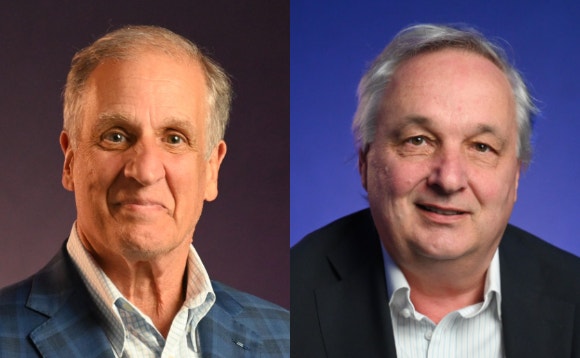
EMEA distributors are facing a period of rapid change, as AI, ecosystem complexity and geopolitical pressures reshape the channel landscape.
Speaking to CRN at the recent GTDC Summit EMEA, CEO Frank Vitagliano and GM EMEA Peter van den Berg, point to a market undergoing structural change, with digital transformation, sustainability and shifting partner models converging to redefine distribution’s role.
According to Vitagliano, the industry’s transformation has been decades in the making but is now entering a new phase.
“If you look at distribution in the early days, it was pretty basic. I call it a bank and a warehouse. It was about getting product from one place to another and financing it,” he says.
“Now we’re at the point where we’re really into distributors leading the digital evolution and transformation.”
That shift is underpinned by significant investment.
“Distribution has invested hundreds of millions of dollars into platforms,” Vitagliano explains, outlining productivity, marketplaces and data as the three core pillars.
“Everything becomes faster; go-to-market, quote-to-cash. Distributors are unique because they bring everything together.”
Disties’ ability to aggregate vendors, solutions and partners places them at the centre of the ecosystem, while data is emerging as the next differentiator, he adds.
“There’s an incredible amount of data flowing through distribution.
“The opportunity now is to harness that data using AI to identify opportunities, generate leads and bring business to both vendors and customers.”
MSPs and ecosystem complexity redefine the channel
Alongside digital transformation, partner dynamics are also shifting, with MSPs taking on a more central role.
“I think there is a new focus on MSPs. The MSP market is very significant,” Vitagliano says.
“It’s the way end users now want to conduct business, particularly with all of the cybersecurity concerns which will only get more complex.”
At the same time, the distinction between partner types is becoming increasingly blurred.
“You’ve got the solution provider, which could mean they’re a reseller, it could mean they’re a reseller and an MSP, or a reseller, an MSP and providing professional services.”
This growing complexity is further amplified by the emergence of new actors.
“There are a lot of different distinctions, and then you have influencers out there in the space,” he adds.
“If distributors are going to live up to what I call them, the orchestrators of the IT ecosystem, they have to be comfortable working with all of those players.”
Sustainability ‘still there, but less visible’
While sustainability remains an important topic, its priority has shifted as organisations balance competing priorities.
“It is sort of wintertime now. Sustainability is still there, but it is less visible,” highlights van den Berg.
“Companies are still thinking about it and working on it. A lot is happening underground.”
Both execs point to sustainability transitioning from compliance-led activity to a more embedded, long-term priority.
Regional differences are also emerging.
“In Asia, sustainability is actively treated as a business opportunity,” says van den Berg.
“It is happening as well in Europe, but not as strongly.”
Despite that, Vitagliano stresses that sustainability, and particularly circularity, remains a structural focus for the channel.
“All the distributors are engaged in it in a big way.
“They all have sustainability leads and the circularity piece is a major part of it.
“It’s a major topic. It’s not going away.”
Sovereignty debate grows amid structural constraints
Geopolitics and technology sovereignty are also rising up the agenda, though execution remains uncertain.
“I think it will continue, and I think it should,” says van den Berg.
“The world has changed. Europe is far behind. About 95 per cent of big tech comes from the US.”
He points to a significant investment gap as a key barrier.
“A company like Google or Microsoft invests more than the entire EU.”
While sovereignty efforts could create new opportunities for the channel, the current reality remains complex.
“Right now, sovereignty is being discussed, but dependence remains,” says the EMEA GM, citing ongoing reliance on US vendors.
Vitagliano echoes that view.
“It’s more of a discussion topic, not necessarily something being fully executed.
“And that’s how a lot of these trends start.”
Supply pressures reshape buying behaviour
Beyond strategy, distributors continue to navigate operational challenges, particularly around memory shortages.
“It will continue until at least 2028. It can get messy,” explains van den Berg.
“There is always an unhappy party when supply is limited.”
While the impact has so far been manageable, Vitagliano notes that behaviour is already shifting.
“When customers can’t get certain products, they redirect their budgets elsewhere,” says the CEO.
“For example, instead of refreshing PCs, they might invest in monitors or other areas.”
Over time, he warns, the impact could become more pronounced if shortages persist.
“Any time demand outstrips supply, someone in the chain is unhappy.”