‘It’s a threat for the channel, but also an opportunity’: Ikonic channel boss on sustainability
Russell MacGowan talks rising customer demand, circularity and how the distie plans to help partners demonstrate their social impact
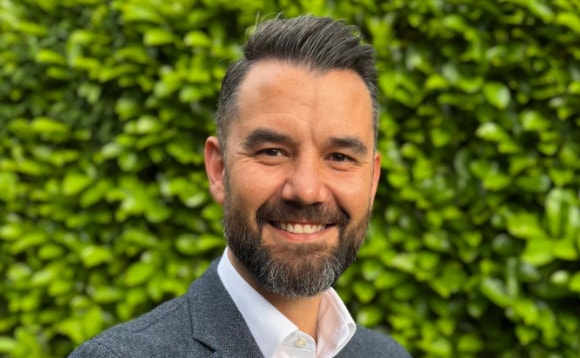
Sustainability is becoming both a commercial opportunity and a competitive threat for channel partners as changing customer demands put pressure on resellers to demonstrate their environmental and social credentials.
Ikonic channel director Russell MacGowan tells CRN that businesses failing to adapt risk losing customers to partners capable of supporting their sustainability requirements.
“There’s a threat there for the channel, but there’s also an opportunity,” he says.
“This is where we feel that we can help our resellers and our clients move with the knowledge that we’ve gained over the last five, six, seven years and help lead them on that path.
“Ultimately, they need to secure their business. That means that they are a viable avenue for customers to place business with.”
MacGowan argues that Ikonic's early adoption of sustainability initiatives has contributed to the company's momentum.
Beyond focusing on areas of the channel where its larger rivals have less reach, the distie has established clear ESG targets and has been carbon neutral for five years.
“From the board down, there’s been a recognition around sustainability for a number of years,” he says.
“From a moral point of view, whether it’s the social governance or the environmental aspect, they do play a big part, but with the way that the channel is moving and the fact that we’ve been early adopters in this area, it has played a part in growth.”
Sustainability moves down the channel
MacGowan says demand is no longer confined to the industry’s largest players.
While major resellers and service providers have invested heavily in sustainability strategies, environmental and social requirements are increasingly affecting smaller channel businesses.
“For SMEs, particularly resellers and VARs with revenues between £25m and £75m, their end users are driving this change as well,” he says.
“Public sector is a big part of that, but even within the private sector, you’re seeing businesses are paying more attention to this and how they interact with their supply chain is changing.”
The exec warns that suppliers unable to meet those changing expectations could lose existing customers.
MacGowan points to changes to the Government Buying Standards, which came into force at the beginning of April, as another driver of demand.
He says the requirements mirror moves in the European Union towards ensuring a proportion of new IT purchases are sustainably and ethically sourced.
“This isn’t going to go away now,” MacGowan says.
“There are real-world implications around our industry, and these things do have to be tackled.”
For partners yet to develop their sustainability capabilities, however, he argues there is still time to act.
“There are plenty of companies across the scale who have already adopted this, but there are plenty that haven’t yet,” he says.
“It’s not too late. There’s no time like the present.
“You could have planted a tree last year, but if you haven’t, the best time to do it is today.”
Demand spreads across geographies
Ikonic is also reportedly seeing increasing sustainability demand beyond the UK.
MacGowan says there has been strong uptake around ESG across Britain and continental Europe, while challenging the perception that sustainability has gained less traction in the US.
“I’ve had people say that it’s not such a big thing in America, but I’d like to differ in some ways.
“There are partners that we have official distribution status with where they are US-owned companies, and this is on their radar and has been.”
He also points to China’s investment in green technologies as evidence of the global direction of travel.
“You look at the huge growth in the last five years, ten years within China around green technologies,” he tells CRN.
“They’ve gone from being this economic and industrial powerhouse that surged in the late 20th century to being the world leaders in sustainable technology.”
For Ikonic, most direct interaction remains concentrated in the UK and European channels.
“We’re seeing strong demand from products and from vendors alike to be aligned,” MacGowan says.
“It’s out there, it’s growing.”
He adds that the UK sustainable IT market has been valued at around £900m, with forecasts indicating it could reach £3bn by 2028.
“When businesses see growth and potential, they invest, and then it becomes a self-fulfilling prophecy,” he says.
“It’s certainly here to stay, which is good news for the planet ultimately.”
Beyond refurbished IT
MacGowan says the sustainability strategy extends beyond Ikonic’s BSI refurbished IT division, which was one of the main reasons he joined the company.
“The BSI refurbished division, that’s the tip of the iceberg,” he says.
The exec believes the distributor’s experience across both new and refurbished technology puts it in a strong position to support partners beginning their sustainability journeys.
“BSI is obviously a strong element of our sustainability, but Ikonic as a whole has been a sustainable business for over five years now,” he says.
“Whether it be new retail or refurbished, we’re well positioned to help people during that transition and start that journey.”
In a recent interview with CRN, Ikonic’s CEO Chris Perry explained that all refurbishing is carried out in the UK, arguing that the company's emphasis on transparency and locality resonates with customers.
MacGowan teases Ikonic’s future ESG proposition
Alongside its environmental initiatives, Ikonic is preparing to launch a new proposition focused on helping channel partners measure and report the social impact of their sustainability activities.
MacGowan says the project is expected to go live within the next six to eight weeks and will focus on the social and governance elements of ESG.
“There’s going to be a large focus on the SG part, that’s the social governance, because that’s key to some of our partners, especially from a public sector point of view and the whole tendering process.
“That will have a real big impact in the channel’s ability to report on the impact of social governance, which isn’t always the easiest of things to do.
“The proposition that we’re going to be providing the channel will streamline that and give them clarity as to how their actions are making an impact.”
He stresses that the results will be independently verified rather than relying solely on claims made by participating companies.
“This is done through third-party verification, so it’s not just we believe that X, Y and Z has happened,” he says.
“There are traceable and trackable markers as to the impact that these opportunities bring to people.”